

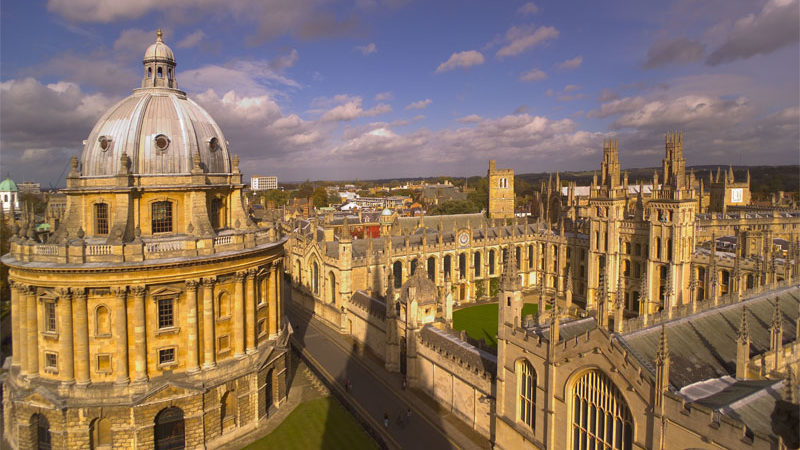

Fair Access to Higher Education

January 27, 2012 1:56 pm

Higher education in Europe is going through the biggest changes since the Renaissance. With the UK’s Conservative-Liberal Democrat government increasing tuition fees, cutting university places and slashing universities’ budgets, the debate around improving access is often overlooked.

The UK is highly unequal. Fair access matters. Fair access is about removing barriers to higher education for students from that would not have traditionally studying for university qualifications. Providing opportunities for talent students from non-traditional backgrounds benefits the whole of society, not least because it stimulates economic growth. In a fair society, everyone who has the talent should have the opportunity to study at university. The most talented students should go to the best universities.

Sadly this is not the reality.  Four schools and one sixth-form college sent more pupils to Oxford and Cambridge between them over three years than 2,000 other schools and colleges combined. One Oxford College did not admit a single black student in five years.  A level achievement directly correlates with household income. You can actually predict from the birth weight of a baby how long that person will stay in higher education. (The last statistic is from a book written by Tory Universities Minister David Willets – a shame his policies will only serve to strengthen inequality.)

The fees debate has often centred round the assumption that it is appropriate that the top universities should charge the highest fees. Likewise, less prestigious universities that take a higher percentage of poorer students should offer degrees at lower cost. Poorer students could live at home and study at their less prestigious local university. Poorer students could study part-time or by distance learning. The two-tier system this creates would be regrettable but inevitable.

But what makes a good university?  There is no formal UK accreditation system for ranking university undergraduate degrees. Newspapers compile their own rankings based in part on the relevant A level scores achieved by university entrants. This approach effectively treats university as a reward for high A levels.

Universities that are strongly committed to improving access to higher education have flexible admissions policies. Such universities welcome applications from students who do not have formal or traditional entry criteria but who have relevant experience or the natural ability to undertake a degree. These universities are effectively penalised in the newspaper league tables, with implications for the levels of funding they receive.

Why should universities with successful widening participation programmes (with all the associated challenges of recruiting and supporting students from non-traditional backgrounds) be able to offer education at two thirds of the price of the “top” universities? Logically, universities with successful fair access schemes should receive more funding than “top” universities who admit fewer students from deprived backgrounds. After all, it is more expensive for the former to run their degrees. A Vice-Chancellor of a former polytechnic put this argument to the Deputy Leader of the Liberal Democrats:

“I got Simon Hughes to agree with me. But then you can get him to agree to anything these days.”

  • Anonymous

    Not a lot to say really but labour brought in Tuition fees and would only have cut it by £3,000 from £9000 and they would only have done that to make out they cared.

    But in the end you have a name Unversities  rise or fall on the name they make for themselves.

    • http://twitter.com/Newsbot9 Newsbot9

      No, they rise or fall by the commercial success of the fields they teach. Many fields are rapidly withering in Universities even now, and will continue very rapidly to do so.

      At the same time, research is very rapidly being squeezed out of timetables for university staff – the shrinking proportion of staff who are permanent, that is, increasingly hourly-paid staff are being used…

      I’m one of them, and I’m seeing this now. In other times, I’d have had an offer of a part-time role from at least one university, but it remains hourly paid for now because of the uncertainties of the current environment…

      • Anonymous

        So the name Oxford or Cambridge would not give you a lift in the jobs market, I think they do.

  • http://www.figurewizard.com Joe Jonkler

    Is it possible that not just the general standards of education and their commitment to driving genuine potential candidates for top universities of the 2,000 schools you mention played some part in your conclusions? Also why no mention of UCL and Imperial College, which ranked 2nd. and third respectively in the TES survey of the UK top ten or Bristol, Edinburgh, LSE, Manchester and Warwick who also featured in that list?

  • Dave Postles

    Yes, I fully agree, Alice, but it’s all undermined further by the government cutting the teaching grant and the number of admissions in the coming academic year as specified in the letter from Willetts to HEFCE on 25 Jan last.

  • charles.ward

    So rather than fix the problem of low A-level attainment by poorer students you want to disguise the symptom by skewing university entrance against those with wealthy parents (through no fault of their own).  Perhaps if Labour concentrated more on helping the poor rather than punishing the rich they might stand a chance of getting votes from both.

    • Anonymous

      Well said!

    • http://twitter.com/Newsbot9 Newsbot9

      It won’t work. It relies on people being dumb anyway.

  • Anonymous

    Excellent piece Alice- and I think this is a “hot topic.”

    The picture seems to be one of an increasingly divisive hierarchy,
    which mirrors the inequality between private and state schools;
    also socio economic factors such as the streotypical “middle classes”
    moving to good schools’ catchment areas and leafy green suburbs.

    There is also an unhealthy culture of incessantly target driven
    tables/results, which can often only present one part of the picture;
    this can become too much of a focus and pressure for schools,
    to get higher up the leagues etc- designed to impress,
    but not necessarily teaching better or providing an all ’round package
    for young people.It perhaps belies the real needs of education,
    and becomes a somewhat zero sum game?

    Also- market forces are being imposed to such an extent
    that this may lead to fragmented provision and anomalies?

    Add to all of that- trebling of uni tuition fees- disastrous;
    I believe will have a real impact on number of students
    and dampen down aspirations and opportunities.

    Politically Labour would gain great popularity if it pledged
    to reverse high fees, or offered a serious alternative I think.

    Thanks, Jo.

  • Anonymous

    Oh dear, oh dear.  Ms Perry writes:
     
    “Fair access is about removing barriers to higher education for students from that would not have traditionally studying for university qualifications. Providing opportunities for talent students from non-traditional backgrounds benefits the whole of society, not least because it stimulates economic growth.”
     
    I would like to think I can work out what she is trying to say, but Ms Perry does not seem to have a grasp of basic English.  The first sentence is hopelessly confused, although one assumes that it is directed at some supposed barrier based upon some inappropriate criterion or criteria, although what it or they might be is left unstated.  The second merely suffers from the failure to add “ed” to “talent” and I am sure we all make typos occasionally.  But it is a bit sloppy.
     
    The problems with Ms Perry’s juvenalia do not end there, however.  No one could disagree with her proposition that the most talented students should go to the best universities.  That is why the excellent Mr Gove is so angry about the poverty of achievement at most state schools (and, as is painfully obvious from her prose, Ms Perry is herself a victim of want of a good education rather than want of innate ability of which I am sure she has plenty).
     
    It is – as Mr Gove is the first to point out – extraordinary that a handful of public schools dominate entrance to Oxbridge.  But that is the result of two things.  The first is the relative collapse in state education (whatever Peter Jukes may say – and I know his views).  By “relative” I mean the failure of most, but not all, comprehensive schools to educate their brightest pupils to the full extent of their potential.  The second is the impact of league tables on public schools (a little noticed but very real phemonenon).  This has concentrated talent in a handful of public schools, for which admission is fiercely contested.  Parents who want their children to go to Westminster, St Pauls (boys or girls) etc. send them to expensive preparatory schools where they are well taught in small classes. These parents are themselves largely, if not always, intelligent and well educated, so that their children are likely to be relatively clever and to enjoy loads of support at home.  These parents also subject their children to coaching after school (on top of  far more homework at a higher level than primary schools) so that their offspring have the best chance of getting into one of the top schools. The league tables have concentrated talent in the private sector in a few schools and these hot houses do extraordinarily, but understandably, well.  The combination of high intelligence, supportive and educated parents and top rate teaching is very hard to beat.
     
    However, Ms Perry should be reassured that Mr Gove – who is seriously concerned about the dreadful lack of attainment in the state sector during and as a result of 13 years of Labour - will do all that can be done to sort this out.  More power to his excellent elbow!    

  • Anonymous

    Oh dear, oh dear.  Ms Perry writes:
     
    “Fair access is about removing barriers to higher education for students from that would not have traditionally studying for university qualifications. Providing opportunities for talent students from non-traditional backgrounds benefits the whole of society, not least because it stimulates economic growth.”
     
    I would like to think I can work out what she is trying to say, but Ms Perry does not seem to have a grasp of basic English.  The first sentence is hopelessly confused, although one assumes that it is directed at some supposed barrier based upon some inappropriate criterion or criteria, although what it or they might be is left unstated.  The second merely suffers from the failure to add “ed” to “talent” and I am sure we all make typos occasionally.  But it is a bit sloppy.
     
    The problems with Ms Perry’s juvenalia do not end there, however.  No one could disagree with her proposition that the most talented students should go to the best universities.  That is why the excellent Mr Gove is so angry about the poverty of achievement at most state schools (and, as is painfully obvious from her prose, Ms Perry is herself a victim of want of a good education rather than want of innate ability of which I am sure she has plenty).
     
    It is – as Mr Gove is the first to point out – extraordinary that a handful of public schools dominate entrance to Oxbridge.  But that is the result of two things.  The first is the relative collapse in state education (whatever Peter Jukes may say – and I know his views).  By “relative” I mean the failure of most, but not all, comprehensive schools to educate their brightest pupils to the full extent of their potential.  The second is the impact of league tables on public schools (a little noticed but very real phemonenon).  This has concentrated talent in a handful of public schools, for which admission is fiercely contested.  Parents who want their children to go to Westminster, St Pauls (boys or girls) etc. send them to expensive preparatory schools where they are well taught in small classes. These parents are themselves largely, if not always, intelligent and well educated, so that their children are likely to be relatively clever and to enjoy loads of support at home.  These parents also subject their children to coaching after school (on top of  far more homework at a higher level than primary schools) so that their offspring have the best chance of getting into one of the top schools. The league tables have concentrated talent in the private sector in a few schools and these hot houses do extraordinarily, but understandably, well.  The combination of high intelligence, supportive and educated parents and top rate teaching is very hard to beat.
     
    However, Ms Perry should be reassured that Mr Gove – who is seriously concerned about the dreadful lack of attainment in the state sector during and as a result of 13 years of Labour - will do all that can be done to sort this out.  More power to his excellent elbow!    

    • Anonymous

      Sorry to regurgitate – problems with the new way of posting.

    • Anonymous

      But with all the education of this world, with all the world leaders going to the best schools the best Universities , they all F*cked up the world.

      Perhaps  a few mothers who are poor need to come in and tell the country how to spend and stay within Budget.

      • Anonymous

        Bring back John Major! Or, were he still alive, Jim Callaghan!

        • Anonymous

          I agree bring back Major and I think Labour bring back Brown the two stooges,   lets see you have a list as long as your arm to make it number three

  • Anonymous

    This is such a silly and irritating piece that I feel moved to respond again.

    Ms Perry asserts that “A level achievement directly correlates with household income”.  She does not provide any link or evidence to support this obviously daft suggestion.  Has she not heard of the upper class twit?  And, if – extraordinarily – she is right, then that is the result of the last, lamentable Labour government.  It used to be the case that you could not coach pupils to do much better at A level than they merited.  If you can do so now, that is the result of years of falling standards.

    And it certainly was not the case that A level grades were related to parental/household income in the past.  My own parents’ achievements show that to be utter rubbish.

  • Anonymous

    And another thing!  Ms Perry asks “what makes a good university?”  It is obvious to all except the blinkered that the Russell Group plus a few at the margins are “good” universities whereas there are many so-called universities which would be a joke were it not for the fact that someone (whether the taxpayer or the undergraduate) is paying for the supposed privilege of attending them.  While a comprehensive definition of a “good” university is not something for this time of day, I would suggest that academic excellence, the inculcation of independent, questioning thought and the encouragement of original thinking and research were sines qua non (pardon my Latin).

  • Franwhi

    Never mind the clever clever quip at Simon Hughes – what about the issue of tuition fees ? Remind us who introduced them in the first place ? At least 60 Scottish Labour MPs voted with the Blair Govt on the issue knowing full well that their children at Scottish universities would have no tuition fees to pay. There were issues with wider access before tuition fees and in all conscience how is it going to get better now ?   

    • Anonymous

      Good point.  People are so quick to fire the blame at this Government, when this problem has occurred for a long time.  We don’t live in a Utopian world, so disparities will continue in the Educational System.  The word ‘fairness’ is too subjective to be used effectively in a debate of this sort.

  • http://twitter.com/Newsbot9 Newsbot9

    It’s irrelevant. The majority of the poor are NOT going to to to University when it’s a losing proposition for income over your working lifespan.

    (And cutting it to 6k makes NO difference to the majority of students on this, it’s a SCAM)

    The UK already charged almost double the average for Western countries, and with this change they’re making a mockery of any form of “equal” access. The situation in America isn’t even remotely comparable, incidentally – there are deacent-but-cheaper universities and a MASSIVE amount of grants, which don’t exist here.

    The percentage of graduates we’ve has has been falling for a decade. Now it’s going to plummet. Shame about that thing called the economy, when increasingly highly-paid positions require a degree: Companies will go elsewhere, or import them.

  • jaime taurosangastre candelas

    There’s an assumption in this article that all university courses are the same in both academic rigour and cost of providing tuition.  That is not the case in reality.  Studying chemical engineering cannot be compared with studying History of Art.  Both are equally valid, but that is not the same as both costing the same to deliver, or needing a equal levels of mental capacity to study successfully.  I’m not sure about Surfing & Tourism or Golf Course Management, but I have my doubts and wonder if they are just over-specialised business degrees.

    All university course are subsidised.  Some are subsidised more than others.

  • happy.fish

    “The most talented students should go to the best universities.”
    The problem in my experience is that there is insufficient capacity for the most talented students in the ‘elite universities’. Meaning they can cherry pick students, and thus have to create additional critieria to simply academic ability. It is possibly the nature of these criteria that cause skewing to students from one particular school background over another.
    Also the historical and financial advantage and the cache amongst the elite a handful of universities hold, effectively acts as a gatekeeper to access to the elite.

    I continue to suggest that the best thing to solve issues around unfairness in access to university is to simply allow universities to set entry requirements to courses up front. When students gain their grades they can apply to 4 or 5 courses for which they already have the qualifications, using a ranking order. Places are then awarded randomly using the preference criteria. THat way uncertainty around grades and offers are removed. The inefficiency of the present system is eradicated. Students can make truly informed choices and will get one of the picks. If they are not happy they can always reapply and take their chances again. Many will complain but I ask why, since surely the present system is based on results, or do these complainers know something about how they can garuntee a place at certain universities that we should be aware of??

    • Anonymous

      Excellent comments happy.fish.

      Enjoy hearing from informed people.

      Jo

  • Anonymous

    The real problem with higher education is that we are trying to send too many people to university. To accomplish that, universities have had to start running courses in subjects that really aren’t suited to an academic institution.

    I regularly see students on courses like Hotel Management and Tourism Studies who would be much better served by studying through a Chartered Institute of Tourism or some such equivalent.

    A friend of mine works in conveyancing and she has a degree-equivalent qualification through their chartered institute. She didn’t have to pay tuition fees or build up any debts and was actually earning money whilst she was training.

  • Mr Chippy

    Oxford and Cambridge are undoubtedly excellent institutions but not in everything they do.  Some courses are better in other institutions but degrees in those subjects do not have the same kudos as poorer ones from Oxbridge.

    A lot of fire would be taken out of this debate if firstly institutions with broadly similar standards of courses were held in the same esteem on a like for like basis. Unfortunately the products of Oxbridge popularise their alma maters because they have prominent roles in the media. Just look how references to an Oxbridge education are included in articles or features on individuals when similar references are not made if a person is educated elsewhere. 

    Secondly the Oxbridge stranglehood over many jobs particularly in public sector needs to be broken. People are talking about the first female director general of the BBC following Thompson. When was the last non-Oxbridge director general? Why do you have to go to Oxbridge to read the news? 25% of MPs are Oxbridge educated. Look at figures for the civil service and judiciary. Is it any wonder the freemasons are in decline when you now where the college scarf as opposed to rolling up your trouser leg? If there was no job premium with going to Oxbridge I am sure people may select more suitable institutions to attend.

    Having said all this those who argue that the Oxbridge attracts the brightest and best are incorrect. There is an over reliance on qualifications and this suits the products of private schools.  An 18 plus for higher education is no more edifying than a 11 plus for secondary. The fact that those overcrammed and overcoached products in many cases bearly score higher results than those with less advantage leads me to argue that we need broader assessment criteria particularly when you consider there is not a pure correlation between A level pass levels and a higher degree. Latent potential not measured by A levels is developed by good institutions and as a result many end up with better degrees. To believe otherwise is to believe is that there is a genetic link between class and intelligence which sounds to me like an academic form for eugenics.

Latest

  • Featured I Agree with Jack, End EU Elections

    I Agree with Jack, End EU Elections

    I agree with Jack Straw. EU parliamentary elections should be abolished. It’s not that we object to democracy, it’s that we object to failed democracy. We object to democracy that continues to exist as a pointless halfway-house absorbing considerable revenue without delivering anything in return. “The directly elected European parliament should be abolished after failing to achieve its purpose of bridging the divide between the European people and the European Union” is what Jack actually said at the recent IPPR event. [...]

    Read more →
  • Video Why are we losing police officers? asks MP

    Why are we losing police officers? asks MP

    Mp Clive Betts put Cameron on the spot over policing at PMQs, but do his arguments on “visible policing” really stack up? Watch their exchange and see for yourself:

    Read more →
  • News Gordon Brown slams Greek bailout – and warns Europe over austerity

    Gordon Brown slams Greek bailout – and warns Europe over austerity

    In an article for the Washington Post entitled “Europe’s shortsighted response to a worsening fiscal reality“, Gordon Brown has hit out at German-led austerity in Europe, lambasting: “policies that the whole world can see have already failed.” In fact, Brown goes further still in tackling head on the central argument around austerity – that any failings that arise from austerity are because there isn’t enough austerity: “the unfolding tragedy of a bankrupt Greece is only a symptom of an even [...]

    Read more →
  • Comment Featured PMQs verdict: How could anyone have “won” something as dreadful as that?

    PMQs verdict: How could anyone have “won” something as dreadful as that?

    So much of the coverage of PMQs is focussed on the snap verdict. Who won? Who lost? I’m aware that this blog is as guilty as anyone for playing that game. So let’s make this one simple – nobody won today. How could they have, when the event itself was so deeply, stunningly, mind bendingly dreadful. It started off relatively normal. Loud admittedly, but normal. Ed began with the NHS. Still normal. Cameron dodged the question. Still supremely normal. But something [...]

    Read more →
  • News David Davis launches a scathing attack on the government’s close relationship with big business

    David Davis launches a scathing attack on the government’s close relationship with big business

    David Davis has launched a broadside against the PM – and especially the government’s relationship with big business (or “crony capitalism” as he calls it) – in an interview with Prospect Magazine. The former leadership challenger (who lost out to Cameron in 2005) has spoken out against the government’s handling of Hester’s RBS bonus, tax avoidance and the media. Interestingly, the quotes have come to light on the same day as fellow Tory right big hitter Liam Fox returns to the [...]

    Read more →
