

Duty, Obligation and the Labour Party – The Jon Cruddas Interview

August 15, 2012 9:15 am

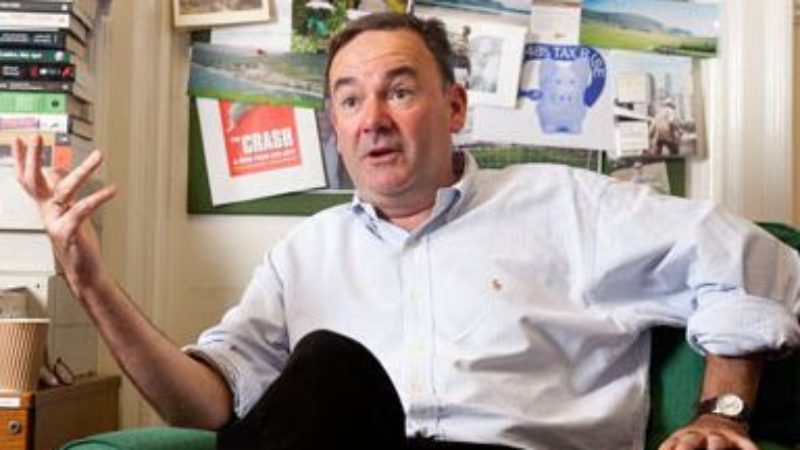
A few weeks ago I interviewed Jon Cruddas. Usually when you meet an MP in Parliament they send one of their staff down to meet you. Cruddas by contrast is a refreshing change – he came himself. And when we got to his office, there was no SpAd or researcher with a dictaphone at the ready to make sure he said “the right thing”. In fact there was no-one else in his office. Just Jon Cruddas, leaning back in a computer chair swigging from a bottle of water, and me, sitting in another computer chair.

What better place to discuss the future of the Labour Party. No faux glamour like some MPs offices. Only a large photo on one wall, but we’ll come to that later.

I was visiting Cruddas to speak to him about the policy review which he’s recently taken on. But considering he’s avoided taking on ministerial and shadow ministerial roles before, why now? Why the policy review?

“I turned down other invitations because it seemed to me if you disagree with what’s going on then you can’t just sort of trade that off to trade up. So I was never interested in it.”

That certainly chimes with media coverage at the time. Brown was seemingly determined to install Cruddas as Housing Minister, but he evidently wasn’t keen. There was speculation that he wasn’t interested because he had been told he would not be able to introduce a large council housebuilding programme that had become a signature issue of his deputy leadership campaign:

“When we did the Deputy Leadership thing, that was precisely not to use it as a platform to try and ingratiate yourself and trade up…that can’t be the platform and then the first sign of an offer you go ‘I didn’t really mean it’”.

This idea of “trading up” is something that Cruddas comes back to time and time again. The idea is anathema to him. You sense it’s what annoys him about modern politics – trading up sounds an awful lot like selling out. So why is this different?

“This time round…the policy review interests me, the sort of shape of the party – where it’s going? – interests me. I think Ed Miliband is being extraordinarily inventive, and interesting. It was something you can’t turn down. My sense is now that it’s an obligation to get involved to get involved, right? It’s not actually a choice. It is something where it’s all hands to the pump, not least because of the shape of the country and what the coalition’s doing. It’s literally a duty of all of the party members to get together and try and contest the national story. The stakes are very high. It’s not a choice really.”

Duty, obligation – those aren’t words you hear often in the party these days, but Jon uses them comfortably, fluently and easily. Duty to him doesn’t seem arduous. Or maybe it is? Maybe he’s just good at hiding it?

But if the membership has an obligation to get involved and help fulfil Miliband’s vision, then the party needs to have a better relationship with those same members. You might call it rights and responsibilities, I suppose:

“If you’re going to respect the membership you’ve got to open [the party] up and give it more rights. We are literally – in real time – discussing how we do that.”

And where better to start, when it comes to the broken nature of Labour Party democracy, than policy making:

“I went to the National policy Forum a couple of weeks ago and it was really interesting, but we’re looking at – myself and Angela Eagle – ways of re-democratising the process – as well as bringing clarity to the Shadow Cabinet policy making processes. And basically I went to the joint policy committee yesterday and it was the same structure to the National policy Forum as when we set it up 14/15 years ago. Literally the same titles. So there is a question about whether that’s good enough for a contemporary party in a different epoch to 15 years ago. I think Angela’s very keen. There’s a broad sense across the party – Ed’s very keen too – to reform the architecture to make it breathe more and to re-invite all of the different sites of representation across the party to get involved and participate in policy making. And participate in a new democratic settlement in the party. And I think that’s much more interesting than it was four or five years ago, when part of our platform was about the lockdown in the party.”

The policy making structures of the party, Cruddas argues “became an exercise in political control”. That’s the kind of hyperbole that Labour activists are used to throwing around at GCs, so it’s both heartening and surprising to hear a senior party figure speak in such terms. But can the party really change. Five years ago, Cruddas argues, “it was total, top down, control not respect for the membership” – for the avoidance of doubt, his tone of voice doesn’t suggest that he thinks that was a good thing.

He also says that one of the country’s biggest issues – housing – links back to party democracy. If the leadership had listened to the party more, they might have realised that the party have been talking about housing for years.

He seems far more confident about the party’s ability to change now than he was back then. Of party General Secretary Iain McNicol, he says:

“I listen to Iain McNicol, and he does remind me of Larry Whitty. He could be as good a General Secretary as Larry Whitty in terms of the way he’s progressing. In terms of the the democracy of the party. In terms of how he sees it. And that’s looking good. Culturally that means the party’s changing. Or is in the process of confronting some of that legacy. And there has to be a reckoning about what it becomes.”

 Despite only having been a member of the Shadow Cabinet for a few months, he’s similarly complimentary about many of the others sat around the party’s top table – and one person in particular has caught his eye:

“I sit up when he says anything…Vernon Coaker. When he talks about Labour, the language he uses…he’s literally an Oracle.”

Coaker is literally – if the Wikipedia definition of Oracle is correct – a person or agency considered to be a source of wise counsel or prophetic predictions or precognition of the future, inspired by the gods. Now that, right there, is praise. If anyone sees him ask him what the lottery numbers are going to be.

Being able to pontificate about the future is one of the benefits of being an MP, although it’s often easier on the backbenches. Jon Cruddas has spent a decade on the backbenches and much of that tim e was spent pontificating.  Of course now that Cruddas is in charge of the policy review many within the media have started looking back over some of his previous writings and pronouncements and wondered how many of his views might find their way into a future Labour manifesto.

Does he, for example, still favour an EU referendum?

“That  was my view”.

He laughs a big hearty throaty laugh and rocks back in his chair. I sense this isn’t the first time this has come up.

 “Lets be pretty blunt about this. I come to this job – a generous invite from our leader to participate in the shadow cabinet – with a fair degree of baggage. I fervently believe in a lot of things, right? And I still do. But, my job is more of a secretarial job across the party. It would be wrong to see it simply as an exercise in ensuring that the party says what I think. Because I actually think – I’ll be completely honest about this – I don’t want the party to think what I think, because I don’t think it would win if it did, right? This is not an indulgent exercise to try and make sure the Shadow Cabinet takes my views on things, because I don’t think that’s necessarily the most successful route to victory.”

“Where the leader of the Labour Party should be, is not necessarily where I would be. That’s just an objective fact…that’s just about having a mature approach to your party.”

He says that he’s not going to disinvent what he’s said before. That’s a good to hear, in a world where politicians are constantly reinventing what they’ve said before to mean something else. That doesn’t mean Cruddas is going to stop being strident though. I ask him about another subject he’s been outspoken on – welfare. He speaks about “the culture war around the demonisation of the welfare recipient” and says that “We cannot lose our compassion in this process, or we’re dead, as a political party.”

Jon Cruddas doesn’t tend to mince his words, which he sees as part of the priviledge of being an MP

“I think if there’s one job where you should be able to say what you think, it’s being an MP, right? And I say what I think. And it’s a fantastic privilege.”

I like that he says “Right?” at the end of most of his numerous rhetorical questions. I have no idea if he does it on purpose or if it’s some kind of verbal tick. Either way, it makes it feel, amongst the jargon (or “waffle” as he calls it) as if he’s making sure that you’re still part of the conversation. It’s part of his charm – one part blokey and one part academic rambling (he is Dr Cruddas after all).

So if Jon Cruddas isn’t the right person to lead the Labour Party, according to Jon Cruddas, what does he think of the man in the hotseat right now?

“Ed Miliband I find intriguing. His resilience surprises me, and I probably underrated that, or didn’t detect it. And I think he’s moved from strength to strength and he’s looking a strong leader. And he’s come a long way quite quickly…He has a capacity to shift the tempo of the mainstream conversation…I like his manner as well. He genuinely is inclusive, and he believes in party democracy as well. These things are interesting characteristics in the party.”

Crucially, for someone who is dead against the idea of “trading up” or selling out on principles in order to succeed, Cruddas says that Miliband is “not compromising in the way I thought he might do.” From Jon, I think that’s fairly firm praise, considering how he seems to think other leaders have compromised.

At the start of the interview I mentioned a photo on Jon’s wall. It stands out in an office with few such adornments. At the recent Fabian Society Conference, Jon described Tony Blair as “Labour’s Miles Davis”. The photo on his wall is of Miles Davis, so I have to ask, what did he mean by that analogy?

“I love Miles Davis, don’t get me wrong, he made the best sounds. He made the best tunes. But it was sort of 52-56 rather than 70-76. But when he was on he was just the best.”

“I worked with Tony Blair for a few years and he was extraordinary, absolutely extraordinary as a charismatic contemporary Labour leader, and I always saw Blair as entrenched within certain traditions in Labour’s history. It wasn’t actually new, it was deeply, historically embedded. And the story to me was what was lost within Blairism. Because when Tony Blair is shouted down, or howled at at conference, or where it’s seen as a term of abuse in the party, that is a totally one dimensional view of what it was and could have been.”

“Miles Davis is absolutely the perfect description because I love Miles Davis but he irritates the hell out of me as well. All of that later fusion stuff was just…you know…”

I’ve heard many people speak fondly of the early Blair years but critically of the later Blair years (which, incidentally, seems to be the complete opposite of how Blair views his time in office), but I’ve never heard anyone use their musical hero to make the point. “He won’t like that…” says Jon, who knows fairly well what Blair will and won’t like, having worked with him in the nineties.

And now of course the two men will be working together again, albeit in somewhat different capacities. Cruddas seems to relish the idea of working alongside Blair on the Olympic legacy “As long as it’s the Blair of 52…”, he says, grinning again. When we spoke the Olympics hadn’t even started and the country was still mired in G4S inspired doom and gloom. Which may or may not have put Cruddas in a mischevious mood:

“If the Tories try a land grab around a successful Olympics, I think we should be very clear that it was actually Gareth Thomas that brought the Olympics to London. It was Gareth Thomas who convinced Tony Blair to make the Olympic bid. So if it goes wrong we blame Gareth… Put that in, because he’ll go mad.”

I think with the benefit of hindsight, we can now safely say it didn’t go wrong (thanks Gareth).

So what does Jon Cruddas do after 2015 when the policy review is complete, the election is over and Ed Miliband is (hopefully) in Number 10. Does he fish in Ireland?

“I might do”

That’s not a committal answer, and neither is this one:

“It’s a fantastic privilege. I don’t want anything. From no-one. And I’m not trading up and I haven’t got a dog in the race, you know? I do actually feel the Labour Party has given me everything, so I do feel obliged to give a hand. But we’ve all got a shelf life. There are other things to do.”

But not yet Jon. There’s plenty to do yet. And despite one MP jokingly telling me that he’s “nearly finished” the policy review, anyone who has ever tried to make any sort of change in the Labour Party knows the process will take Jon quite some time yet. The fishing might have to wait.


 

  • http://www.robbiescott.com/ Robbie Scott

    It would have been nice if you had used the interview to tease out where we are with the actual policy review, this reads as a bit of a bio, an interesting one but a bit of a missed opportunity in my opinion. 

    • markfergusonuk

      Thanks for your comment Robbie. Fact is where we’re going with the policy review is a 2/3 year process, and when I interviews Jon he was just getting started. I think he gives some useful pointers as to where the policy review is going – it’ll be more open, democratic, transparent, and it won’t just be Jon’s thoughts. Considering he’s just starting a long process, I think that’s a good start.

      • Alan Giles

         The problem is, Mark,  2/3 years takes us to 2015. I think something will be needed before that. While it is true oppositions don’t win elections, governments lose them, you can’t rely on things continuing to be as dire as they are today (if a week is a long time in politics 2/3 years is an aeon) and, considering some of the sources Mr Cruddas is seeking advice from, some policies may need a lot of negotiation.

        • http://www.labourlist.org/mark_ferguson Mark Ferguson

          I completely agree Alan. FWIW I think we will see some policies take shape sooner. Housing, for example, is a policy area I’ll be keeping a close eye on.

  • SR819

    One area where Labour could certainly gain the upper  hand over the Tories and Lib Dems is free trade. The Conservatives love free trade because it helps businessmen make higher profits by gaining access to new markets, while the Lib Dems like it because it increases opportunities for developing countries. If Labour adopted a protectionist trade policy, I’m sure we’d be on the same page as the vast majority of people in this country (including Tory supporters). Don’t forget, there are quite a few backbench Conservatives in rural constituencies who oppose the EU’s liberalisation policies especially as it reduces the prices that farmers receive on their produce. Moreover, we’ve seen how free trade has led to offshoring of call centres to India and Steel plants/car factories to China, and how the takeover of British companies like Cadbury’s has led to job losses. The Tories cannot argue against these because they are in the pay of the business lobby, who want freer markets even if it is not in the interest of British workers.

    A protectionist policy would link in well with the Blue Labour philosophy as well. Labour for too long have been technocratic, and believed in free trade based on a very narrow cost benefit calculus. They thought, sure, some working class people may lose jobs to India, but if free trade creates economic growth, we can redistribute the proceeds towards job training programmes to help those who’ve lost their jobs. However, this fundamentally economistic position ignores the value of manufacturing work, the dignity and intrinsic value that a well paid, unionised, skilled technical job provides, and its positive effects on the community. All this is lost, even if you create a supermarket or warehouse to provide employment. Sure, you can find work for those who lose out to free trade, but the work they find regularly has proven to be dehumanising, insecure and with poor pay.

    It would have been good if you could have asked Cruddas about trade policy, and especially the obsession with “progress” at the expense of community which has been a feature of his critique of “progresssive” politics for a while. If Cruddas can develop a communitarian national story, based on economic protectionism, I’d say we could very easily win the next election against a Tory government that would (ironically) look liberal, metropolitan and technocratic, exactly the way New Labour were painted in it’s final years in office.

    • http://www.facebook.com/people/Mike-Homfray/510980099 Mike Homfray

      Absolutely right – and it will happen out of sheer necessity – and despite those who think that the average person worships at the altar of free trade and ‘choice’, it will be both popular and called for.

  • Jim Dandy

    Hurrah!

    With Cruddas at the wheel the Labour Party will commit itself to building hundreds of thousands of much needed council houses at last! 

    Or will it?

    The plot thickens…

    • treborc

       Council houses swearing is not allowed on here, you mean affordable homes.

  • Alan Giles

    ““I love Miles Davis, don’t get me wrong, he made the best
    sounds. He made the best tunes. But it was sort of 52-56 rather than
    70-76.”

    I hope for your sake Mr Cruddas isn’t as confused at his new job as he is at re-writing jazz history.

    Miles came to prominence in 1947 replacing Dizzy Gillespie in the Charlie Parker Quintet (he in turn was replaced by Kenny Dorham, who was a technically much more adroit player), however in the summer of 1948 Miles met Gil Evans, an arranger, and together with the likes of Lee Konitz, Gerry Mulligan, John Lewis, formed a nine piece band, which became known as the “Birth of The Cool” band, which included tuba and French horn – instruments then alien to jazz. It was an attempt to make a small(ish) band have the tone colours of a big band (that of Claude Thornhill 1913-1966). The Evans/Davis partnership lasted on and off till 1962 producing “Miles Ahead” (1957), Porgy & Bess (1959) “Sketches of Spain (1960) and “Live At Carnegie Hall” (May 1961). A final effort “Quiet Nights ” (1962) was less succesful.

    Between April 1949 and January 1950 they undertook three famous recording sessions for “Capitol” (4 78 sides recorded at each session” and these sessions are so famous and excellent they have never been out of print since the 1950s.

    In 1951, Miles became addicted to heroin and his career was in the duldrums till the summer of 1954. He bravely weaned himself off heroin and made his comeback in July 1954 at the first Newport Jazz Festival.

    In 1955 he formed the first of his famous quintets, which recorded several albums for Prestige (1955/6) and thereafter Columbia(CBS/Sony) with which label he was associated for most of the rest of his life.  John Coltrane partnered him on tenor, until JCs drug habit became too much for the irrascible Miles and he sacked him and got Sonny Rollins (they made up in 1957).

    So Mr Cruddas is only half right: 1952-54 were lost years for Miles (the few records he made in 52/3 for Blue Note are quite poor (there is a “Blue Room” that is best forgotten). By his own admission he was only making records to score.

    As for Mr Cruddas not liking the 1970 period: jazz was in a great state of flux in the 70s, with electronics coming to the fore. There were still a few masterpieces – In A Silent Way for example, but in hindssight Miles was building on what had gone before – Mr Coltrane and Sonny were replaced by Hank Mobley and Wayne Shorter. With the 12″ LP opportunities for extended soloing were taken full advantage of, as was the “live recording” of concerts. He was still influencing other musicians, in the UK Ian Carr (1933-2009) who took the electronic Miles and had a great success, 1971-79 with a band called “Nucleus”.

    Miles Davis was therefore adapting to the times, which I daresay politicians would like to think they do as well. Whether or not he was successful has to be a matter of opinion. As, of course, is political attitudes.

    As for this article, well, I can only echo Gertrude in “Hamlet” when she says to Polonius “more matter – with less art!”

    • http://twitter.com/mistyblulabour dave stone

      Thanks for that, Alan. I haven’t yet explored the entire Davis opus, so I’m grateful for the guidance offered by your pointers.

      I must say, I’m a little disappointed over the “All of that later fusion stuff was just…you know…” dismissal. 

      Though, I suppose one shouldn’t fix the bar too high – of all the mistakes that Labour politicians could, and indeed, have made this one, happily, should be entered into the less consequential section of the register.

      • Alan Giles

         Hi Dave. It is amazing how Miles, as late as the mid 80s was still trying to advance his music, and in doing so he actually gained a young audience, many of who wouldn’t have known what you were talking about had you mentioned “Relaxin’” or the “Blue Moods” session with Mingus. Paradoxically, he had long lost most of his original audience  Very bravely, not long before his death he engaged in a little nostalgia recalling the earlier years of the Gil Evans collaborations including the Birth Of the Cool, with Quincy Jones at Montreux. This was recorded in July 1991 and he died two months later. The CD is I think still available on Warner Brothers. So the ever forward looking Miles made his last recording project an affectionate look back. Perhaps there could be a lesson for “New Labour” there?

        As regards the Jon Cruddas interview, I always feel that he is a verbal stripteaser from the 1950s – he hints, he suggests, he wiggles, a knowing wink here, and flash of the eyes there….and just he is about to drop the lot – the lights get extinquished. Exit to ragged applause and a frustrated audience.

        The cynic might wonder if he really knows where he stands. While we are in musical mood, Antonio Carlos Jobim’s “One Note Samba”  comes to mind:

        “There’s so many people who can talk and talk and talk
        And just say nothing or nearly nothing”

  • Ff

    Did this so called working class hero and ex Harvard politics professor explain why he rents out his place in Dagenham so that he can live in, of all places, Nottingham Hill?

    • treborc

      Interesting renting his home is your worry, interesting when you could have had a go at him over lots of things his renting.

  • http://twitter.com/johnringer John Ringer

    I do hope that John is able to weave some of his own views into the policy review, rather than acting as an amiable sounding-board. 

    He spoke to my university Labour Club a while back (before the 2010 election) and made the point that we should be more willing to look at the opportunity cost of keeping Trident. Well, that’s putting it mildly. He actually said that we should propose to scrap Trident and plough most of the savings into improving state schools. Contrary to what he said to Mark about his ideas not being vote winners, he seemed really convinced that this idea could be sold to the electorate.

    Frankly, I am inclined to agree, at least insofar as saying that the electorate wouldn’t automatically crucify us for scrapping Trident, so long as we had a concrete plan for what we’d do with the savings. At the very least, this idea should be seriously discussed during the policy review – and no, listening patiently to a rambling CND member at some public meeting does not count as ‘serious discussion’. I hope John can make this happen.

    • treborc

       But you need a brave leader to go with Cruddas, sadly I do not yet see much bravery within Newer labour, but we will see.

  • Daniel Speight

    We have a lot riding on Cruddas. He gives us a place where we can say principles will again play a part in the party rather than just opportunism. I hope he realizes that and doesn’t play the reluctant virgin yet again.

  • http://www.facebook.com/people/Mike-Homfray/510980099 Mike Homfray

    Interesting stuff. I agree with him about the communitarian imperative and the need to move away from the relentless individualist.’choice’ obsession

    But as a jazz-fusion enthusiast I prefer latter-day Miles……

    • Chilbaldi

      Is this your way of subtly declaring love for the latter day Tony Blair?

      • treborc

         I doubt it or I hope not…

  • Suey2y

    “I don’t want anything. From no-one. And I’m not trading up and I haven’t got a dog in the race, you know?”
    This I find exciting for two reasons a) I actually believe him and b) nor am I. In my experience, “politicians” have nowhere to go with that. 

  • http://twitter.com/Samanthajacob2 Samanthajacob

    its really inspiring interviwe.

    Interview
    Questions

Latest

  • Featured Becoming a Living Wage City – an ambition worth having

    Becoming a Living Wage City – an ambition worth having

    A cleaner met me on the corridor the other day as I was leaving the office and gave me a huge hug. “Thank you, City Mayor,” she told me “that’s been the best news for years.” After I had recovered from my embarrassment, I realised what she was talking about. Salford had just introduced the full Living Wage – becoming the first local authority in Greater Manchester to implement a full Living Wage of £7.45 for every member of staff [...]

    Read more →
  • Comment Planning the revolution – Labour and the Spending Review

    Planning the revolution – Labour and the Spending Review

    In four weeks time the Chancellor will announce the results of the 2015 spending Review. There won’t be many winners but some will have lost more than others. Political commentators and discussion forums will pass judgement and public sector managers will, yet again, pick through the debris, making do and mending from what ever they can salvage. Before we get overtaken by the detail we should reflect on the bigger picture. What ever the chancellor says on June 26th it [...]

    Read more →
  • Comment A call for action at the G8

    A call for action at the G8

    In less than a month’s time, the UK hosts the G8 Summit. With hunger, tax, trade and transparency all on the agenda, the UK has a unique opportunity to show global leadership on these issues. The scale of hunger is devastating. There is enough food in the world for everyone, yet 1 billion people still go hungry. 2.3 million children every year die from malnutrition – to put that in perspective, that is around 16,000 children every day. Or one [...]

    Read more →
  • News TUC suggests Football World Cup vote should be re-run – Media roundup: May 24th, 2013

    TUC suggests Football World Cup vote should be re-run – Media roundup: May 24th, 2013

    Subscribers to our morning email get the best of LabourList – including the Media and blog round up – every weekday morning. If you were a subscriber you would have already received this in your inbox. You can sign up here. TUC suggests Football World Cup vote should be re-run “The TUC along with its international equivalent – the International Trade Union Confederation (ITUC) – is calling on UEFA to address the appalling treatment of workers and players in Qatar and [...]

    Read more →
  • Featured A Northern Tory that Labour should be afraid of

    A Northern Tory that Labour should be afraid of

    The Labour Party spends a great deal of time beating itself up over its performance in Southern England. We know it simply isn’t good enough, but we can’t seem to put our finger on why exactly that’s the case. Is it demographics? No. Culture? Perhaps. Lack of basic party organisation in some areas? It’s certainly a factor. But whilst we’re flagellating ourselves over our inability to perform south of the Watford gap (outside of London), we should remember that the [...]

    Read more →