

Primaries – why our heartlands need them more than London

November 9, 2012 1:50 pm

I was recently part of a conversation in which a local member of Parliament proudly proclaimed that the Young Socialists were once so numerous in my native County Durham that they had their very own County wide football league and would often be seen painting fences in the local community or cutting grass as an example of ‘practical socialism’. Whilst I suspect a degree of exaggeration was at play, the truth is that mass membership once meant the selection of candidates for local and national government was a big affair in the close-knit communities I grew up in.

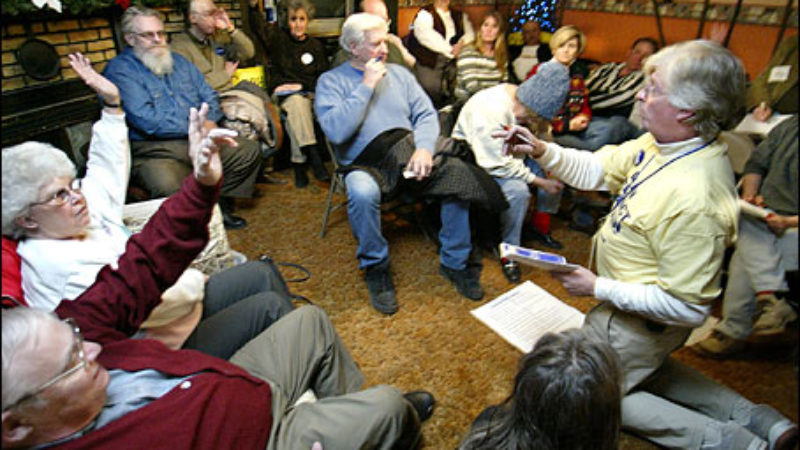
Recently I saw firsthand the County Durham selections for the 2013 local elections and I was surprised by how few people were involved in the selection of candidates, with a large number of selection meetings consisting of less than eight people. This is not a new problem, the regional media highlighting that during the 2010 leadership election areas such as the North East had relatively low party membership in relation to the level of electoral support for the party.

The steady erosion of the links between the party and our traditional avenues of support (along with declining membership) has left the door wide open for Primaries or a hybrid of the current method of selection, which could help the party re-engage with some of our most committed supporters giving them a stake in the Labour party and helping to inspire a true grassroots movement.

The argument against primaries and their variants often centres on the role of membership in our party and how primaries could alter the traditional role of a membership in selecting candidates.  Yet in areas where the party has receded but our support has not there is a clear opening for new ideas and new methods of selection to be tested. While membership would no longer be the sole force in deciding selections it could play a role with members forming an electoral college with primary voters to decide on the eventual outcome a selection, this could be applied to the selection of Prospective Parliamentary Candidates or Prospective Local Government Candidates.

Membership of the party would still be a requirement for candidacy however primaries would force potential candidates to actively campaign for selection giving local parties a much needed dry run for local elections and keeping our activist base on its toes even in areas of strong support. It could also be a powerful new way to convince active members of the community to transfer their support into membership of the party, helping further bolster local party institutions.

While there is no magic bullet to the problem of declining party membership there can be little harm in actively engaging local communities in the selection of their next Labour candidate through a more open system which includes the views of supportive members of the electorate.


  • Daniel Speight

    Craig, taking it that there was a ‘degree of exaggeration’, although if your local member was talking about either pre-war or shortly after the war then it’s possible, but on hearing how it was once instead of saying let’s again aim at being a mass party of the labour movement you instead want Labour to follow some American model where money will control selections.

    Why not say, ‘let’s rebuild a local Young Socialist movement, maybe start signing up kids who would like the help of an EMA?’ Really how much better would it be to let the Westminster political class take the local party activists out of the equation? This sounds like a charter for the apparctchiks and ‘red princes’.

    (And yes, I still remember when a much later version of the YS run discos on many council estates throughout the country.)

  • http://www.facebook.com/people/Mike-Homfray/510980099 Mike Homfray

    My concern is that reaching a larger audience may be easier for the professional politico with money, networks, time and contacts

  • Redshift1

    This is a terrible argument. Our membership may have dwindled but to accept that certain areas need to have primaries on the basis of low membership is just opening the door for well-heeled candidates from often outside these areas coming in and running an expensive selection campaign, and getting selected purely through bulldozering through more leaflets than their opponents because they have more money. 

    We need to active engage the public, not take party democracy in the one place we still have a decent degree of it, where the membership still gets a decent say – and degenerate it into what would be painfully less popular version of The X Factor.  

    • Alexwilliamz

      It also seems counterintuitive. If membership is low does that not suggest people are not interested in the party, why then would they want to register for a primary? It’s like those people who want to deal with the low numbers of young people voting by lowering the voting age. there is a very simple way of being a stakeholder in the party or to be involved, it’s called membership! You might then get a role in selecting the candidate too, just like a primary.

    • Alexwilliamz

      It also seems counterintuitive. If membership is low does that not suggest people are not interested in the party, why then would they want to register for a primary? It’s like those people who want to deal with the low numbers of young people voting by lowering the voting age. there is a very simple way of being a stakeholder in the party or to be involved, it’s called membership! You might then get a role in selecting the candidate too, just like a primary.

  • Quiet_Sceptic

    The article talks about actively engaging the community in selecting candidates but does the party even actively engage its members?

Latest

  • Featured Technology isn’t just something for geeks to worry about

    Technology isn’t just something for geeks to worry about

    If you Google ‘Ed Miliband,’ you quickly get the old stuff about him being a bit of geek. His appearance at Google’s big Tent on Wednesday almost begged the headline “Geek Goes Home”. But that assumes technology is just something for geeks to worry about, and that Ed is a techie. Neither are true. What we saw on Wednesday was a leader with the courage to tell Google straight that it should live up to its founding principles on the [...]

    Read more →
  • Featured Woolwich: The British people – and our politicians – have risen to the occasion

    Woolwich: The British people – and our politicians – have risen to the occasion

    “We want to start a war” – Woolwich attacker “right now it is only you versus many people, you are going to lose” - Ingrid Loyau-Kennett Only 24 hours ago, news began to trickle through about a barbarous crime, committed on the streets of our capital city, in broad daylight. It seems that the murderers who attacked and brutally murdered a soldier felt they were acting in a way endorsed by their religious beliefs and their god. But to try and [...]

    Read more →
  • News

    Labour NEC Report – 21st May 2013

    Party Organisation The General Secretary (GS) noted the party’s good performance in the recent Local, Mayoral and South Shields elections and thanked all members, activists and staff for their contribution to that success. The committee discussed the work of Blue State Digital who have been brought in to revolutionise the party’s use of new and social media as part of our suite of campaign tools. It was noted that Matthew McGregor, Head of Blue State Digital’s London Office and former [...]

    Read more →
  • News Labour’s London Assembly Leader responds to Woolwich attack

    Labour’s London Assembly Leader responds to Woolwich attack

    Following yesterday’s attack in Woolwich, Leader of the Labour Group on the London Assembly Len Duvall AM said: “The attack in Woolwich was horrific, the actions of local people in response and the head-teacher and staff at the school are a reflection of the values and strength of our community. “At this afternoon’s London Assembly Police and Crime Committee questions will be asked about yesterday’s attack and the response, and at a future assembly meeting we will come together to [...]

    Read more →
  • Comment If Labour is to build One Nation, it must be a safe and equal one for women

    If Labour is to build One Nation, it must be a safe and equal one for women

    Today End Violence Against Women (EVAW) releases a new report auditing the Government’s progress in acting to prevent violence against women and girls. And with the revelations from Operation Yewtree and group exploitation cases set to roll on for many months , we hope the response from Parliament, policy-makers and the media will be unanimous : that prevention must be at the top of the priority list for any government, of any colour, from now on. On that basis, it’s [...]

    Read more →