
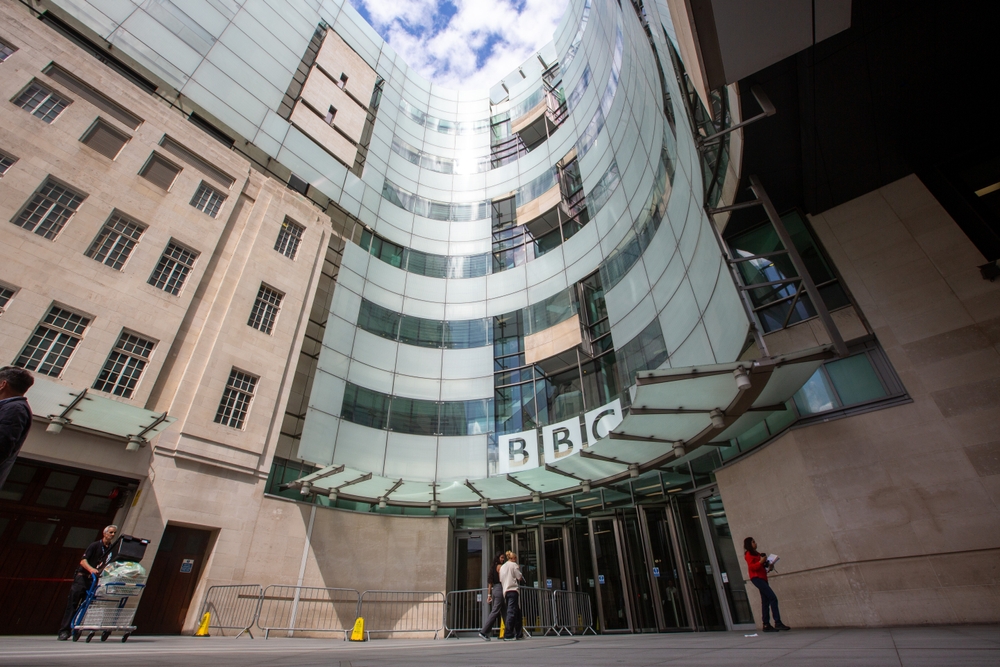
Now that the smoke has cleared on Bonfire Night, attention always quickly turns to Christmas. For many families, that means gathering around the television to watch some festive favourites, often on the BBC.
The broadcaster, even in the digital age, remains woven into the fabric of British life – and that’s certainly true for me too. Over the years, I’ve rushed home from school to watch CBBC, I’ve sat on the edge of my seat with my friends watching The Traitors, and they remain one of my go-to places for news each day.
For all its trials and tribulations (and yes, there have been many), the BBC has served the nation well over the course of more than a century – delivering on its original maxim to “inform, educate and entertain”.
However, in the age of streaming, changing viewing habits and tough economic decisions, I fear that the BBC we perhaps take for granted is at risk of becoming just another broadcaster, rather than the unique public asset that it is.
Become a friend of LabourList and join our community. Our friends support our vital non-factional work and get access to exclusive content and events.
The BBC is great value for money. The £180 licence fee helps fund the country’s most trusted news provider, pioneering science and nature programmes, free-to-watch coverage of domestic and international sporting events, children’s programming, and the truly priceless World Service. That’s not bad for around 50p a day – and that’s not to mention the BBC’s extensive radio network and local reporting from across the country.
However, the BBC’s recent struggles with funding have come at a high cost. The cuts have slowly chipped away at some of the things that make it so unique. The merger of its UK and global news channels has arguably left viewers here with a service less tailored to a UK audience, while the recent announcements of channel closures and the shelving of programmes in the name of cost-cutting raise real questions about what kind of BBC we want to see.
If the BBC is too busy trying to emulate its commercial competitors, it may soon lose sight of what makes it different. Its role as a public service broadcaster must always be front and centre: to provide programming that reflects the lives, interests and cultures of communities across the country, including those that might be otherwise overlooked by mainstream broadcasters.
Subscribe here to our daily newsletter roundup of Labour news, analysis and comment– and follow us on TikTok, Bluesky, WhatsApp, X and Facebook. You can also write to our editor to share your thoughts on our stories and share your own. The best letters are published every Sunday.
In an age of limitless entertainment through Netflix, YouTube and a myriad of other streaming services, it’s fair to ask what is the point of having the BBC. But at its core, public service broadcasters, like the BBC, don’t exist to line the pockets of shareholders, chase subscriptions or maximise profits, but to serve all of us.
That means children have access to entertaining, educational and age-appropriate programming. It means an ability to take on more risks in supporting new creative talent and tell stories that might not make sense for commercial rivals. And it means having news, sport and culture available to everyone.
Without that commitment, we risk drifting towards a landscape similar to the United States; a patchwork of privately-owned networks, dominated by large corporations and commercial interests, where public access to quality programming is far from guaranteed.
The BBC is a vital national asset and is, for me at least, as synonymous with Britain as Big Ben, the NHS and Buckingham Palace. It is far from perfect, and there will always be legitimate questions about how it spends its money and how it holds itself to account. But those arguments should be about how we make the BBC better, not whether we allow it to be diminished.
That’s why preserving the BBC, and ensuring it has the means to fulfil its public service mission matters so much. Whatever funding model is agreed when the Royal Charter is renewed, the principle should remain the same: an independent broadcaster that is properly funded and accountable to the public it serves.
If we lose sight of what makes the BBC special, we may eventually discover too late just how much we took it for granted.
-
- SHARE: If you have anything to share that we should be looking into or publishing about this story – or any other topic involving Labour– contact us (strictly anonymously if you wish) at [email protected].
- SUBSCRIBE: Sign up to LabourList’s morning email here for the best briefing on everything Labour, every weekday morning.
- BECOME A FRIEND: If you enjoyed this, why not consider becoming a Friend of LabourList? Help sustain our journalism, and of course Friends do get benefits…
- PARTNER: If you or your organisation might be interested in partnering with us on sponsored events or projects, email [email protected].
- ADVERTISE: If your organisation would like to advertise or run sponsored pieces on LabourList‘s daily newsletter or website, contact our exclusive ad partners Total Politics at [email protected].
LabourList Daily Email
Sign up to our morning email and get the latest news, views and comment from across the labour movement.