
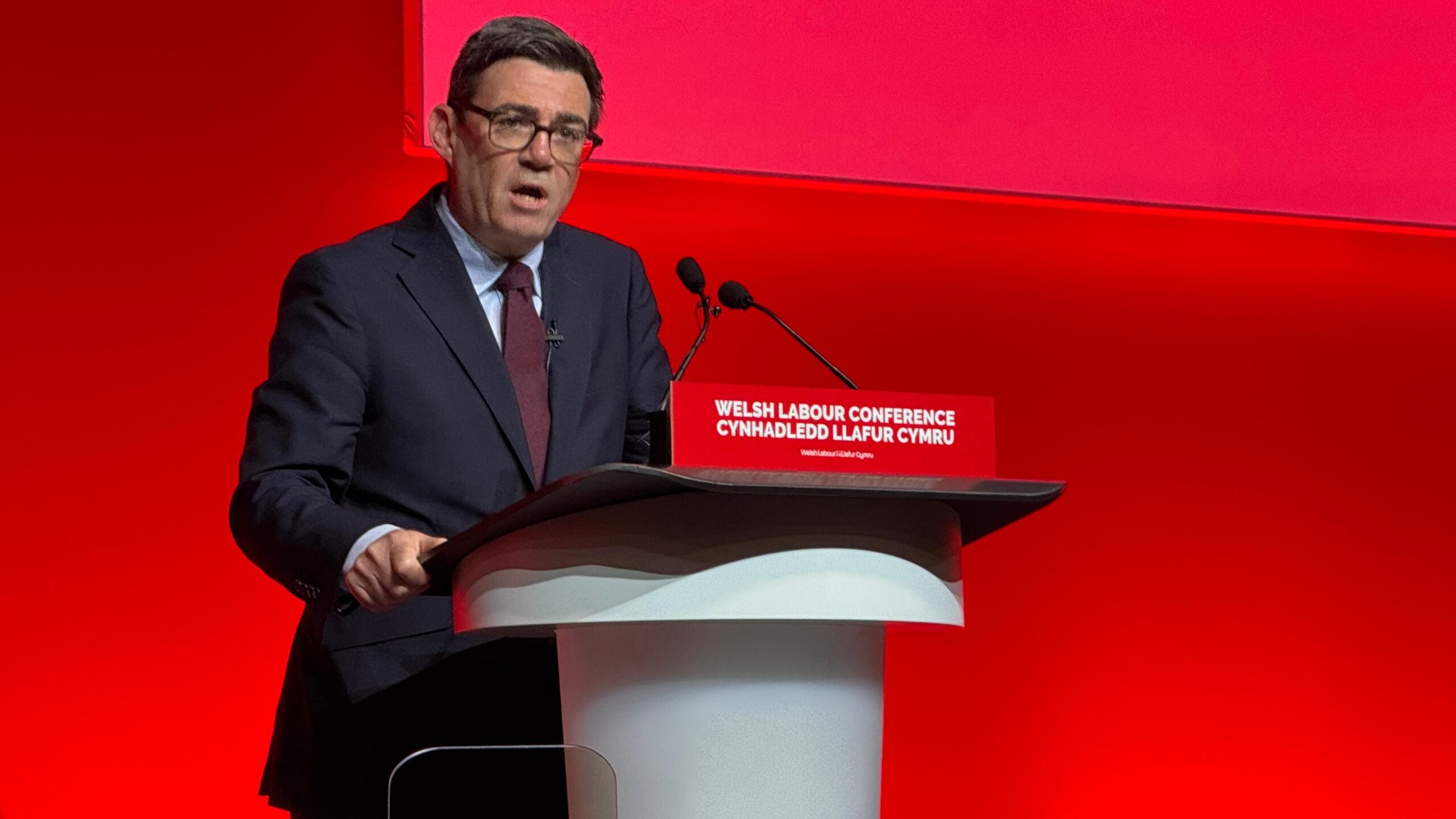
Thank you so much, everyone. Thank you, Ken. Thank you, everyone.
It is great to be here at my first Welsh Labour Conference. Thank you to the wonderful deputy leader of Welsh Labour, to my great friend Carolyn.
Four months in. Already, I’ve achieved a political dream. When I was a young man, there was something I wanted to see more than anything else in the world. A Kinnock around the Cabinet table.
In fact, I blame his dad for it all, really. I wouldn’t be here, I don’t think, were it not for him.
Well, it has finally happened, and Stephen, I’m so proud that you’re our Welsh Secretary in the Cabinet, and it’s great working with you.
And the next mission, actually, is world domination for the football club that Ken mentioned. The Prime Minister of Canada has already been to the Hill Dickinson Stadium with me. You may have seen that.
I’ve recruited the Prime Minister of Australia to the cause in return for supporting his rugby league club, Sydney Rabbitohs, but it’s a fair deal. So he’s, he’s in as well, in as well.
So the next mission, of course, is to get the Everton supporting leader of Welsh Labour as First Minister of this great nation.
And Ken, you and I are absolutely in lockstep, in lockstep on that, on that mission.
It’s been a hard year, of course, hard year in terms of the elections that you fought. But we’ve got one job to do today – to make sure the fightback starts in earnest here.
Listening, learning, coming back stronger. And that’s what we will, we will do. We’ll do that together. UK Labour, Welsh Labour, working together.
I know North Wales so well from my childhood. So many of us came here from the North West all of the time, and you know that. But I’ve got to know South Wales very well with my daughter just having graduated from Cardiff University. I love the place, I love the people, I love everything about, about Wales.
But it was my last visit here that left the biggest mark on me, and one that I feel today as I talk about it.
A few weeks ago, I had the privilege, and it was a privilege, of visiting Aberfan as the community marked 60 years since the disaster.
Growing up, I’d heard about it from my mum and dad, and they would talk to me about what happened to the children in the school. The families whose lives were shattered, the terrible injustice of it all, the warnings that were ignored, a tragedy that could have been prevented.
But going there with Stephen was something else, actually. Hearing it from people as though it was the very first time, ’cause that’s how they spoke about it.
The unimaginable. A parent who had watched one child grow up, having lost another. A woman who was just a child herself in the school on that day. A teacher who saved the children in her class, only to face the heartbreaking task of identifying those who’d lost their lives.
What came over more than anything on that day when I visited was the awesome strength of the community. That’s what came over to me. Incredible strength, dignity.
And the thing is, it wasn’t just the injustice of the tragedy and the warnings ignored. It was the appalling way in which the community was treated in the aftermath by the powers that be.
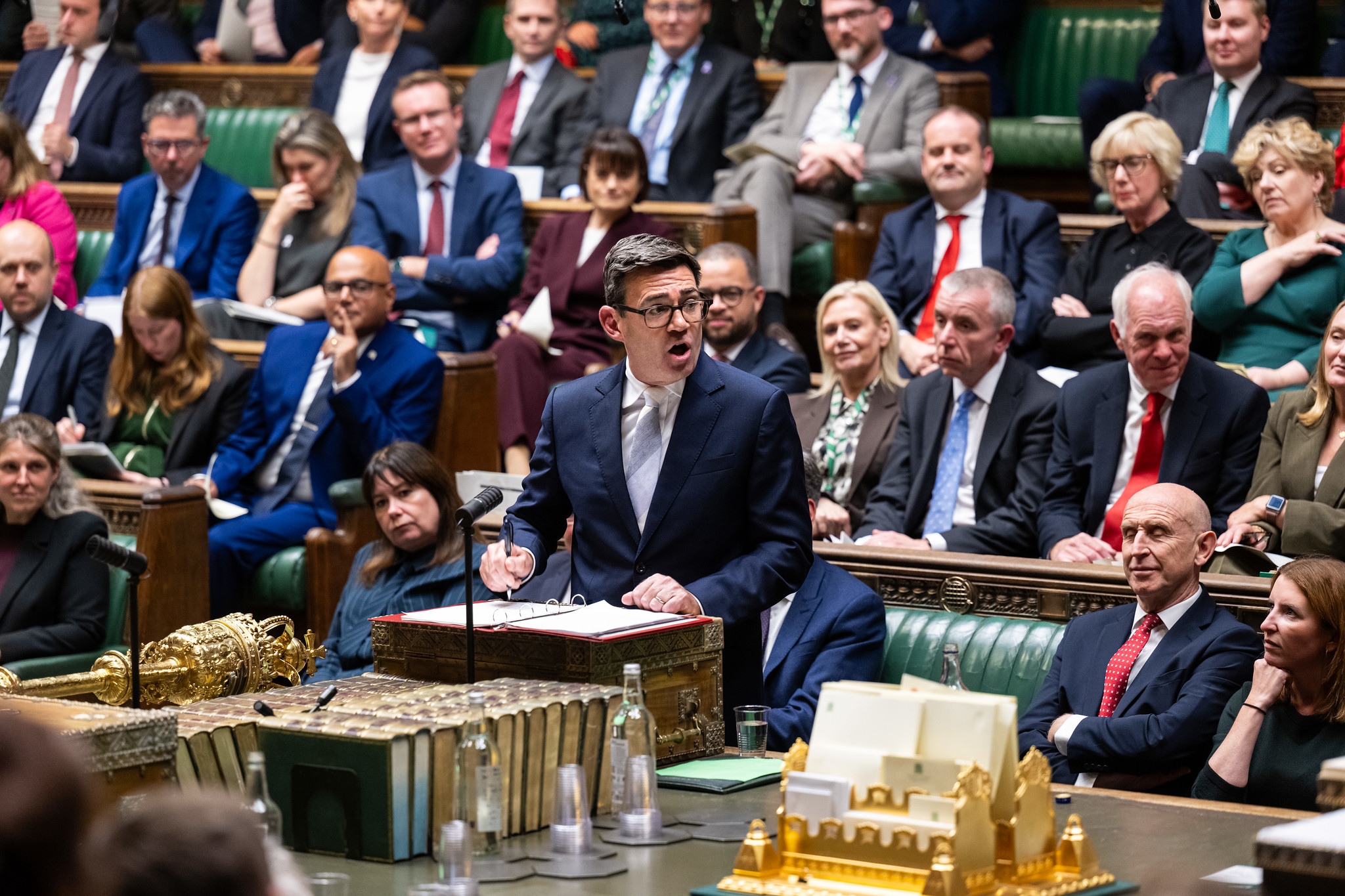
I said sorry for that from the despatch box in the House of Commons on the 60th anniversary, and I meant it. I meant it.
’Cause I know the people of Aberfan helped the Hillsborough families as well. And I thank them for that. They passed the torch to them.
And, you know, that, that fight has been a big part of my politics, and the change that it brought in me in terms of understanding the unfair way in which this country has been run, the United Kingdom, how working class people and working class communities have been treated, even in the moment of disaster.
It changed me, my work with the Hillsborough families. But I do trace it back to what happened to the proud people of Aberfan.
And we commit, don’t we, together, to fight for a fairer country where communities are not treated like that, where they have more power to fight back, to do things for themselves.
That’s what I believe in. A country where all people, and all places, are treated equally, fairly, and with dignity. And that’s what I am all about as Prime Minister, and that’s what I will work with you to bring across Wales.
How did they fight? Well, you have to go back, don’t you, to where this country was in the postwar period.
It came, obviously, from the character of the Welsh people, but also from industry. Our communities had a resilience about them because of the good jobs that there were in communities across Wales. And it is right across Wales.
Those jobs gave people security, but more than that, much more than that. I’m gonna get this wrong. Cynefin. Have I got that right? Nearly. I have to look to the Welsh Secretary for approval when I try and speak in Welsh.
But it’s a great word, because I feel I know what it means. A deep sense of belonging. Deep sense of community, connection between people and the place they call home.
And that is exactly what Wales had in communities across the country, still has because it’s still, it’s still there. It’s still there today.
The workplaces that created a way of life, the social infrastructure that we took for granted, the working men’s clubs, the sports teams, the choirs, the trade unions. People came together, looked out for each other. It’s still there.
But let’s be honest, this country took some wrong turns in the 1980s that shattered the way of life for communities up and down Britain. Economic power privatised, political power centralised.
And overall, a loss of agency in places up and down Britain. The mines closed, factories closed, steelworks silenced. It was felt everywhere.
And, you know, that has kind of left us for 40 years in a place where communities haven’t had the power that they needed to turn things around.
And I know this because it’s the story in many ways of the North West of England as well. The part of the world that shaped me. You know, I was in my teenage years when those industries were disappearing, when Neil was fighting for those communities.
And that is what forged my politics. How could it be right that a way of life was taken away, and nothing was done to help those communities with the transition, to build back better, better jobs? They were just abandoned.
I remember going past Parkside Colliery, where I grew up, during the miners’ strike, bringing tins of food into school for the, for the dads who were out on strike, food for their, for their kids.
It’s what we did and it’s what Wales did too. We were the front line of Britain’s proud industrial history.
Welsh coal powered the Industrial Revolution while steel helped build the infrastructure of the modern world. A generation of Welsh workers created wealth that reached far beyond the places that they called home.
But when those industries declined, when there was money to be made elsewhere, they were forgotten.
And that is something that has never, has never left me. And that’s what I’m determined to change as Prime Minister.
My vision for Wales is as a reindustrialised nation with revitalised high streets and empowered communities. Good jobs, evenly spread, all over, with all of the benefits that comes from that. Communities able to do more for themselves, more power in every Welsh postcode.
That is what I want to bring about working with you. And I believe we can do it, because we should be proud, actually, of all of the time that Welsh Labour was in the Senedd. We should be proud of what we did to build a modern Welsh economy.
You can see it if you look around Wales. Nuclear, advanced manufacturing in North Wales. One of the world’s leading semiconductor clusters in South East Wales, floating offshore wind in the Celtic Sea, agricultural innovation in Mid Wales.
You can see it all over, but we know Wales could be more. We know we can turn that into much more.
The people, the talent, ambition, it’s all there, but too often, as we know, decisions are taken elsewhere without Wales in mind. And that doesn’t enable us then to unlock the potential of the people and places of Wales, and you can feel that.
There is potential, but it’s not fully realised. And it brings me to how we make this happen. This is what I want to talk about today.
UK Labour, working with Welsh Labour, to bring a vision forward that the people of Wales deserve. Because reindustrialisation is the goal. And empowering Wales’ people and places to get there is what we’ll, what we’ll do.
Because that then means taking devolution further.
As I said a moment ago, we should be immensely proud of the things that Labour achieved in power in Wales. Free school meals. In many ways, you led the way. You had policies here that the mayors in England, for sure, said, “Well, yes, we should follow that.”
I remember when Mark put such a focus on young people leaving care, and we said, “Yes, we should, we should do that too.”
Free prescriptions, Flying Start, you know, when, obviously, Sure Start was dismantled by the Tories. You know, Wales fought back in power. And we’re proud of that.
The creation of Transport for Wales, public transport under public control. When I was Mayor of Greater Manchester, Transport for Wales were the best rail operator I had in Greater Manchester. And we took inspiration from that, as then we called for the renationalisation of our rail system, and that is coming through.
Often, it has been Wales that has led the way. Just as Wales led the way in the past, the vision of a National Health Service forged here in the valleys of Wales. You have shaped policy and a vision for a fairer UK.
And I want to say thank you to the leaders who made that happen. I remember working with Rhodri many years ago, but the ones I’ve worked with in modern times, Carwyn, Mark, Vaughan, Eluned. I worked with all of them, and I’ve seen the difference that’s been made.
So much to be proud of, but also, let’s be honest, we’ve got to also listen when we need to listen and hear what the public have said.
Somewhere along the way, perhaps we lost sight of some of the principles that drove devolution in the first place. Probably stopped listening as much as we should have, and actually stopped driving power right down into every Welsh postcode, which is what the vision really, to me, should always have been about, about people and places.
So for the first time in, in its history, Labour is not leading the Welsh Government, and that’s a hard thing for us all to have to accept. But accept it, we will, and come back stronger.
And we will come back together with a vision for a stronger Wales within a fairer United Kingdom. And that’s what I’m trying to lead with you as your, as your Prime Minister.
And I will always make the argument for Wales within a fairer, more equal United Kingdom. I always say to people that their voices matter. And when they make themselves heard in the way that the people of Wales did, you can’t look away. You have to listen, take stock, and commit to doing things differently.
I’m always one for saying, “Let’s do politics differently.” It doesn’t connect with people as much as it should.
And I’m taking the way I approach being Mayor of Greater Manchester into my work as Prime Minister. Let’s be place first before we’re party first because, at the end of the day, that is what people expect.
They expect us to work for them in their places and put that before anything. So we will go into this next phase with that spirit, problem solving rather than point scoring. I think that is the way to go because it’s what the people expect.
It would be the worst response, wouldn’t it, just to be blaming everything and blaming others? What you do is you come back and you come back in the right way, and that’s what we will, we will do.
And I’ll say more in a moment about how I will work with the Welsh Senedd government so that we take forward the, the improvement of our communities here.
So, that’s what our mission is ahead of us, and it’s also what we started, and we’ve got to get a vision together now, working with Ken and all of his colleagues, working with our brilliant Members of Parliament. Many of them are here today.
What I want to achieve more than anything is the sense of a one Labour team for Wales, where we’re all pulling in the same direction, where I’m pulling with you, not creating problems for you or going against what Ken and colleagues want to achieve, with our Welsh PLP.
You know, everyone signed up and on the same page. That’s a proper fightback, isn’t it? When you’re in that position and you’re working like that.
One Labour team, backing Wales at every, at every level, and all of our councillors too, who we know face challenging elections next year. The best thing we can be is one team behind you with one clear vision for your community that you can feel proud and take to the doorsteps.
So that’s what we’ll do, everybody, and we will go out there, we will go further, we will go deeper, and we will put forward a vision for communities up and down Wales, as well as giving Wales a stronger national voice.
None of this is about devolution for its own sake. It’s about what works.
And I know, as the former Mayor of Greater Manchester, what happens if you put power in the hands of people at the local level. It allows you to do so much more to bring out the full potential of the place, giving young people the feeling that they can have a good life in the place where they grew up, families seeing the difference too, bringing those good jobs and good growth to every postcode.
But what I also know what I’ve got to do is help people now. And I, I’m in no doubt whatsoever. Cost of living is the top issue here in Wales, as it is in all parts of the UK.
And we’ve got to be relentless in bringing down the cost of living, to make sure we make life more affordable for people. We take that pressure off their shoulders. We give them the breathing space that they need to have a good life again.
Not worrying about whether they can have a night out or a holiday with the kids. Our job is to get that cost of living down in any way that we possibly can. And we will take those decisions at a national level to show that we mean what we say.
For instance, the first thing I did was take VAT off electricity bills. And that is having a benefit, a small benefit, but a benefit to people here in Wales.
At the Budget, we put forward at the UK level a plan to take money off council tax, a £100 rebate that will land in people’s bank accounts early in the new year by taxing the banks.
That’s what Labour should do. People helped the banks in the tough times when the banks needed help. And in this moment, when people need help with the cost of living, it is right to ask them on a temporary basis to pay a little more to help people and to help communities.
So I’m pleased that the Welsh Government has taken the funding that has been made available as part of that to make the same benefit available to people in Wales too.
And we do need to go further. Today we’re announcing that some of Britain’s biggest employers, including BT, M&S, and Home Bargains, are joining our workplace savings initiative.
We’ve come up with a whole range of other things, smaller things to help people in their everyday lives. I can say this to you today. I can confirm that we will remove the standing charge from gas bills in the new year. And we will make sure that benefits every single person in Wales.
I’m not going to stand here though, friends, and say that all of these changes are enough. They’re not.
We need to do so much, so much more. We need to be willing to take difficult decisions to get the cost of living down.
It’s why in a few days’ time, I will head to the next UK EU summit. And I will be working hard as we move towards it to get to a new deal on food and farming between the UK and the EU.
Why am I doing that? Because I want to help Welsh businesses. I want to remove some of the red tape that food exporters here face when they are seeking to send their products abroad.
But more than anything, I’m trying to get prices down. Food prices down.
And if we get the right deal, that is what we will do, as well as reduce costs for businesses. And overall, get more growth into the UK economy, up to 0.4% on GDP.
Why wouldn’t I do that as Prime Minister? Why wouldn’t I lead in that, in that way?
We’ve got the Conservatives who were standing out against it, saying no change. Well, I don’t believe Brexit and the deal that they got has been good enough for Britain. I think we’ve lost more than we’ve gained over the last 10 years.
And actually, I think the Conservatives gave Britain a harsher and harder Brexit than people thought they were getting when they voted in 2016, because they burned all of our bridges in the aftermath with the EU.
And so I’m going to lead as Prime Minister on this issue. And I’m going to go and try and get the best deal I can for Wales, for those here who could benefit, Welsh farmers, exporters of Welsh shellfish and Welsh lamb. That’s what it will mean.
And that is Labour working on a practical level to help people in the here and now, to put more money in their pockets, to remove red tape from our businesses.
And we need to, obviously, then go further too, and show how we’re willing to reach out and work, work with people. And that’s what I’m trying to do now, working with the Welsh Senedd government.
I want to develop a model of devolution that goes further, that doesn’t bypass the Senedd, but goes through it and works with it to make sure it benefits all places.
It’s not about copying and pasting what’s been done in England, because that wouldn’t be right. You’ve got to have a model of devolution that’s right for people, people here.
But it does mean going further. And it does mean powering up the councils of Wales and also the regional partnerships that you’ve got. And it’s got to be right for the different parts of Wales.
I will take power out of Westminster as Prime Minister, and I will put it into all parts of the United Kingdom. As I say, every single postcode.
And that, I think, is where we have a different vision from Plaid. But it’s an offer that I will make on the table.
I want to show how, in this role, how being in the UK is good for Wales because of the partnership that we can develop together, and how Wales is stronger working in that way with us.
But it doesn’t mean I won’t work with people where we can make a difference, a difference now.
I think our shared job is to build Wales’ strength, not put walls around it, because I know here, and I know this from working with Ken over many years, North Wales is bound up with the North West of England. You can’t separate the two. The economy is linked together.
People cross the border every day going to work. You know, if you take a view that that border is, you know, a line that separates people, then, really, you start to lose if you take that mentality, because the reality of every, of people’s everyday lives says, says something different.
And the same is true of South Wales and the South West of England. Again, the economies are bound up together. People’s jobs depend on working together and collaborating.
And that’s our approach, and it will always be our approach. People working together in unions, trade unions, but also unions of nations, and that’s what makes us who we are.
And yes, working with the European Union, as I said, but at the same time, respecting the red lines in our manifesto and respecting the referendum, the referendum result.
So that’s the spirit, everybody, that I will take forward. Working with Wales as equal, as equal partners.
And I know there is something that I can do to make a real difference. The First Minister and I started having that conversation at the National Economic Council meeting last month.
And I’m happy to say we agreed how the UK and Welsh Government can work better together. Collaborating on issues such as regional empowerment here in Wales. How do we put more power into those partnerships?
Reindustrialisation, as I’ve said. It was a great pleasure to visit Port Talbot in the summer with Stephen and see what’s being done there to put in place the new electric arc furnace.
Now, I know how hard it’s been for the people in that area. And I got, for the first time, the scale of the steelworks site, absolutely vast, and you realise, you know, the impact on the community of any change to what happens.
But this is a Labour government doing what wasn’t done in the past in Wales, helping with industrial transition and helping build a new future out of a proud past that Port Talbot has.
And I want to do that more broadly and make that vision of good growth in every postcode a reality. And it does also mean working to support young people and rethink how we help young people into jobs.
Next week, we will see Alan Milburn produce his report. And as he says in his own words, he’s not just talking about youth unemployment.
Sadly, we’ve seen a phenomenon grow post-pandemic of youth detachment. Of too many young people feeling lost in their 20s and feeling there’s no alternative other than benefits.
Well, we can do better for them. We are going to bring forward a vision around rethinking childhood and reimagining youth in terms of the support that we, that we give them.
It can’t be right that we’ve stripped support away from young people as a society, as life was getting harder for them, and growing up was getting more difficult. But that’s what is what has happened.
So it will be about putting in place the support that people need in the early years of life, in the school system, and a vision for schooling that is about academic and technical together, not solely focused on the university route, as it has been too much under governments in the past.
Strong technical paths for our young people. Mental health support when they, when they need it.
We will guarantee that support for young people, but we will also have an opportunity guarantee for young people so that we invest in their success rather than paying for failure for many years to come, and we’ll work to make sure that that happens in Wales too.
I want to open a conversation with the First Minister as part of the devolution drive to have much greater devolution of employment support. So that we allow communities here to create those paths into opportunity for young people, those technical paths linked to local employers.
And that is something I’ve put on the table. And I’ve asked Number 10 North to work with them, to see if there is a vision for the devolution of full devolution of employment support.
There is some, but I think we can go further. And I’ve put that on the table, and we’ll see if something can be agreed.
And I think it’s something we should, we should work together on. Putting ego aside, reaching out, working together, problem solving rather than point scoring.
This is the way we’ll come back, everybody. We’ll come back in the right way.
Welsh Labour today is sending out that clear message. We’re rebuilding, we’re coming back in the right way, having, having listened. But we will be stronger with Welsh Labour and UK Labour working together. That’s the partnership that always will underpin us.
And we take, we take all of our spirit in this fight, and I’ll go back to where I started, from the people of Aberfan.
What did they do? They stood together as a proud working class community, and they fought for what is right. A country where working class people are treated properly and fairly.
And they were right to lead that fight, and I salute them in the way that they carried it forward all of those years. And they did pass the torch to the Hillsborough families, who carried on that same fight for a different country.
A different country where there is justice in the way people are treated, and the country at the national level never turns its back again on any part of the UK.
You know, how could an English city have cried injustice for 20 years, and the powers that be just simply ignored them? How could the proud people of Aberfan be just left in the way that they, in the way that they were, in those years fighting for what was right?
That has been the country that we’ve lived in. And being part of that fight with the Hillsborough families changed me and it changed my politics.
I am all about rewiring the UK to make it work for every person and every place, in every postcode. And that’s what I’m here to do, to work with you. To get more power in every Welsh postcode.
That is the mission that we agreed together and we will deliver it together. And let’s carry that spirit into next year’s elections.
They will be tough, but I’ll be there with you, fighting for what I’ve said today, putting that positive vision over to the Welsh people, empowering all parts of this great country.
Welsh Labour, listening, learning, coming back stronger, fighting back. That’s what we’re going to do, everybody.
Thank you so much for having me here at my first Welsh conference.
Diolch yn fawr.
Good luck.
And let’s rebuild Welsh Labour together.
Thank you very much.
LabourList Daily Email
Sign up to our morning email and get the latest news, views and comment from across the labour movement.