
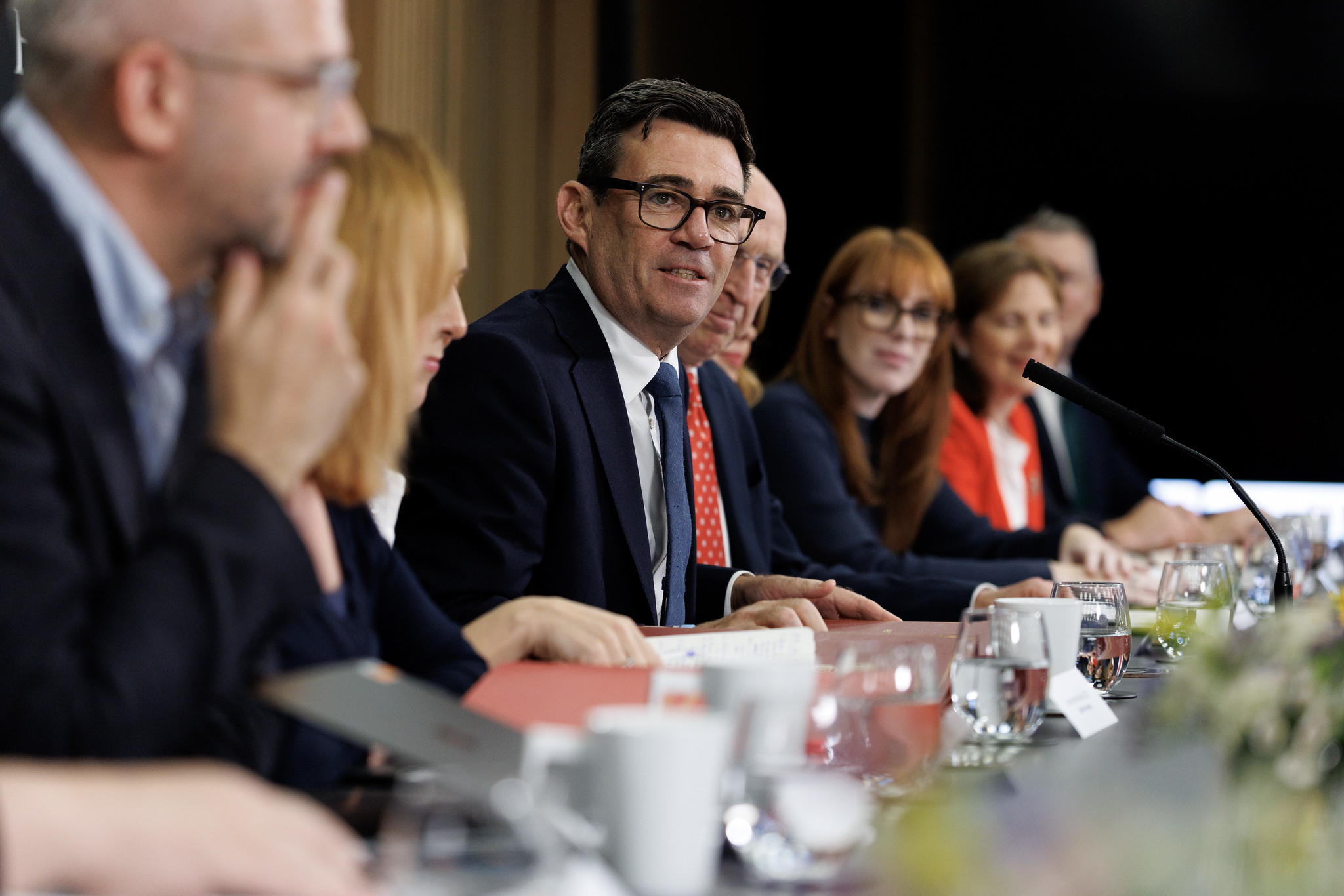
Andy Burnham has promised to end 40 years of neoliberalism. In the upcoming 10-year plan, we need to see the building blocks put in place to make this ambitious goal a reality.
For too long, shareholders have raked in huge profits from essential services while people face soaring bills, creaking infrastructure and declining living standards. The next decade must be about reversing that trend.
Here’s how Andy Burnham’s 10-year plan can achieve this.
Public ownership of water and energy
Crucial national infrastructure must be run by and for the British people: this is a moral, economic and national security imperative. The disastrous experiment in selling off national assets to the highest bidder has left us poorer and more exposed.
The government’s upcoming Water Bill is welcome, but those measures must be the beginning, not the end, of root-and-branch reform.
After decades of rising bills and raw sewage in our waterways, it’s time for a democratic and accountable alternative to our water system. As the think tank Common Wealth has identified, public services that become profiteering ventures cost consumers a substantial “privatisation premium”.
Public control is not enough. Years of scandals and failure have discredited the privatised model: we need public ownership, with greater ability to lower bills, reinvest in faltering infrastructure and a built-in flexibility to mitigate climate stresses.
Great British Energy is a crucial foundation for a more secure future, but the 10-year plan must lay out the steps our government will take to turbocharge the green energy revolution.
We must make the argument that the green transition is necessary, but also that British households can reap the benefits. Amid ongoing global conflict, it’s clear that energy is too important to be left in the control of volatile markets and private interests.
Since Burnham came to power, he has cut VAT on electricity bills and provided a one-off £100 payment to ease the burden on many households. These were necessary and popular choices, but more action is needed.
The energy price cap is set to rise by 26 percent in January, one of the largest increases in history. No one should be forced to choose between eating and heating. The Government must provide more support while building a publicly-owned energy system and promoting Britain as a clean energy superpower.
The affordability agenda
The success of Burnham’s time in power will be measured through quality of life: do the British people feel poorer under a Labour government?
Around 14 million people live with food insecurity in Britain. No one should be going hungry in the fifth richest country in the world. The government must commit to enshrining a ‘Right to Food’ into law so everyone is entitled to safe and affordable access to nutrition.
But, as well as preventing some of the darkest symptoms of poverty, a Labour government must be prepared to use all powers at its disposal to bring costs down for working people.
Economist Isabella Weber has written compellingly about affordability as an anti-fascist economics: defeating a right-wing politics of hopelessness by ensuring people’s basic needs are met. Deep thinking about low costs for consumers and public service excellence should run through the 10-year plan.
Implement the New Deal for Working People in full
Since coming to power in 2024, Labour has delivered the biggest expansion of workers’ rights in a generation, thanks to the tireless work of trade unions, activists and campaigners across the labour movement.
From repealing the Tories’ anti-strike laws to making the road to union recognition smoother, there are several causes for celebration. We must, however, go further and faster in delivering an even bigger uplift in employment rights.
This includes a full ban on employers adopting fire and rehire practices, universal workers’ rights from day one and guaranteed work hours to replace zero hour contracts.
Moreover, we must make it easier for trade unions to engage in sectoral collective bargaining – as is being spearheaded in the social care sector.
It is not just an integral part of any affordability agenda, it is a moral question, and a question of what it is to be Labour. The more tools workers have to be able to advocate for a better deal, the more ability trade unions have to organise sectorally, the smaller burden there is on government to redistribute in different – politically messy – ways.
Tax extreme wealth
A bold and distinctly Labour 10-year plan should include transitioning to a fair and redistributive tax model, including wealth taxes on the very richest. This could help fund the mass investment in public services, housing and infrastructure our country desperately needs. We cannot keep telling those at the bottom of the ladder that there is no money for the things they rely on while ignoring the large pockets of wealth at the top.
These are not isolated policy demands. They are part of a bold, democratic socialist vision about the kind of country we want to build. They are how we make essential services work for the public, how investment serves long-term needs and how the wealth that is created can be shared more equally.
The Labour Party was founded to transform the British economy in the interests of the working classes. Now, in government, it’s our responsibility to put this founding mission to work.