


Today Andy Burnham will chair a Cobra meeting looking at the impact of the extreme heat on areas as varied as our emergency services, our food supplies and our NHS. He also faces continued pressure around the early release of prisoners scheme.
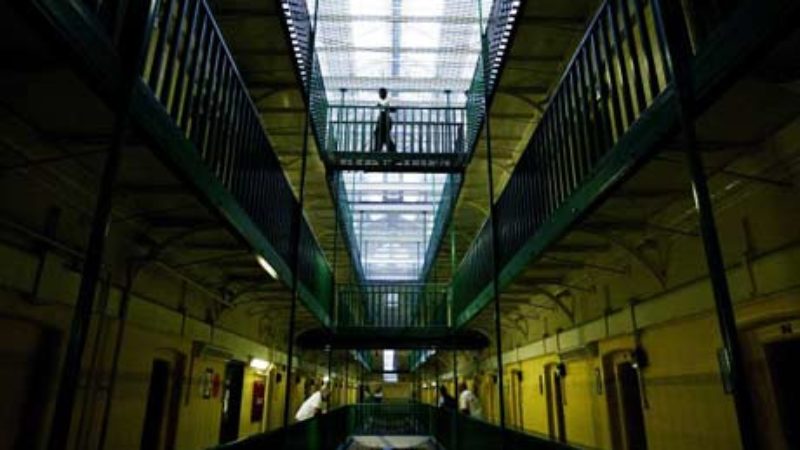
On the surface these two issues could not seem more different. One is about the effect of climate change that will continue to change the literal and political weather, the other is about the creaking prisons estate and the fact that we literally can’t lock up everyone given a prison sentence for the full period specified.
But dig deeper and these crises do have something in common. Our inability to deal with them is the result of decisions made long ago that have left the UK’s increasingly ageing infrastructure out of date, out of capacity and a long way from what is needed for a modern country.
This is what the PM means when he talks about the failures of 40 years of neoliberalism and the wrong turn made in the 1980s and from which successive governments have not truly turned back.
READ MORE: When nothing works there’s lots to fix
The wave of privatisation of public utilities meant that water companies have failed to build long term reservoir capacity. The lack of proper oversight from regulators and companies prioritising short term shareholder profit can all be traced back to the 1980s sell off.
Prison capacity too is a result of poor long term planning exacerbated by short term politics. “Prison works” said Michael Howard. Well maybe – though what is meant by ‘works’ here is contested when it comes to rehabilitation and reoffending. But British politics having pursued an ever more carceral approach to crime – cheered on by the very same right wing newspapers now screaming at the PM about the early release scheme – was never matched by the much less popular decision to build a modern prisons estate. Building prisons is a lot less popular than locking up criminals. And neither the Tories nor their cheerleaders were willing or able to take the pain of those longer term decisions.
I was thinking about all of this as I read James Tibbitts’ report on the National Policy Forum yesterday. He referenced Starmer’s phrase “fixing the foundations” and the problem with this as a doorstep narrative. James is right, of course. But so too was Starmer in his diagnosis that what was needed in Britain was to rebuild the basics – to fix the fundamentals of our broken state.
Burnham is only one month into his leadership but has thus far proven more interventionist than Starmer was prepared to be. While both have the same diagnosis of the broken state of our public services I think there is a difference in their approach to the cure or management of the symptoms. Starmer’s approach was to make vital but small interventions across the piece but rarely addressing the journey that had brought us here. Starmer fundamentally did not believe that Britain is “broken” and his approach was to make the state we have work better in many different ways but not to go deeper under the hood.
Become a friend of LabourList and join our community. Our friends support our vital non-factional work and get access to exclusive content and events.
Burnham is much more willing to go further in terms of his rhetoric. He does talk more about the underlying causes of our multi-crisis and is actively talking about changing the fundamentals rather than fixing the foundations of the system we have.
These approaches are politically very different. But equally are both journeys that can be started from the basis of the 2024 manifesto. That manifesto offered a lot of Burnham and Starmer’s shared diagnosis of the problem and set out areas of work to be done. The level of intervention, ambition and activity within that framework is what differs in their philosophy and approach.
Politically, Andy Burnham is under a great deal of pressure to deal with Broken Britain crisis by crisis. To play a game of political whack-a-mole – today prisons, tomorrow reservoirs, next week – who knows? And he will need to do a certain amount of this. Politics does have shorter timeframes than decay. Here the policies proposed by the NPF will be vital as a lot of hard work has already been done by Labour members on how to deal with areas as diverse as clean water and power, the NEETs crisis and asylum policy.
But in the longer term, to end the multi-crisis, we have to address the ways our systems, society and state have been shaped to allow us to reach this point. That has to be the long term mission of Burnham’s Labour and the story we continue to tell.
Subscribe here to our daily newsletter roundup of Labour news, analysis and comment– and follow us on TikTok, Bluesky, WhatsApp, X and Facebook. You can also write to our editor to share your thoughts on our stories and share your own. The best letters are published every Sunday.
-
- SHARE: If you have anything to share that we should be looking into or publishing about this story – or any other topic involving Labour– contact us (strictly anonymously if you wish) at [email protected].
- SUBSCRIBE: Sign up to LabourList’s morning email here for the best briefing on everything Labour, every weekday morning.
- BECOME A FRIEND: If you enjoyed this, why not consider becoming a Friend of LabourList? Help sustain our journalism, and of course Friends do get benefits…
- PARTNER: If you or your organisation might be interested in partnering with us on sponsored events or projects, email [email protected].
- ADVERTISE: If your organisation would like to advertise or run sponsored pieces on LabourList‘s daily newsletter or website, contact our exclusive ad partners Total Politics at [email protected].



More from LabourList
Healey’s pre-Budget headache
‘Public water, local power’
SPONSORED: ‘Partnership is the key to making devolution deliver Northern growth and UK prosperity’