

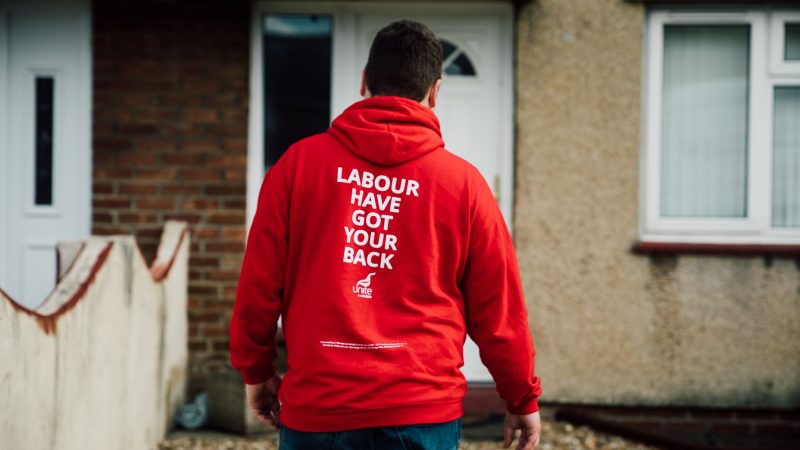

Political ideas shouldn’t just change what we campaign for. They should change how we campaign. So if “Burnhamism” represents an emerging political project, what might campaigning under it actually look like?
Start with the local
Burnham’s politics is rooted in place: Greater Manchester, devolution and the belief that decisions should be made closer to the people affected by them.
Campaign Lab’s work keeps finding evidence for the campaigning equivalent of this.
We’ve studied thousands of conversations in local online communities. Again and again, we find that people’s political worlds are intensely local. In our research into more than 1,000 local Facebook groups, local news was shared around five times more than national news. People talk about buses, parking, crime, GP appointments, their high street and what their council or MP is actually doing.
In our 2024 election experiments, ads featuring local candidates consistently outperformed ones featuring the party leader. In another experiment, 92% of scans of a QR code about a school petition came from within 400 metres of the site. The closer politics gets to people’s actual lives, the more interesting things become.
Our work with MPs’ offices points in the same direction. People value representatives who are visible, responsive and connected to their place.
Yet our campaigning infrastructure is often designed in the opposite direction: create a national message, centrally produce the assets and distribute them downwards.
A politics of place needs campaigning tools and practices that start locally too. We need to build tactics and processes that help MPs, councillors and activists listen to their communities and respond to what actually matters there.
Treat relationships as political infrastructure
Watch Burnham campaign content and another thing stands out: other people are everywhere.
On a recent visit to Cardiff, he simply sat down in the middle of the city centre and talked to people. His videos frequently involve conversations and encounters rather than a politician delivering a monologue perfectly to camera.
That matters because trust is relational. Trust is becoming the meta-commodity every modern politician needs to build: trust that you understand my life, that you listen, that you will tell me what you think and, crucially, that you might actually do something.
People don’t experience politics only through politicians. They experience it through friends, neighbours, community figures, campaigners and the people they see doing things around them. Our own research increasingly points in this direction too: personal forms of outreach and direct candidate contact show promise in creating lasting persuasive effects.
Progressive campaigning has become extremely sophisticated at broadcasting at people. The next generation of campaigning needs to become much better at creating relationships between them.
Similarly, in a world awash with endless AI content and increasing misinformation, building trusted messengers across our politics becomes all the more important.
Understand that new mediums create new politics
Burnham also takes new communications mediums seriously.
One of the best examples of this is his response to a video that went viral when a woman had booked to get married at the new Number 10 North and was jokingly complaining that Andy Burnham creating Number 10 North might make her big day difficult with all the security. Burnham responded, she then invited him to her wedding, and then Burnham sent her a message for her wedding day. The story of this interaction generated several viral TikToks.
It wasn’t a policy announcement. It was local, funny, human, and made for the medium. More importantly, the content provides a definition of who Andy Burnham actually is through a decision and a moment he created. Often politicians can struggle if people can’t recall the smaller stories that give them a sense of who someone actually is.
His wider willingness to prioritise his own video channels and challenge some of the conventions around traditional press access comes from the same instinct. TikTok isn’t simply another place to upload a television clip. New mediums have their own language, characters and rules. Progressives need to learn them.
Attention has moved towards creators, podcasts, group chats and short-form video. At Campaign Lab’s Campaign Fringe in Liverpool, our Beyond the Algorithm session, featuring contributions from MP Gordon McKee and Andy Twelves, asks what it takes to build authentic voices people actually trust in that new landscape.
Remember that campaigning changes what is possible
Finally, Burnham’s politics has been shaped by campaigns themselves, perhaps most obviously Hillsborough and the long struggle to force institutions to confront injustice.
At our first ever Campaign Fringe back in 2024, we ran a session called Wrestling Justice From the State: Using Public Inquiries to Uncover the Truth and Campaign for Change, bringing together Hillsborough Law campaigners and Covid-19 Bereaved Families for Justice UK.
These campaigns are reminders that politics isn’t simply something done by politicians. People organise. They tell stories. They build relationships. They apply pressure. They keep going when institutions would prefer them to stop. Eventually, they can change what the state considers possible. They represent something fundamental about politics: that it is not done to people but by people together. Because campaigning isn’t external to governing. Done well, it creates the pressure, permission and possibilities that allow politicians to act.
That, perhaps, is the campaigning practice most suited to this political moment: rooted in place, built through relationships, fluent in new mediums and relentlessly focused on doing things.
On September 28, we’re once again bringing people doing exactly that together in Liverpool for the 2026 Campaign Fringe to share what they’re learning, try new tools and techniques, and build relationships across the campaigning community.
Because a new politics isn’t just about policies. It will also need new campaigning practices to go with it.
This year will also be the first ever Campaign Fringe Awards. If you have a campaign you’d like to nominate, you can submit a short form here.
Become a friend of LabourList and join our community. Our friends support our vital non-factional work and get access to exclusive content and events.
Subscribe here to our daily newsletter roundup of Labour news, analysis and comment– and follow us on TikTok, Bluesky, WhatsApp, X and Facebook. You can also write to our editor to share your thoughts on our stories and share your own. The best letters are published every Sunday.
-
- SHARE: If you have anything to share that we should be looking into or publishing about this story – or any other topic involving Labour– contact us (strictly anonymously if you wish) at [email protected].
- SUBSCRIBE: Sign up to LabourList’s morning email here for the best briefing on everything Labour, every weekday morning.
- BECOME A FRIEND: If you enjoyed this, why not consider becoming a Friend of LabourList? Help sustain our journalism, and of course Friends do get benefits…
- PARTNER: If you or your organisation might be interested in partnering with us on sponsored events or projects, email [email protected].
- ADVERTISE: If your organisation would like to advertise or run sponsored pieces on LabourList‘s daily newsletter or website, contact our exclusive ad partners Total Politics at [email protected].



More from LabourList
‘Why Iceland’s EU referendum matters to British progressives’
‘Beyond recruitment: a new fostering plan that offers real hope’
Reform’s rotten culture is exposed