

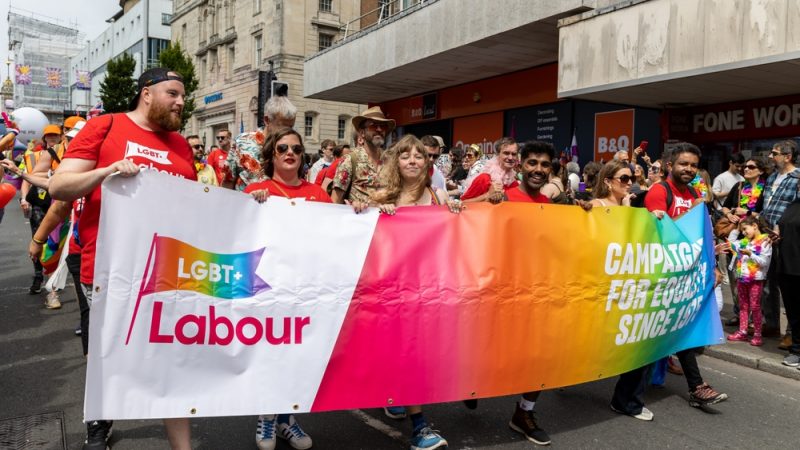

This year’s Labour Party Conference will be my fourth and final one as Co-Chair of LGBT+ Labour, before standing down in October. Since taking over the role in 2023, the organisation – and the Labour Party – has experienced significant change. These are my reflections on my time in the role.
In 2023, a general election was on the horizon and LGBT+ Labour had two objectives: support Labour to win power and help prepare the party for government. Years of fundraising and campaigning experience culminated in a record £27,500 Chris Smith Fund, our campaigning fund for LGBT+ candidates, helping to elect a record number of LGBT+ Labour MPs in July 2024. We strengthened our relationships (and, I hope, influence) with figures across the party to secure key commitments in the manifesto, including on LGBT+ hate crime, trans healthcare and outlawing conversion practices.
The following year, LGBT+ Labour celebrated its 50th anniversary, while holding the government to account on manifesto delivery. This included financial redress for LGBT+ veterans mistreated in the military, making anti-LGBT+ hate crime an aggravated offence, committing to end new cases of HIV in England by 2030, pledging £21m to support global LGBT+ rights and publishing the draft bill to end abusive conversion practices in England and Wales.
READ MORE: Labour Party Conference 2026: Full LabourList events programme, revealed
Throughout this period, we continued to push for further and faster action, often in private, while seeking to mobilise beyond our existing base. We spent a significant amount of time meeting with new and returning MPs, explaining the details of our manifesto commitments on LGBT+ rights and answering any questions. In almost every case, much of the conversation was spent on trans rights, including puberty blockers, single-sex spaces and aspects of Relationships and Sex Education in schools.
The range within those conversations was striking. A small number of MPs declined to meet with LGBT+ Labour. Others would meet with us, given our affiliation to the Labour Party, but expressed reluctance about engaging with certain, national LGBT+ organisations due to their positions on trans rights. On the other hand, many MPs were outraged by the growth of ‘gender critical’ views in recent years, seeking to overturn the ban on puberty blockers and oppose any changes to the interpretation of the Equality Act.
Most MPs sat somewhere in the middle. Supportive of LGBT+ rights, including trans rights, but with concerns or caution around some policy. This included those with (i) strongly held beliefs around, for example, single-sex provision in women’s refuges; (ii) instinctive concerns around young people, for example, their access to life-changing drugs; and (iii) a limited depth of familiarity with the policy detail given the wide array of topics they are expected to legislate on. What united almost all of them was a reluctance to engage publicly, for fear of saying something “wrong” or upsetting a particular interest group.
Become a friend of LabourList and join our community. Our friends support our vital non-factional work and get access to exclusive content and events.
In these conversations, we sought to explain the policy detail, provide reassurance and challenge misconceptions where they arose. For example, we all share a commitment to ensuring children and young people have access to appropriate, high-quality healthcare, and therefore, Dr Hilary Cass has stated, a trial on puberty blockers should be welcomed, as should the increase in specialist gender centres across the UK. Similarly, regardless of one’s position on single-sex spaces, the finalised EHRC guidance on the Equality Act has caused consternation in some areas, such as requiring trans men to use women’s facilities, which undermines their dignity and creates further confusion, not less.
It was also important to reassure potential allies that we were open to working together on shared goals, even if we disagreed on aspects of policy elsewhere. While many of these issues are yet to be resolved, I sincerely hope these conversations have helped to improve understanding among MPs and lessen the polarisation and toxicity in many of the debates in recent years. I also hope this lays the foundation for the Labour Party to rebuild trust with the wider LGBT+ community, including securing a return to the UK’s major Pride marches.
The Supreme Court decision on the Equality Act also brought significant operational and governance challenges to LGBT+ Labour, as it did to many other organisations. Following a threat of legal action last summer, we were forced to postpone our AGM until the EHRC published its finalised guidance. We subsequently sought legal advice and have amended our rules to satisfy the updated guidance, while seeking to protect the dignity of all members seeking to stand for election. I’m proud that, following this summer’s AGM, our national committee continues to reflect the breadth of our membership, including strong women’s representation and a record number of trans and non-binary members.
We have also undergone the process of incorporation to better protect individual officeholders from liability should the organisation ever face legal action. Willingness to accept such legal risk is often linked to personal wealth, but wealth should never determine who can volunteer for LGBT+ Labour, or in politics more widely. The Labour Party was extremely supportive throughout, but our experience raises real questions about how the party can best support its volunteer-led, independent but affiliated socialist societies, whose differing operational and governance arrangements may leave them exposed, particularly given the growing use of “lawfare” in UK politics.
I’m grateful to our members, volunteers and patrons for all their support over the last few years, as well as the countless allies among our MPs and advisers. Building alliances has been key to our success throughout: strengthening relationships across the Labour Party, supporting MPs to navigate complex policy areas, identifying common ground, and partnering with organisations who share our goals — from LGBT+ groups like Stonewall and the Albert Kennedy Trust, to partners such as the Premier League and YouTube, who are once again supporting our disco at Party Conference this year.
I’m incredibly proud of what LGBT+ Labour has achieved in recent years, strengthening our influence in Westminster, creating an organisational structure fit for the future, and widening engagement with civil society.
The job is far from over, with manifesto commitments to be fulfilled and trust with the wider LGBT+ community to be rebuilt, which will require a concerted effort across the Labour movement. But my successors inherit an organisation prepared for the challenges ahead, and I’ll be cheering them on every step of the way.
Subscribe here to our daily newsletter roundup of Labour news, analysis and comment– and follow us on TikTok, Bluesky, WhatsApp, X and Facebook. You can also write to our editor to share your thoughts on our stories and share your own. The best letters are published every Sunday.
-
- SHARE: If you have anything to share that we should be looking into or publishing about this story – or any other topic involving Labour– contact us (strictly anonymously if you wish) at [email protected].
- SUBSCRIBE: Sign up to LabourList’s morning email here for the best briefing on everything Labour, every weekday morning.
- BECOME A FRIEND: If you enjoyed this, why not consider becoming a Friend of LabourList? Help sustain our journalism, and of course Friends do get benefits…
- PARTNER: If you or your organisation might be interested in partnering with us on sponsored events or projects, email [email protected].
- ADVERTISE: If your organisation would like to advertise or run sponsored pieces on LabourList‘s daily newsletter or website, contact our exclusive ad partners Total Politics at [email protected].



More from LabourList
Delivering in local government: How Labour is building a better Britain everywhere
‘Changing our voting system is fundamental to Burnham’s agenda’
‘Labour has a chance to make the socio-economic duty mean something’