

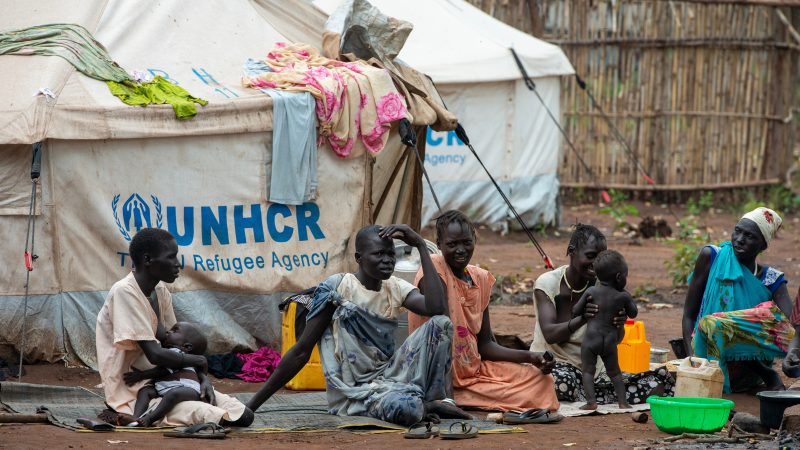

Today’s debate on Sudan comes at a critical moment. The war is now entering its fourth year and has been labelled the world’s worst humanitarian crisis, yet it still barely registers in political discourse. Last week, a humanitarian convoy delivering life-saving aid to Kadugli, where communities are at risk of famine, was attacked. For millions of Sudanese people, this war is a daily struggle for survival.
I’ve recently returned from a parliamentary delegation to Egypt, where I saw firsthand the impact of Sudan’s conflict on the region. My visit brought home that this is a regional crisis, not one that can be contained within Sudan’s borders. Egypt is the single largest host of people fleeing the conflict, with around 1.5 million refugees, placing significant pressure on communities and services already stretched thin.
At a UNHCR registration centre, we heard directly from Sudanese refugees – some, including elderly women and young children, had travelled roughly 1,400km from the Sudanese border just to register. Their journeys underscored the human reality of displacement.
READ MORE: Labour Party Conference 2026: Full LabourList events programme, revealed
Egypt has played a prominent role in stabilising the region, but its ability to manage this crisis is reaching breaking point. The question for Britain is not simply how much we spend on humanitarian assistance, but whether our support reaches people where they are and where the pressure is greatest.
The registration centre I visited is facing immense pressures: 4,000 refugees a day, against a capacity built for 4,000 a month. UNHCR’s Egypt operation has a $133.5 million funding requirement for 2026 and was only a quarter funded at the end of April, leaving a gap of more than $99 million. This operation is currently receiving no UK funding at all – despite the UK’s own record showing what effective support can achieve. The FCDO-funded North Africa Migration and Development project, delivered through the International Organization for Migration, has reached more than 22,400 migrants and host community members in Egypt since 2024. That work is valuable, but it cannot substitute for adequate funding to the organisations providing protection and registration to people fleeing the conflict.
This matters to Britain because the consequences of Sudan’s war are already being felt across the region and beyond. With little prospect of peace or self-reliance in Sudan or the countries hosting its refugees, more people are being forced into dangerous onward journeys towards Europe. Between 2024 and 2025, the number of Sudanese refugees arriving in Europe rose by 232%. In 2025, Sudanese nationals made up 11% of small boat arrivals to the UK. Funding refugee protection, registration, and support for host communities prevents further displacement, reduces exploitation, and stops people from being forced into these dangerous journeys in the first place. However, funding alone isn’t the whole answer.
Become a friend of LabourList and join our community. Our friends support our vital non-factional work and get access to exclusive content and events.
Aid can mitigate the consequences of this conflict, but it cannot end it. Only a political solution can do that, which is why today’s debate matters. As the UK is the penholder for Sudan at the UN Security Council, Britain has significant diplomatic leverage, and the government must use it: maintaining pressure for a humanitarian truce and a permanent ceasefire, for civilian protection and unimpeded humanitarian access, and for a civilian-led political process, including through the Berlin Principles agreed earlier this year.
Alongside this, the government must reaffirm its commitment to the UK’s £146m humanitarian funding for Sudan in 2026/27, while extending meaningful funding to organisations on the ground, including UNHCR’s work with refugees in neighbouring countries, rather than focusing solely within Sudan itself.
Britain has both the means and the diplomatic standing to act. We can help ensure that people displaced by this war receive the protection and support they need, while using our influence to address the conflict that forced them from their homes in the first place.
Subscribe here to our daily newsletter roundup of Labour news, analysis and comment– and follow us on TikTok, Bluesky, WhatsApp, X and Facebook. You can also write to our editor to share your thoughts on our stories and share your own. The best letters are published every Sunday.
-
- SHARE: If you have anything to share that we should be looking into or publishing about this story – or any other topic involving Labour– contact us (strictly anonymously if you wish) at [email protected].
- SUBSCRIBE: Sign up to LabourList’s morning email here for the best briefing on everything Labour, every weekday morning.
- BECOME A FRIEND: If you enjoyed this, why not consider becoming a Friend of LabourList? Help sustain our journalism, and of course Friends do get benefits…
- PARTNER: If you or your organisation might be interested in partnering with us on sponsored events or projects, email [email protected].
- ADVERTISE: If your organisation would like to advertise or run sponsored pieces on LabourList‘s daily newsletter or website, contact our exclusive ad partners Total Politics at [email protected].



More from LabourList
Rotten to the core? Reform demonstrate why party discipline is important
Paul Nowak column: ‘Britain needs a living standards Budget’
‘Brexit was never a closed matter – it’s time to put the national interest first’