

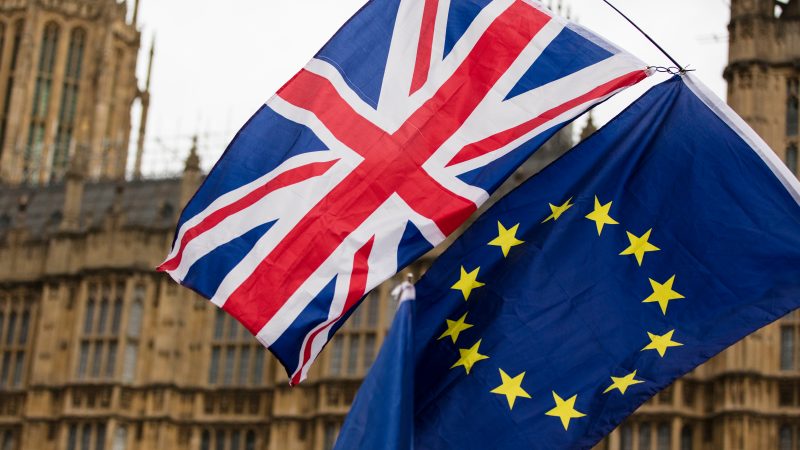

There are voices on the left who argue it would be a mistake to reopen the Brexit debate.
They argue that Brexit was a fait accompli the moment we left the EU. That it is too early to see the benefits of leaving. That it is only by charting a history entirely outside the European firmament that we can purse an interventionist industrial strategy. And that our relationship with Brussels is one of declining importance.
On each of those assertions, they are wrong.
All too often, proponents of the status quo seek to put their political interests above the national interest. That is the wrong choice. Not least, at a time when Britain is faced with increasing protectionism from the US and China, when Putin’s barbaric attacks on Ukraine threaten all of Europe, and when the ongoing threats to the freedom of navigation through the Strait of Hormuz imperil global trade and drive spiralling energy costs.
With distance, it’s worth noting that the Leave vote was strong in many Labour constituencies. So it proved to be in Conservative constituencies, in Reform-held seats and even vast swathes of the country where the Lib Dems profess to be ‘winning here’. But fear of a political backlash is no excuse for failing to build a better relationship. Nor does it insulate us from the economic fallout of the last decade.
So let us cast ideology aside and simply look at the evidence.
The independent Office for Budget Responsibility (OBR) sets out in clear terms that leaving the EU will lead to a long-term productivity hit amounting to four percent. The OBR also notes the new trade agreements we have signed with other third countries are likely to have a “marginal impact”, not least because many of them roll-over the arrangements already in place before we left the EU. Elsewhere, academics writing for UK in a Changing Europe point to UK GDP per capita being six to eight percent lower than without Brexit by 2025.
And so when claims are made about the UK having a good trading relationship with the EU we should consider the enduring cost of our decision to pursue the hardest of hard Brexits.
Become a friend of LabourList and join our community. Our friends support our vital non-factional work and get access to exclusive content and events.
I think of the trailer manufacturer in my constituency suffering under three separate, but identical, piles of paperwork in order to manufacture products for the Great British, Northern Irish and EU markets at considerable cost because of a lack of mutual recognition of conformity assessments.
Or the German architect I spoke to recently, struggling to attract talent into their British business because we have no mutual recognition of professional qualifications.
Or the young person keen to travel as an exchange student to Italy who is keenly awaiting that chance once the UK rejoins the Erasmus+ programme.
These are the concrete examples of what happens when you pull up the drawbridge in the face of our inescapable geography and enduring ties – fewer opportunities, higher costs, more bureaucracy.
Not only do those barriers have material impacts on the cost of the weekly shop, but they also act as a drag anchor on this government’s number one objective – growth.
So, it is a false dichotomy to see the fork in the road ahead of us as one between the hardest of hard Brexits negotiated by the Tories and returning as an EU member state. For Rejoin campaigners, any such simplification ignores the opt-outs we had secured on borders, on the single currency and on justice and home affairs before we left. And for Brexit status quo acolytes, it seeks to portray those pursuing a reset as bad faith actors, when their motivations are nothing further from the truth.
That’s why I was proud to put my name to last year’s UK-EU report from the Foreign Affairs Committee. That report – unanimously supported across party divides – made numerous recommendations, including on closer UK-EU security partnerships, UK participation in the EU’s SAFE defence procurement instrument, and removing longstanding trader barriers, all the while ensuring structured parliamentary scrutiny and oversight.
The truth is this isn’t about reopening a debate. Brexit was never a closed matter. For one, that’s simply because Boris Johnson never had an ‘oven-ready’ deal. Second, his government never properly oversaw the implementation of the Trade and Co-operation Agreement, which was rushed through the Commons at the end of 2020.
That’s why Rishi Sunak’s government had to think again and secure the Windsor Framework. It’s why the 2024 Labour manifesto committed to closer co-operation. It’s why the 2025 Common Understanding between the UK government and the EU Commission committed to implementing shared initiatives on youth mobility, on agri-food products and on electricity trading.
Subscribe here to our daily newsletter roundup of Labour news, analysis and comment– and follow us on TikTok, Bluesky, WhatsApp, X and Facebook. You can also write to our editor to share your thoughts on our stories and share your own. The best letters are published every Sunday.
Which brings me to a philosophical question: what was the purpose of the Leave vote?
To give the establishment a kicking? If so, one may judge it a success. But if you believe its purpose was to take back control of our borders, then the Boriswave of net migration at the start of this decade put pay to that. And with public services stretched, the much-promised £350m extra a week into the NHS has yet to materialise.
Let us continue our negotiations with the Commission with a keen eye on the national interest. That requires an honest conversation in the country – one that acknowledges the will of the British people back in 2016, but which is clear that Brexit has not delivered the promises made by the Leave campaign. We owe it to future generations to address the deficiencies in our existing relationship, with a resolute focus on the cost-of-living, on security and on jobs. That discussion has to move beyond the headline discussions around the Single Market, customs union, status quo and Rejoin; instead, we need an immediate focus on delivering 2025’s agreed commitments, many of which are yet to be implemented.
-
- SHARE: If you have anything to share that we should be looking into or publishing about this story – or any other topic involving Labour– contact us (strictly anonymously if you wish) at [email protected].
- SUBSCRIBE: Sign up to LabourList’s morning email here for the best briefing on everything Labour, every weekday morning.
- BECOME A FRIEND: If you enjoyed this, why not consider becoming a Friend of LabourList? Help sustain our journalism, and of course Friends do get benefits…
- PARTNER: If you or your organisation might be interested in partnering with us on sponsored events or projects, email [email protected].
- ADVERTISE: If your organisation would like to advertise or run sponsored pieces on LabourList‘s daily newsletter or website, contact our exclusive ad partners Total Politics at [email protected].


More from LabourList
Paul Nowak column: ‘Britain needs a living standards Budget’
‘Older renters can’t wait: local housing allowance must be uprated now’
‘A long-delayed moment of truth for North Sea oil and Labour’s climate credentials’