

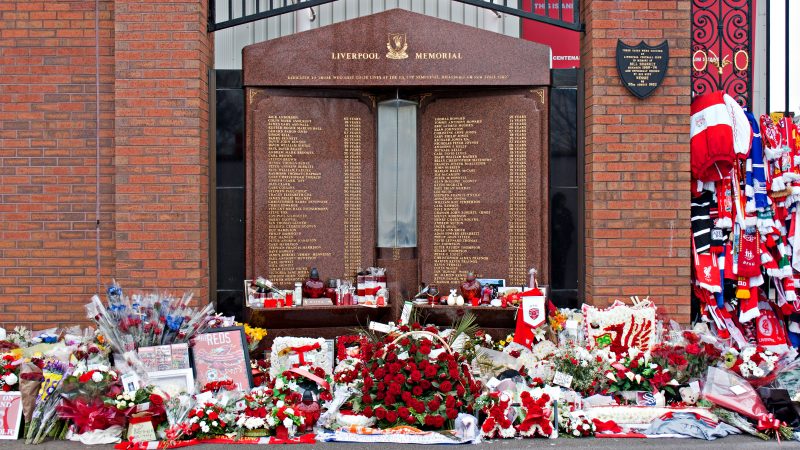

Andy Burnham knows what it means for families to spend decades fighting for the truth. His tireless campaigning alongside the Hillsborough families helped expose the devastating consequences of institutional failure, secrecy and the denial of justice.
He understands, perhaps better than most politicians, that when the state fails to tell the truth, the damage does not end with the original injustice. It continues through generations, eroding trust in institutions and compounding the suffering of those left behind.
Now, as Prime Minister, he has an opportunity to apply those same principles to another group of families who have waited far too long for answers: victims of the Troubles.
As the Northern Ireland Troubles Bill returns to the Commons, Labour faces a defining test of its commitment to truth, transparency and accountability.
The government says its legislation will finally deliver answers for families while introducing further protections for veterans. But its latest amendments raise serious questions about whether those promises can be reconciled, particularly given existing concerns about a national security veto that could perpetuate a culture of cover-up and concealment.
For families who have spent decades fighting for the truth, the stakes could scarcely be higher.
Justice cannot depend on which side of the Irish Sea you live
The parallels between Hillsborough and the experiences of many Troubles families are impossible to ignore.
Families have spent decades challenging official accounts, confronting secrecy and obstruction, and fighting to establish what happened to their loved ones.
Many have had to battle the very institutions responsible for investigating the deaths of their relatives. Some have died without ever receiving the answers they sought.
These are not abstract questions of constitutional law or parliamentary procedure. They are about parents who have gone to their graves without knowing how their children died, siblings who have devoted their lives to uncovering the truth, and families still waiting for the state to acknowledge what happened.
Labour has rightly championed the principle that families should not have to fight the state for decades to obtain truth and accountability.
That principle cannot stop at the Irish Sea.
The pain of losing a loved one is no different in Belfast, Derry or Liverpool. Nor should the right to truth, accountability and effective investigations be any less.
Become a friend of LabourList and join our community. Our friends support our vital non-factional work and get access to exclusive content and events.
Why is the government giving the Attorney General the final say on prosecutions?
Perhaps the most troubling of the government’s latest amendments is the proposal to require the consent of the UK Attorney General before serious Troubles-related prosecutions can proceed.
The government argues that the change will provide reassurance and protection to veterans against ‘repeated investigations’. But it raises fundamental questions about the independence of justice and the potential undermining of the Good Friday Agreement.
Northern Ireland has its own independent prosecution system, and the criminal justice reforms that followed the Good Friday Agreement were a significant milestone in the peace process.
Why, then, should a government law officer have the power to prevent a prosecution from proceeding?
And in cases involving alleged wrongdoing by state forces, how can families be expected to have confidence in a system where the government effectively gets to mark its own homework?
The issue is whether the system creates the possibility, or even the perception, of political interference in decisions that must be demonstrably independent.
For families whose trust in state institutions has already been profoundly damaged, this matters enormously.
A justice system must not only be independent. It must be seen to be independent.
Veterans do not all speak with one voice
Much of the political debate around this legislation has focused on the need to protect veterans from investigations decades after the Troubles.
But veterans are not a single bloc, and the loudest voices in this debate do not speak for everyone who served.
Senior former military figures, including former Army lawyer Lieutenant Colonel Nicholas Mercer, have challenged the suggestion that soldiers require special protections from legal accountability.
Most soldiers neither need nor want impunity.
Proper investigations, rights and the rule of law are not threats to the UK Armed Forces. They are essential to maintaining public confidence in the institutions entrusted with the use of force.
Shielding wrongdoing from scrutiny risks undermining those standards.
And there is another perspective too often overlooked in this debate: military families are victims as well.
Families of soldiers murdered during the Troubles are among those still seeking truth and accountability. They, too, were affected by the previous Conservative government’s Legacy Act.
The question for ministers should not be how to protect one group at the expense of another.
It should be how to create a system capable of delivering answers and accountability for every family, regardless of who was responsible for the death of their loved one.
Subscribe here to our daily newsletter roundup of Labour news, analysis and comment– and follow us on TikTok, Bluesky, WhatsApp, X and Facebook. You can also write to our editor to share your thoughts on our stories and share your own. The best letters are published every Sunday.
Labour risks damaging its Good Friday Agreement legacy
Almost three decades ago, Labour helped deliver one of the most significant peace agreements in recent history: the Good Friday Agreement.
That agreement was built on principles of equality, human rights and the rule of law.
Those principles must remain at the heart of how we address the past.
There are important elements of the government’s legislation that offer the possibility of progress, particularly in moving away from the deeply flawed approach of the previous Conservative government’s Legacy Act.
But progress cannot come at the expense of truth, transparency or accountability.
Independent, effective processes and a meaningful duty of candour are essential. So too are robust safeguards to ensure national security cannot be used to conceal wrongdoing or prevent families from accessing the truth.
Without these protections, the government risks creating another system that promises answers but ultimately leaves families facing the same barriers they have spent decades trying to overcome.
The sheer scale of the government’s latest amendments, and the limited time available for proper scrutiny, make getting this right all the more important.
Victims and families deserve legislation that has been carefully examined, not a process rushed through Parliament while fundamental questions about their rights remain unresolved.
This is Labour’s moment to get it right
Andy Burnham’s work with the Hillsborough families demonstrated what can be achieved when political leaders stand alongside those seeking truth and refuse to accept that accountability has an expiry date.
Now his government has the opportunity to demonstrate that those principles are universal.
Families affected by the Troubles are not asking for special treatment. They are asking for the same rights to truth, justice and accountability that every family should expect.
They have waited decades. Many are elderly. Some have already died without answers.
This is an eleventh-hour opportunity to deliver a legacy framework worthy of the principles and protections Labour helped establish through the Good Friday Agreement.
The government must not allow that opportunity to be squandered by new barriers to truth or political interference in independent investigations and prosecutions.
Labour has a chance to finally deliver for victims, but for many, time is running out.
-
- SHARE: If you have anything to share that we should be looking into or publishing about this story – or any other topic involving Labour– contact us (strictly anonymously if you wish) at [email protected].
- SUBSCRIBE: Sign up to LabourList’s morning email here for the best briefing on everything Labour, every weekday morning.
- BECOME A FRIEND: If you enjoyed this, why not consider becoming a Friend of LabourList? Help sustain our journalism, and of course Friends do get benefits…
- PARTNER: If you or your organisation might be interested in partnering with us on sponsored events or projects, email [email protected].
- ADVERTISE: If your organisation would like to advertise or run sponsored pieces on LabourList‘s daily newsletter or website, contact our exclusive ad partners Total Politics at [email protected].



More from LabourList
Delivering in local government: How Labour is building a better Britain everywhere
Labour members would back tax increases on gambling, banks and wealthiest in Budget
Rotten to the core? Reform demonstrate why party discipline is important