

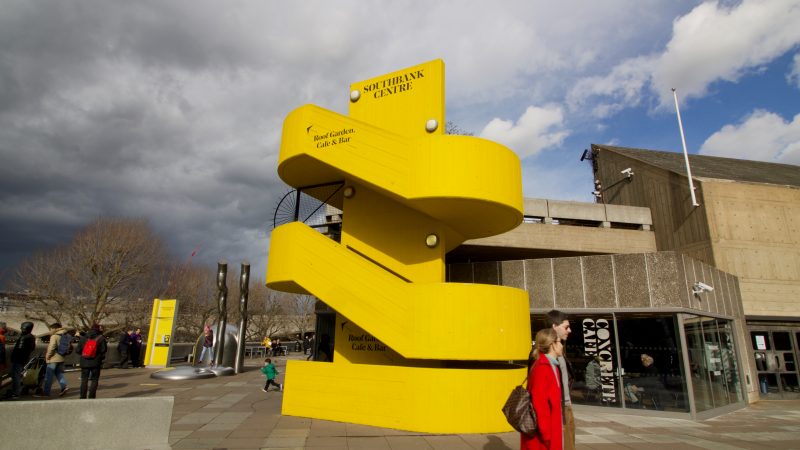

When Clement Attlee’s Labour government held the 1951 Festival of Britain, it was conceived as a bold and optimistic post-war initiative – a ‘tonic for the nation’ after the trauma of the Second World War. The Royal Festival Hall – the flagship venue of what is now the Southbank Centre, Europe’s largest arts centre – is the only permanent structure to survive that extraordinary festival. With its open foyer policy in place since the 1980’s (the first cultural organisation to do this) it has variously been dubbed ‘London’s living room’ and the ‘nation’s village hall’ – where culture is recognised as a vital civic and societal need.
Seventy-five years on we face a different, but deeply akin, collective crisis. We are a nation divided as never before and we are grappling with a crushing youth mental health emergency, where one in five young people aged 8 to 25 lives with a mental condition. We need that same spirit of civic purpose and optimism once again.
DHSC’s recent confirmation, following Professor Peter Fonagy’s review – that young people will no longer need a formal clinical diagnosis before accessing mental health support – is a brilliant and necessary policy shift. It recognises a fundamental truth that parents, teachers and health workers have long known: clinical diagnosis cannot remain the only door through which a child in distress can find help. Spending years on waiting lists before accessing appropriate support is both humanly devastating and economically unsustainable.
READ MORE: ‘Arts for young people is key to hope’
As ministers turn these early intervention promises into practice ahead of the upcoming Mental Health Strategy for England, they must look beyond clinical settings. Warm, open, cultural spaces, like the Southbank Centre, are uniquely positioned to help. And we are determined to do so.
For thousands of young people struggling with anxiety, depression or isolation today, formal clinical environments feel intimidating, bureaucratic and alienating. Our creative spaces offer a welcoming, non-stigmatising alternative – open, safe ‘third spaces’ where young people can walk right in, build relationships with trusted adults and express themselves on their own terms.
The evidence is robust. Research from the National Centre for Creative Health shows that ‘arts-on-prescription’ programmes reduce GP consultation rates by 37%. University College London studies demonstrate that community cultural engagement lowers the risk of developing depression by up to 48%. And the list goes on. Creative health delivers tangible, transformative outcomes at a fraction of the cost of clinical interventions.
At the Southbank Centre, we are already putting this into practice through a system change partnership with South East London Integrated Care Board and South London and Maudsley NHS Foundation Trust to embed creative health directly into clinical care. This week, we have also launched Ombri, a social prescribing platform developed with social impact technologists Mortar, which connects young Londoners directly to free local creative activities before they reach a mental health crisis threshold.
Become a friend of LabourList and join our community. Our friends support our vital non-factional work and get access to exclusive content and events.
Yet the true value of this work risks falling between the cracks. For too long, we have treated health and art as entirely separate domains because we view public investment through rigid departmental silos. Cultural institutions like ours are funded under the umbrella of DCMS via Arts Council England, yet the immense preventative health benefits we deliver stretch directly into DHSC and the NHS. Furthermore, they are also linked to better outcomes for the DfE and DWP, too. Because those outcomes land on other departments’ balance sheets, the full public health potential of culture remains under-recognised and under-utilised.
We need the arts formally recognised as a preventative health intervention – with the same status as sports and physical activity – and written into the upcoming Mental Health Strategy for England.
When John Maynard Keynes helped create the modern framework for public funding of the arts under the 1945 Labour administration, the aim was clear: to enrich daily life for the nation. Today, this Labour government has an extraordinary opportunity to break down outdated structures and reconnect with that vision – unlocking civic spaces in towns or cities across Britain to heal our communities once again.
Subscribe here to our daily newsletter roundup of Labour news, analysis and comment– and follow us on TikTok, Bluesky, WhatsApp, X and Facebook. You can also write to our editor to share your thoughts on our stories and share your own. The best letters are published every Sunday.
-
- SHARE: If you have anything to share that we should be looking into or publishing about this story – or any other topic involving Labour– contact us (strictly anonymously if you wish) at [email protected].
- SUBSCRIBE: Sign up to LabourList’s morning email here for the best briefing on everything Labour, every weekday morning.
- BECOME A FRIEND: If you enjoyed this, why not consider becoming a Friend of LabourList? Help sustain our journalism, and of course Friends do get benefits…
- PARTNER: If you or your organisation might be interested in partnering with us on sponsored events or projects, email [email protected].
- ADVERTISE: If your organisation would like to advertise or run sponsored pieces on LabourList‘s daily newsletter or website, contact our exclusive ad partners Total Politics at [email protected].



More from LabourList
Good growth in every postcode 21st October 2026
The Thames Valley is driving growth. Devolution can turbocharge it.
‘It’s time to put tariffs on Chinese electric vehicles’