
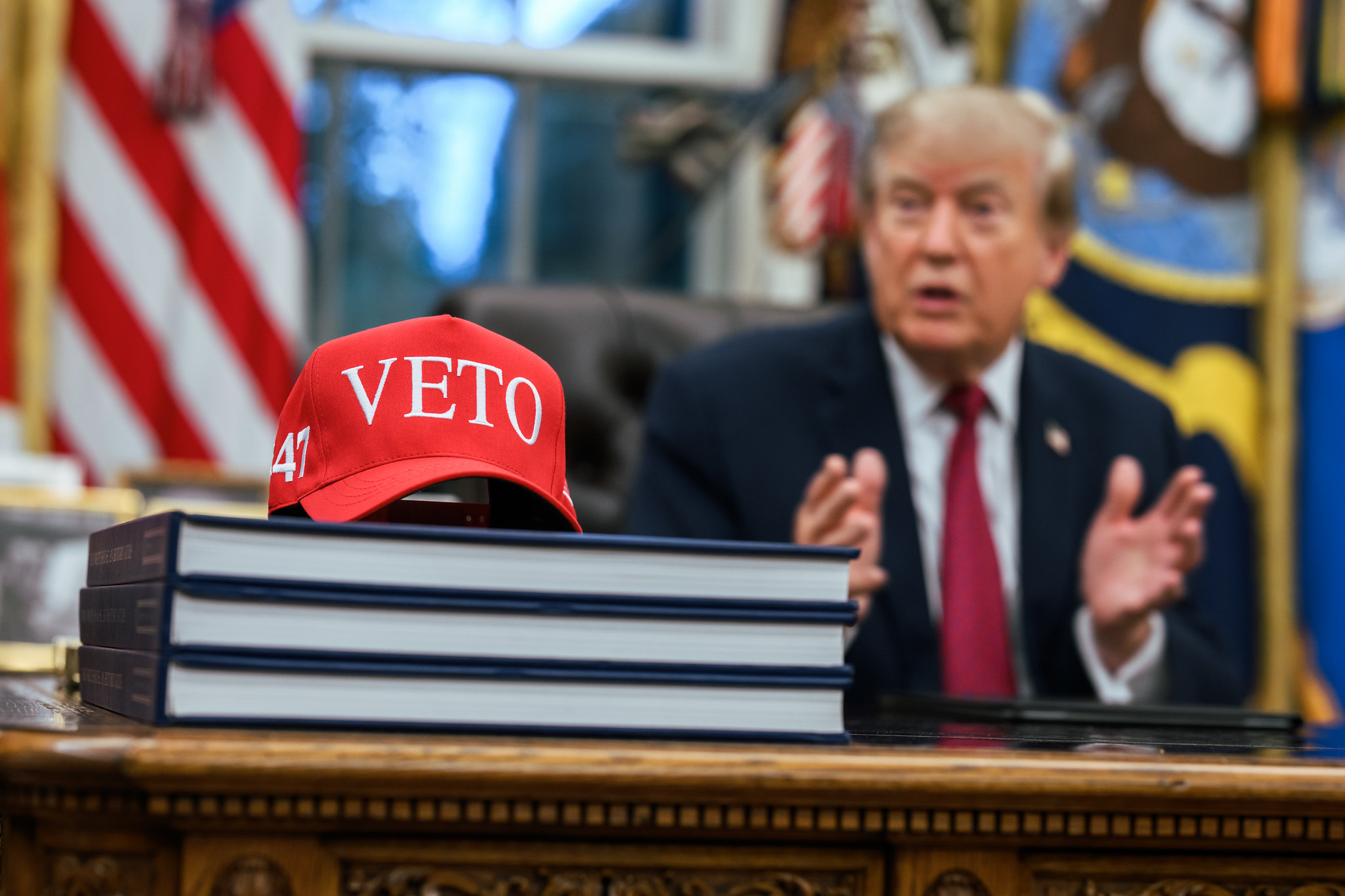
The results of the midterm elections in the United States have dealt the Trump administration a seismic political blow, with Democrats making sweeping gains across the country and securing victories in states that had previously appeared well beyond reach.
The scale of Democratic success has raised questions about whether the decade of Trumpism is finally coming to an end, with voters turning away from the President over high petrol prices and concerns over the way he has wielded power.
Will Marshall, president and founder of the Progressive Policy Institute (PPI), said the results represent a “turning point” in American politics – and offered a lesson for other centre-left parties globally.
“You can look at the map and see us plunging deep into the red zone and winning the Texas governor’s race, South Carolina, Georgia’s governor, Kansas. It was hard to see how it could have been better,” he said.
“Trump is not going anywhere, but his spell is broken. I think it’s because he is so clearly responsible. He shaped the conditions that led to this Democratic rout. It was his signature policies, on tariffs and the war, which pushed living costs up. That was the biggest issue for voters.”
It’s the economy, stupid
For Republicans, November 3 represented a perfect storm, Marshall argued, driven primarily by concerns about the cost of living.
“You can’t get around the fact that this is a third straight national election dominated by cost of living concern; worries about inflation, high prices of life’s necessities. There’s a CNN story that correlates high diesel prices to Democratic gains in rural communities.”
He also said that concerns about alleged corruption in the Trump administration had become an important factor in voter thinking, with polling showing it was the second most important factor after only the state of the economy.
“A large percentage of voters said they want Congress to put more constraints on Trump. In other words, his autocratic governing style [was what] I think a lot of people were reacting to. I think there was a reaction that comes with comprehensive or serial abuses of power.
“They feel like Trump unchained is dangerous and so, in a way, this is a vindication of the resilience of American democracy.”
‘Trump set up Republicans for a fall’
Marshall also highlighted how key demographics that helped make up Trump’s 2024 electoral coalition had become disillusioned with the Republicans, shifting towards the Democrats in the midterms. In particular, he pointed to Latino and non-college-educated white voters, who shifted in large numbers away from Trump and backed Democratic candidates across the country.
He also suggested Trump’s own interventions in Republican primaries in key states, including Texas and Ohio, had helped “set up Republicans for a fall”.
“This is very much an accountability moment for Donald Trump. You’re going to see Republicans now emboldened to stand up to them, leave the reservation, break out of the cult and stand up to him.”
The results challenges some assumptions about the power of money in determining electoral success in American politics, just as concerns grow about the influence of ‘mega donors’ on elections in Britain.
Despite tech trillionaire Elon Musk putting up almost half a billion dollars into Republican campaigns that ultimately came up short, Marshall argued that the power of money on election outcomes is “routinely overestimated”.
“We ought to take a step back and wonder whether this obsession about how much money goes into campaigns is warranted because it doesn’t seem to overcome the fundamentals.”
Learning from Democrat’s’ ‘red zone’ victors
While Marshall said ideology was not necessarily a decisive factor in determining which Democratic candidates won on November 3, he noted that some progressive candidates, including Abdul El-Sayed in Michigan, underperformed despite a national political environment particularly favourable to Democrats.
Instead, he argued that Democratic success in traditionally Republican territory had come from selecting more moderate candidates who could appeal to voters in the “red zone”.
“Talarico’s a seminarian. Hamilton is an actual preacher. These are the kind of Democrats that are winning in these states, and by and large they have been quite pragmatic and mainstream in their outlook, not pushing out the hardest ideological line.
“The real lesson is if you get the right candidates that map well to the terrain you’re trying to compete in, with mainstream values focused on the cost of living issues for working families, that can appeal to working-class [voters].”
Despite the scale of the scale of the Democratic victory, Marshall warned against interpreting the results as a ringing endorsement of the party itself.
Drawing a comparison with Labour’s 2024 general election victory in Britain, he suggested that the party had benefited from an anti-incumbency mood, rather than overwhelming enthusiasm for the Democrats.
“Democrats need to understand that this is, first and foremost, a repudiation of Trump and not a vote of confidence in the Democratic Party.
“The main dynamic here was an anti-Trump vote, not just anti-Republican, because it was his signature policies that they were running against.
“The Democrats need to be careful. The last thing we want to do is revert to the status quo and start passing a lot of big spending bills and doing a kind of Bidenomics redux.”
Regardless, Marshall explained that the sheer scale of Democrat success has significantly expanded the electoral battlefield ahead of the 2028 presidential election.
“We’ve created new battleground states. Can we compete in Texas again? Ohio, which used to be a reliable swing state, might be moving back into that category and out of the red zone – same with Iowa.
“The wonderful thing about this election is it suggests Democrats can compete anywhere. There’s no place we should feel we can’t go. Suddenly, Democrats are regaining national competitiveness in areas where we’ve been really weak.”
Marshall explained that Democrats should heed lessons from those who won in solid Republican territory in order to chart a course to victory in two years’ time.
“Let’s take our cue from people who know how to compete on the toughest terrain in American politics for Democrats and win.
“The main thing is not just to revert to our blue bastions in the cities and to the kind of politics that is found there. Democrats have to meet voters where they are and try not to foist somebody’s preconceptions as to what they should want.”
It is that approach that will be important when considering who should be their pick as president. Marshall said he would be looking for an outsider that embraces “radical pragmatism”.
“The last thing we want to be is a kind of sterile centrist party. We want to be a party of change. We want to break with the status quo.
“I’ll be looking for somebody who comes from outside the establishment culture and can pose some challenge to it, push back against the tendencies that have parted us with working-class voters. Somebody who brings a fresh approach… with fresh ideas, maybe a good, successful governing record – and run against type, not simply fulfil the public stereotypical image of Washington Democrats.”
What lesson does Marshall take away from the midterm result for other centre-left parties, such as Labour? For him, winning over working-class voters to build a “cross-class” coalition must be central to their electoral strategy.
“I don’t think the fundamentals are different. The same set of voters need to be wooed and won – working-class voters. It’s a very fragmented political picture in Britain right now, and if I were in the Labour hierarchy, I would be thinking [about an] all-hands-on-deck push to win back working-class voters.
“Centre-left parties everywhere need to be thinking about building a cross-class coalition, that combines their highly educated and comparatively affluent voters with aspiring working-class voters.”
The scale of the Democrats’ victory suggests that Trump’s political grip is far from unshakeable. But, as Marshall’s analysis makes clear, the party’s challenge now is to offer voters something to believe in beyond simply being an alternative to the president – and to convince the working-class voters who helped deliver its gains that it understands their concerns.
LabourList Daily Email
Sign up to our morning email and get the latest news, views and comment from across the labour movement.