
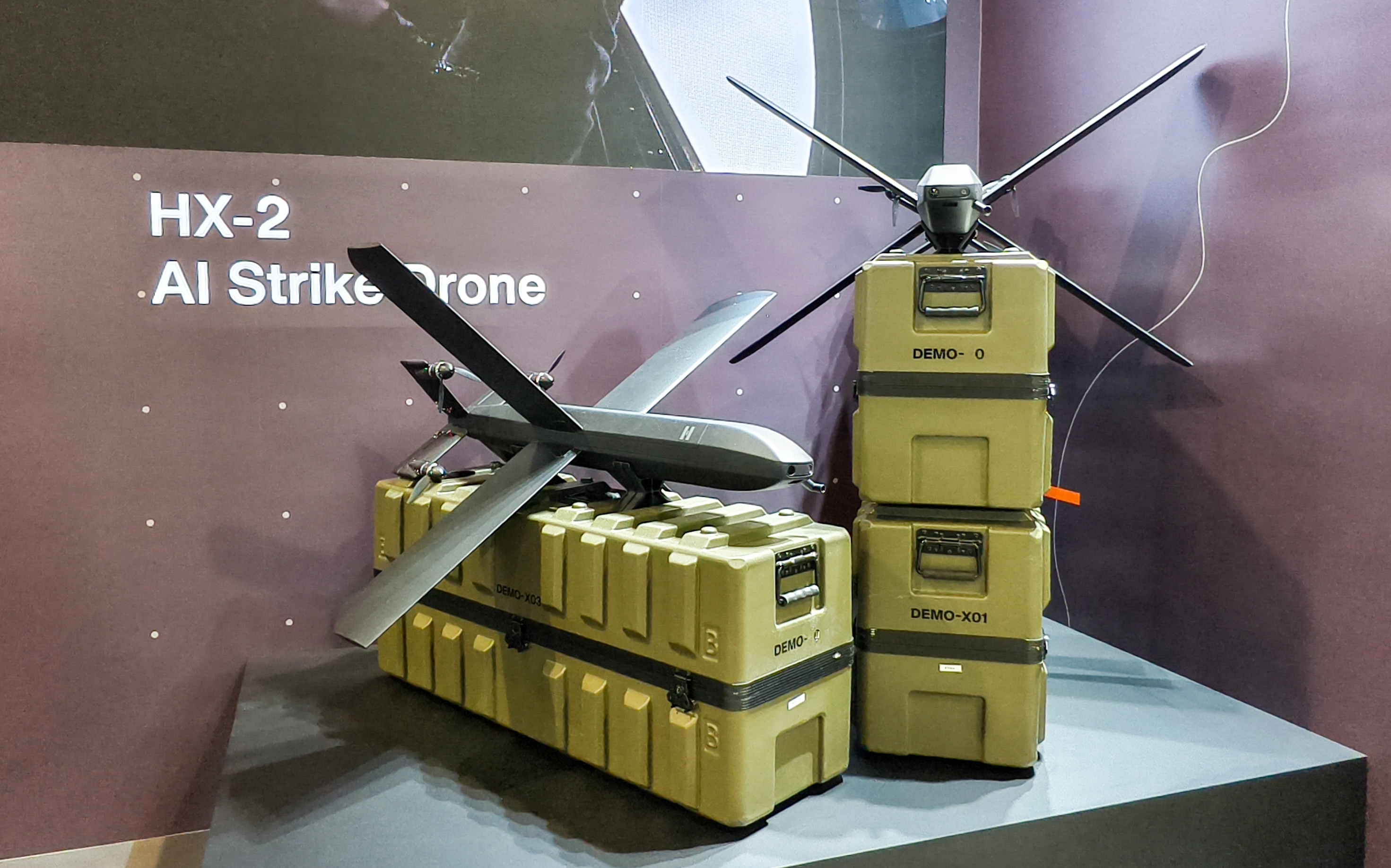
Meeting once every five years, today the United Nations Seventh Review Conference of the Convention on Certain Conventional Weapons (CCW) meets in Geneva, to consider developments in the means and methods of warfare and their humanitarian implications. They will discuss controls on ‘autonomous weapons’, a central issue we must address now.
Back in 2008, a new Labour Prime Minister took action to ban a lethal technology, in defiance of both the US and Russia. In turn, our Foreign Secretary was praised for his progressive leadership on international law.
The ban in question was on cluster munitions, explosive weapons which release many further smaller bomblets over vast areas of land. Despite resistance from great powers, the ban passed at the UN CCW and shaped the behaviour of even those who didn’t sign. Countless lives have been saved since.
The threat of military AI
This week, the Convention meets again to discuss controls on autonomous weapons. Right now, military AI has civilians in the crosshairs in Ukraine, Palestine, Sudan, Iran and beyond. In August, a drone entirely guided by A.I. killed three Ukrainian civilians. Pentagon investigators partly blamed an overreliance on AI for the US missile strike that hit an Iranian school in February, killing 168 people. Last year, a UN report named military AI as a key variable in the surging number of children killed in conflict in 2025. It is therefore no surprise that MI5’s director-general laid bare the threat to Britons emerging from AI-powered weapons proliferation.
It is clear why some states are blocking progress towards regulation in this area. The US wants its tech firms to be able to profit from selling dangerous, experimental systems. Russia wants no limits on its assault on Ukraine. The scale of China’s defence industry in the global market for autonomous combat platforms outweighs almost every other combined. The UK cannot continue to remain on the fence on these autonomous weapons, having, so far, not committed to a legally binding instrument ensuring meaningful human control of lethal AI.
Concerns about autonomous weapons are not new. In 2018, I was the only Parliamentarian to sign the Lethal Autonomous Weapons Pledge alongside now household names, including prominent AI Founders, CEOs and academic experts. The pledge called for Governments to agree that weapon systems should never be delegated to a machine.
Even leaving aside the moral harms and risks to civilians, there is no rational reason for Britain to oppose controls on autonomous weapons. Forcing experienced commanders to surrender control to algorithms would be a grave error. AI weapons systems are error-prone, vulnerable to hacking, and generate a minefield of legal risks.
There is still time to act
However, there is still time to regulate. This is why a wide-ranging coalition of over 160 states at the UN General Assembly, the International Committee of the Red Cross, the Pope, and numerous humanitarian health organisations have called for new international law to ensure machines are never permitted to decide to take human lives.
Many are currently sceptical of international law, having seen numerous violations committed in recent years with little accountability. However, despite Trump and Putin wanting us to give up on the rules-based order, this does not mean we should. As Nye Bevan said of the NHS, it will last as long as there are those with the faith to fight for it.
Britain has historically shown leadership on civilian protection issues, and can do so again when it comes to regulating the use of autonomous weapons. A forward-facing defence policy is about diplomacy as much as it is military spending; showing that we have the confidence to lead on issues of shared global interest when others will not.
Britain can and should show bold leadership
An overwhelming majority of the world’s states back controls on autonomous weapons. Over 90% of Britons polled recently want the UK government to lead on new rules for military AI – with similar support in France and Germany.
An existing text, agreed by a group of governmental experts in talks that have lasted for years, is ready to be used as the basis for negotiation. This week’s Seventh Review Conference of the Convention on Certain Conventional Weapons is where we can take a bold stance on controls of autonomous weapons.
Our Foreign Secretary can be bold, just like we were in 2008, and lead by example by providing a clear instruction to those negotiating on his behalf in Geneva this week, to do all they can to secure a legally-binding instrument to forge real safeguards on autonomous weapons.
Labour has a history as an architect of postwar international security, and in the Age of AI, lets instill human rights at the core of our guiding principles.