
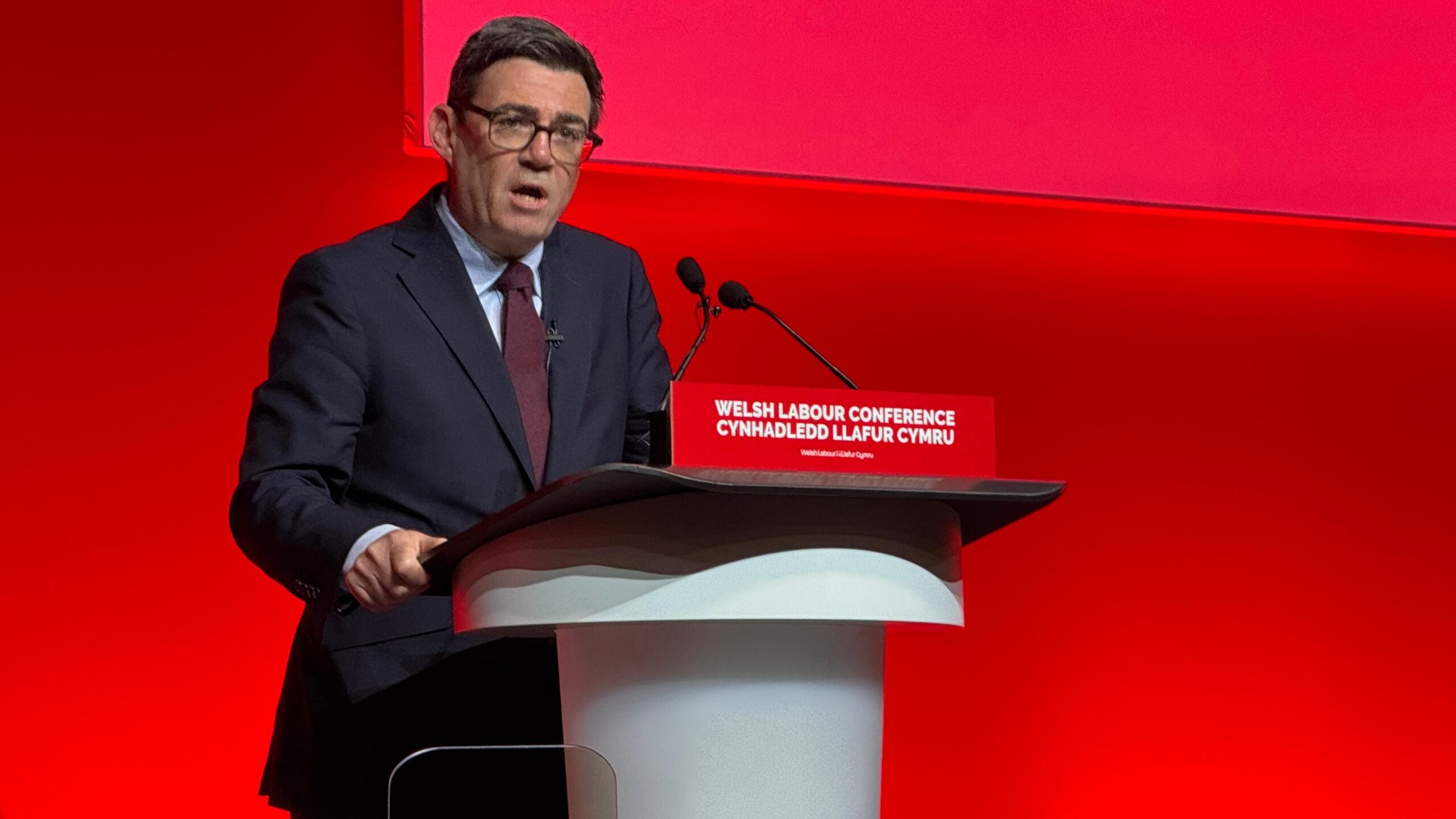
I am so pleased that Andy Burnham is Prime Minister.
So much of the radicalism he has brought to the job matters enormously to Wales: closer ties with the European Union, public control of essential services, a proportional voting system. Each speaks directly to the progressive possibilities which have long been the preference of Welsh voters.
It was all the more shocking, then, to read the Prime Minister’s letter to the First Minister of Wales, published on 20th November.
Labour was the party of devolution
Devolution is the ground on which Welsh Labour has been founded. Ensuring that Welsh citizens have control over our own domestic affairs, while remaining firmly within the United Kingdom has been our unique offer. The Tories and Reform would hand Wales back to Whitehall. Plaid Cymru exists to take Wales out of the Union. Only Welsh Labour offer the best of both worlds: both autonomy and unity.
In opposition, the UK Labour Party appeared to understand this too. Keir Starmer established the Gordon Brown review of the UK’s constitutional future. When the report was published, Sir Keir accepted all 40 of its recommendations including its conclusion that no powers devolved to Scotland could not be devolved to Wales. Speaking at the launch, the then-Leader of the Party said it would result in, “the biggest ever transfer of political power out of Westminster and into the towns, cities, and nations of the UK”.
But, when Labour came to power in 2024, none of that happened. In two long years, our reputation as the Party of devolution withered in the absence of any evidence that either the recommendations of the Brown Report, or the policies of the Welsh Labour Party, were to be implemented. By the time of the Senedd elections in May, our claims to be standing up for Welsh interests, and for leading the evolution of constitutional change was no longer credible. Plaid Cymru didn’t steal our clothes. They were handed to them, and they wore them all the way to victory in May’s elections.
Imagine the relief, then, to have a new Prime Minister who not only spoke the language of devolution, but had direct experience of it himself – someone who had seen the world not simply from the Westminster end of the telescope, but who knew, through being on the receiving end, that “Westminster has not been working for people and it has not been working for a very long time. In fact, it is broken.”. And that the solution was clear too: “The days of Whitehall fighting the devolution [of] power into the regions and nations are over for good.”
How difficult – and how desperately disappointing – therefore, to read a letter in which each one of Welsh Labour’s devolution proposals were dismissed in their entirety.
Criminal justice is devolved to both Scotland and Northern Ireland. But will not be, the letter said, to Wales.
The Crown Estate is devolved to Scotland. Wales is a country which knows by bitter experience how its natural resources were exploited and the profits exported beyond our borders, leaving only lasting damage behind. Speaking at Welsh Labour conference in Llandudno only a short time ago, the Prime Minister spoke movingly of his recent visit to Aberfan. Its impact on him is plain for anyone to see. Yet the letter, cold and dismissive in its tone, was the antithesis of that empathy. It felt like it was saying that what is good enough for Scotland is too good for Wales.
Now we are told the UK government, in a phrase which demonstrates just how deep the determination in Whitehall to fight the devolution of powers runs, is ‘not persuaded’ that these responsibilities should come to Wales.
Wales wants powers devolved
Let me make one thing plain. Whitehall may not be persuaded, but Wales is. In particular, the voters lost by the Labour Party, hand over fist to Plaid Cymru, in May 2024 are persuaded.
The most sophisticated analysis of those elections results, by Jac Larner of Cardiff University, show that 41 percent of those who switched their vote from Labour to Plaid in May want more powers for the Senedd, while 22 percent now favour independence. A review commissioned by Welsh Labour into May’s catastrophe reports even higher figures. In that report, 49 percent of those who switched from Labour to Plaid wanted a stronger Senedd within the UK, while 26 percent preferred independence.
Little wonder that the review’s research showed Plaid Cymru leading Welsh Labour on the question of which party does most to stand up for Wales by 28 percentage points. Just recall, for a moment, that Standing Up for Wales was Labour’s slogan, when winning the 2011 Senedd elections. Indeed, it worked so well that Carwyn Jones decided simply to readopt it for his winning campaign in 2016.
These are the voters we have to win back. These are the voters who have to be persuaded, to use the letter’s term, that Labour is listening to them. Instead, they hear an unequivocal message that the opposite is the case. Whitehall just says no.
Welsh citizens will now miss out on the Prime Minister’s promise that powers should be exercised as closely to people as possible and the Labour Party stands in grave peril of missing out too.
Welsh Labour MPs were once the heroes of devolution because, without them, the Senedd would never have been created. The real and present danger is that, instead of speaking up for Wales, they become seen as standing against Wales. That would be a travesty of the contribution of many committed Welsh Labour MPs. It would certainly make a mockery of the instincts of the Prime Minister himself. But, if the charge sticks – and this week’s letter has given our opponents a lot of glue – then the damage will be real.
The job of Prime Minister is unrelenting. It requires attention to a vast number of always-urgent concerns. In a period in which repairing our country’s relationship with the EU has been such an important priority, the bandwidth to attend to other issues is inevitably reduced. Now, however, repairing our Party’s relationship with Wales has to be a priority for the Prime Minister too.
Finding a way through
A core skill in politics is to help find a way out of an impasse in a way in which all can retain a sense of self-respect. There are ways this week’s difficulties can be put right. They all begin with dialogue. That should begin, I believe, by assembling a wider cast of voices than simply the two governments – including other political parties committed to devolution. In addition to the Brown Report there are, for example, heavyweight reports on these matters by the previous Lord Chief Justice of England and Wales, Lord Thomas, and the former Archbishop of Canterbury, Rowan Williams. The inevitable tensions between governments can be navigated by enriching the conversation with these, and other contributors such as the Welsh TUC and other social partners.
This wider group should be convened directly by Andy Burnham, with a clear remit to put his devolution policy to work for Wales.
If the Prime Minister owns it, then so will Welsh Labour. And when Welsh Labour owns devolution, we earn the support of Welsh voters. It is no exaggeration to say that the future of Labour in Wales depends on it.