

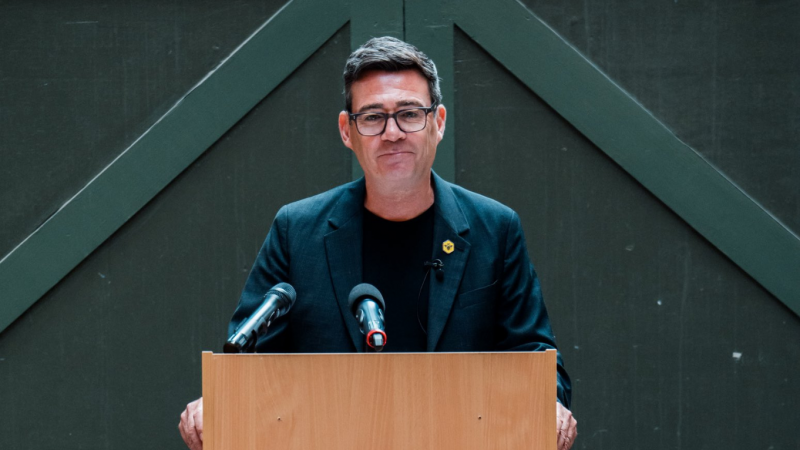

Andy Burnham’s assured performance in his first few weeks as Prime Minister has won grudging admiration from political commentators. But many of them warn that the radicalism he expressed campaigning for the job will have to be ditched now he is in it. There is no room to tax, borrow or spend any more – and if there were, defence spending will use it all up. Inflation and debt costs are rising again. Hard spending choices can’t be dodged.
To the cynics it’s almost unthinkable that Burnham could actually do the things he has promised – whether it’s reforming social care, bringing energy and water under public control or changing the way politics is done. They see no alternative to the kind of reined-in, cautious centrism practised by Keir Starmer and Rachel Reeves.
But they are wrong. The constraints are real, but it’s simply not true that Britain can’t be governed from the left of centre.
READ MORE: Labour Party Conference 2026: Full LabourList events programme, revealed
It’s worth remembering why Burnham is now Prime Minister. It is because in the May elections the voters rejected Starmer’s moderation. Right across the country the public vented the frustration they have been expressing to opinion pollsters for more than a decade: that they are fed up with the high cost of living, stagnant wages, declining public services, the rundown of town centres, poor jobs and housing prospects facing young people, the loss of control of the country’s borders – and the apparent inability of politicians – whatever they promise – to do anything about any of these things.
Burnham put his career on the line to contest the Makerfield by-election, and he won it on an explicit anti-Starmer platform of far-reaching political and economic change. So the idea that, having got to No 10, he will now abandon his radical ambitions and settle into a safe version of ‘Starmerism Mark II’ can surely be ruled out.
But what kind of government he will lead is still up for grabs. As early backers of Burnham we want him to succeed – by making good on his campaign promise to ‘end business as usual’. So through Compass we have published a report in which experts in 18 critical policy fields offer around 70 costed policy proposals showing how he can do just that.
The report starts with an immediate cost of living package: a new way of structuring energy bills which would enable them to be cut, especially for lower income households, along with a freeze on private sector rents.
Several chapters on economic policy offer Burnham and the Chancellor John Healey alternatives to Treasury orthodoxy. The energy bill cut and rent freeze would help bring inflation down, which would ease pressure on the Bank of England and gilt yields. This could be accompanied by a ‘balanced budget stimulus’ to kick-start growth, in which higher current spending on public services is matched by higher taxes on income from wealth.
Such taxes could include equalising the rates of capital gains tax with income tax, while making investment and partnership income subject to National Insurance contributions. Those measures alone could bring the Chancellor around £17bn in new revenue. For the longer term Healey could announce reviews into two other taxes aimed at those whose asset values have inflated so much over recent decades: the replacement of council tax and stamp duty by a proportional property tax, and a 2 percent annual wealth tax on assets over £10m, bringing in an additional £24bn a year.
Become a friend of LabourList and join our community. Our friends support our vital non-factional work and get access to exclusive content and events.
Meanwhile there are new ways the government can borrow for investment off its own balance sheet. It could set up public development corporations to invest in housing and transport development, using their future revenues to repay corporate bondholders rather than the gilt markets. The Treasury can also stop paying the Bank of England to compensate it for the losses made on Quantitative Easing. Healey could reform the way the Office for Budget Responsibility assesses fiscal policy, making it more economically rational and the OBR less powerful.
Ending ‘business as usual’ means innovating across the board. Introduce rent controls, and if landlords want to sell out, buy up their homes for social renting. Allow combined and strategic local authorities in England to retain a percentage of the VAT and income tax which are paid in their areas, so that they have genuine fiscal autonomy. Set up a national programme to repair 90% of potholes by the next election – with local authority borrowing paid for through a weight-based charge on SUVs (which cause potholes).
Some of the policies are expensive, such as bringing the water sector and the energy distribution networks back into public ownership, establishing a national free childcare programme, and ensuring that Universal Credit actually meets basic living costs. But many can be started, even if not finished, in this Parliament.
And underpinning everything is democratic reform. Burnham knows that ending ‘business as usual’ will require public consent and trust, and that can only be achieved by moving to a proportional system of electing our governments (along with an elected second chamber).
‘Ending business as usual’ was the right commitment to make. It is what the public wants. There are practical policies available. Over the coming weeks Andy Burnham must show he means it.
Subscribe here to our daily newsletter roundup of Labour news, analysis and comment– and follow us on TikTok, Bluesky, WhatsApp, X and Facebook. You can also write to our editor to share your thoughts on our stories and share your own. The best letters are published every Sunday.
-
- SHARE: If you have anything to share that we should be looking into or publishing about this story – or any other topic involving Labour– contact us (strictly anonymously if you wish) at [email protected].
- SUBSCRIBE: Sign up to LabourList’s morning email here for the best briefing on everything Labour, every weekday morning.
- BECOME A FRIEND: If you enjoyed this, why not consider becoming a Friend of LabourList? Help sustain our journalism, and of course Friends do get benefits…
- PARTNER: If you or your organisation might be interested in partnering with us on sponsored events or projects, email [email protected].
- ADVERTISE: If your organisation would like to advertise or run sponsored pieces on LabourList‘s daily newsletter or website, contact our exclusive ad partners Total Politics at [email protected].




More from LabourList
‘Sadiq Khan’s legacy in London will be a city where people can breathe easy’
‘How Burnham’s government can overcome barriers to taxing wealth’
‘Our regional theatres are engines of growth. Labour should help them thrive’