

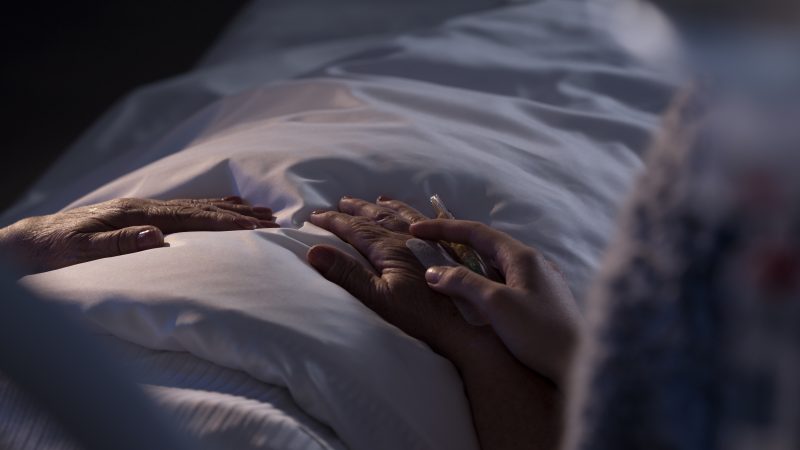

This Friday MPs will once again be voting on the assisted dying bill.
I know many of my colleagues are feeling déjà vu from the bill’s first journey through the Commons. After hundreds of hours of debate there is an understandable confusion at why we are having to go through this again. How could a bill, so strongly supported by the public and the elected House have been blocked? Why must the Commons vote again for something we clearly supported before?
The answer lies in the House of Lords, where the deliberate delaying tactics pursued by a small handful of unelected peers opposed to a change in the law meant the Lords were unable to even vote on a single amendment. This was an outrageous filibuster that, let us not forget, was led by Tories recently rejected by the electorate – Michael Gove, Therese Coffey and Mark Harper.
The unprecedented number of amendments tabled and the length of time taken to debate them prevented the Lords from coming to any conclusions on the Bill. Indeed, the suspicion remains that opponents of the bill, including these ex-Tory MPs, were so keen to avoid any votes because they knew they would lose them.
READ MORE: Labour Party Conference 2026: Full LabourList events programme, revealed
During the many hours of discussion, opponents claimed that the legislation was so deeply flawed in its drafting that it would be unsafe to pass it into law. Many of the ‘solutions’ tabled however, such as a requirement that everyone – including men – must provide a negative pregnancy test, were clearly unworkable rather than a genuine attempt to improve the bill.
Reading the legislation itself leads to a very different conclusion. It is expertly drafted. It is robust and workable, as government ministers have confirmed. It is consistent with the wider demands on the NHS, as the official and independent impact assessment reported.
On Friday we can ask the Lords to finish the job they started by sending the bill back to them.
I will once again be supporting the bill and implore MPs who previously voted in favour to do the same.
I continue to believe in the principle of giving people the choice to die with dignity, that people who are terminally ill and are in intense pain, should be able to decide when they die – not forced to suffer until the inevitable end.
That view comes not only from the various perspectives and research I have considered throughout the debate, but also, as for so many of us, from personal experiences.
One of those experiences is with my wonderful sister-in-law Kelly who sadly died of liver cancer that developed into bone cancer.
She had a fractured left arm, pelvis and sacrum, and had cancer in her spine. Kelly was only 54, and her cancer was particularly painful and unforgiving.
As she lived in Victoria, Australia she was able to register for assisted dying. For her it was incredibly comforting to know that if – and only if – she needed to, she could stop the suffering and the pain.
She did not need it in the end, but she did have the option.
In her darkest days, that brought her and my brother incredible peace of mind. In fact only 30% of those who do register for assisted dying world wide actually use it. But it gives them a choice.
That’s a choice that quite a remarkable constituent of mine, Noah would like too.
Noah was diagnosed with an inoperable brain tumour during the Covid pandemic. He underwent 74 weeks of chemotherapy.
The treatment took its toll, and by the age of 15 he weighed 52kg (115lbs) and needed feeding tubes and a wheelchair.
He was expected to have a further 80 weeks of treatment but “his body wouldn’t allow it”, his mother Shelley said.
Conversations around the possibility of going abroad to end his life had been shut down by Shelley in the first few years following his diagnosis.
Become a friend of LabourList and join our community. Our friends support our vital non-factional work and get access to exclusive content and events.
But, having discussed it at length, researched and explored all the possible options and seen first-hand the extent of suffering he has endured, Shelley’s view on assisted dying has changed.
Noah remains optimistic about his future, but he believes in having a fully informed choice on the possibility of an assisted death in the UK for people like him.
He said when the time comes, he wants to be able to “die with dignity”.
That is the central principle of this Bill.
It would give terminally ill people – with certain criteria – the choice to undergo a very thorough process where they will be given the green light and resources to take their own life at a moment of their own choosing.
They may never use that option, as my sister-in-law Kelly did not. But simply knowing that the choice exists can provide incredible relief to people who are already experiencing immense pain.
I want all terminally ill people to have that choice and I urge all those MPs who supported the Bill the first time around to be in Parliament on September the 11th and vote it through.
Subscribe here to our daily newsletter roundup of Labour news, analysis and comment– and follow us on TikTok, Bluesky, WhatsApp, X and Facebook. You can also write to our editor to share your thoughts on our stories and share your own. The best letters are published every Sunday.
-
- SHARE: If you have anything to share that we should be looking into or publishing about this story – or any other topic involving Labour– contact us (strictly anonymously if you wish) at [email protected].
- SUBSCRIBE: Sign up to LabourList’s morning email here for the best briefing on everything Labour, every weekday morning.
- BECOME A FRIEND: If you enjoyed this, why not consider becoming a Friend of LabourList? Help sustain our journalism, and of course Friends do get benefits…
- PARTNER: If you or your organisation might be interested in partnering with us on sponsored events or projects, email [email protected].
- ADVERTISE: If your organisation would like to advertise or run sponsored pieces on LabourList‘s daily newsletter or website, contact our exclusive ad partners Total Politics at [email protected].



More from LabourList
‘Older renters can’t wait: local housing allowance must be uprated now’
‘A long-delayed moment of truth for North Sea oil and Labour’s climate credentials’
Letters to the Editor – week ending 18th October 2026