

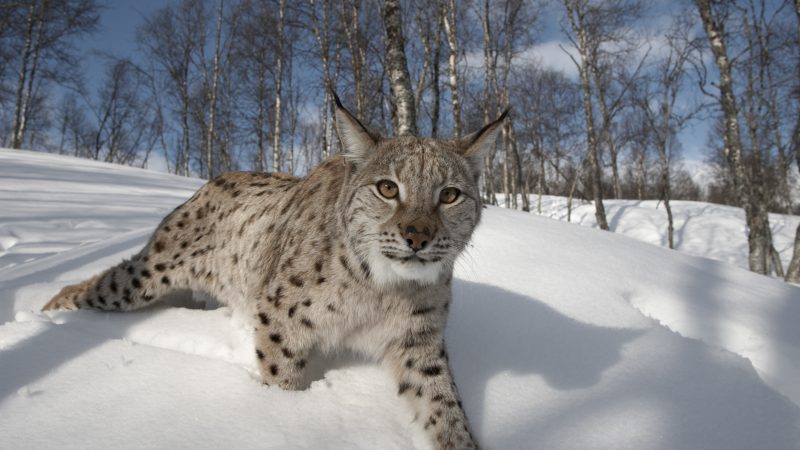

What would a more ambitious approach to nature recovery look like? Well, in some parts of Britain, it could mean bringing back an animal that has been absent from our woodlands for hundreds of years.
The idea of reintroducing the lynx to Britain is bound to attract attention. For some, it is an exciting opportunity to restore part of our natural heritage. For others, it raises legitimate questions about conflicts with farming and livestock, and how we manage our countryside. These questions deserve answers, but they should not mean Labour MPs or our Government shy away from the conversation.
Earlier this summer, I welcomed The Missing Lynx Project to Parliament to discuss the evidence behind a potential reintroduction to suitable habitat around Northumberland’s Kielder Forest. The project estimates that releasing twenty lynx could eventually lead to a sustainable population of fifty animals.
READ MORE: Labour Party Conference 2026: Full LabourList events programme, revealed
For me, this is about more than one species. It is about Labour’s ambition for nature recovery and making sure our approach works for the rural communities that live alongside it.
So why the lynx?
These shy woodland hunters pose no threat to humans and were once part of Britain’s fauna. The tufty-eared, Labrador-sized feline disappeared from Britain in medieval times through hunting and deforestation.
Bringing back the lynx would not, on its own, solve our biodiversity crisis. But it could be an important part of wider efforts on nature restoration, with potential benefits for our landscapes, communities and rural economies.
Lynx could become a native keystone species, helping to restore a more balanced woodland ecosystem. That matters because Britain is one of Europe’s least wooded countries and the Labour Government has pledged to act through ambitious projects that are boosting tree planting and expanding our forests.
One of the biggest challenges facing woodland regeneration is the number of deer in our countryside. I know from my own Cannock Chase constituency, where deer are revered and a true symbol of the area, that this topic can be highly controversial and must be approached very carefully. Deer can overgraze and damage young trees, undermining efforts to regenerate native woodland. Lynx specialise in hunting species such as roe deer, potentially complementing other methods of managing deer numbers and giving new trees and other species a better chance to establish.
There is ample evidence that the public is open to exploring the idea. The Missing Lynx Project’s consultation, which engaged more than 10,000 people, found 72% of people in the region where the lynx could be reintroduced support the idea. Meanwhile, separate polling has found 61% of Scots are in favour.
Labour has been clear that the intertwined climate and nature emergencies are among the greatest long-term challenges we face. Britain’s remarkable natural beauty has been undermined by decades of environmental decline, leaving us one of the most nature-depleted countries in the world. If we are serious about reversing that decline, we need to scale up action to protect and restore nature while recognising the social and economic opportunities a healthier environment can create.
Large-scale nature recovery, including the carefully considered reintroduction of missing species, can help restore our landscapes while creating new opportunities for tourism, helping people to build a future in rural areas that have suffered with declining populations and prosperity for decades. There is already evidence of this: some farmers have diversified their businesses around reintroduced beavers, while research by Rewilding Britain found that rewilding projects have led to a five-fold increase in jobs in Scotland, and a doubling in England and Wales.
But this ambition cannot mean ignoring legitimate concerns, particularly those of farmers. Lynx can occasionally prey on sheep. We know from their reintroduction across Europe that this happens, although the risk of widespread predation is low. For an individual farmer, however, losing even a few sheep can have a significant impact.
Any reintroduction would therefore need to be co-developed with farmers and nearby communities, with practical livestock protection and appropriate compensation where losses occur. Engaging with farmers and taking their concerns seriously has been a feature of The Missing Lynx Project from the very beginning, but there are also positive examples from the continent that Britain can learn from.
Reintroduction cannot be rushed. Any proposal would need suitable habitat and sufficient prey, robust scientific evidence, meaningful engagement with farmers and communities, and a rigorous licensing and assessment process. Ministers should only support a reintroduction if they are confident the ecological case is strong and there is an effective framework for managing any problems that arise.
For me, this is what ambition on nature should look like: being prepared to consider bold ideas while listening to those most affected so that our rural communities are partners in nature recovery, not bystanders to it.
Become a friend of LabourList and join our community. Our friends support our vital non-factional work and get access to exclusive content and events.
Subscribe here to our daily newsletter roundup of Labour news, analysis and comment– and follow us on TikTok, Bluesky, WhatsApp, X and Facebook. You can also write to our editor to share your thoughts on our stories and share your own. The best letters are published every Sunday.
-
- SHARE: If you have anything to share that we should be looking into or publishing about this story – or any other topic involving Labour– contact us (strictly anonymously if you wish) at [email protected].
- SUBSCRIBE: Sign up to LabourList’s morning email here for the best briefing on everything Labour, every weekday morning.
- BECOME A FRIEND: If you enjoyed this, why not consider becoming a Friend of LabourList? Help sustain our journalism, and of course Friends do get benefits…
- PARTNER: If you or your organisation might be interested in partnering with us on sponsored events or projects, email [email protected].
- ADVERTISE: If your organisation would like to advertise or run sponsored pieces on LabourList‘s daily newsletter or website, contact our exclusive ad partners Total Politics at [email protected].



More from LabourList
Reform’s rotten culture is exposed
‘Arts for young people is key to hope’
‘It’s time to end the university-first approach to opportunity’