

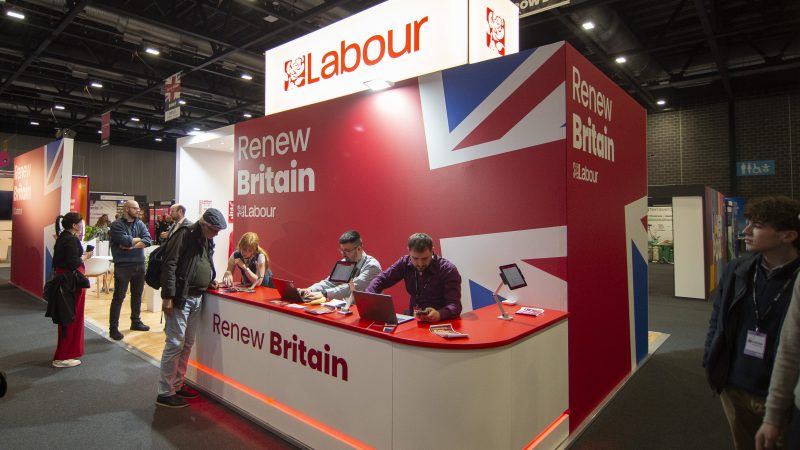

This is the second of three essays by LabourList chair Karin Christiansen on the challenges facing Labour’s new General Secretary, Joe Fortune. Part one looked at the inheritance. Part three focuses on culture change. This essay asks whether the machine is built for the contest we are actually in.
Firstly, congratulations to Joe Fortune, announced yesterday as Labour’s new General Secretary, and who I had the pleasure of working with at the Co-operative Party.
The machine the new General Secretary inherits was built with real skill. The trouble is that it was built for a politics that no longer exists.
The current machinery is designed for a different contest. Put simply, and a little unfairly, it was built to do two things. It identifies Tory switchers and persuades them through the ‘air war’. And it identifies Labour loyalists and turns them out through the ground game. This worked in a two-horse race with the Conservatives. We generally struggled against other challengers – whether the Greens, the SNP, Respect or Reform [EB: what about the Libdems? KC: oops, good point…] Where we do beat them, local teams usually improvised their own strategy, and the national playbook just got in the way.
Beyond the two-horse race
This is no longer a simple two-horse race with the Tories. For most of the post-war period the question in most seats was “Labour or Conservative?” and the machine was built around answering that. Now the competition comes from several directions at once, and it differs seat by seat.
READ MORE: Labour Party Conference 2026: Full LabourList events programme, revealed
The British Election Study (BES) analysis of Labour’s support since 2024 found the vote fragmenting rather than swinging. The largest single outflow was to uncertainty – don’t know or won’t vote – with most of the rest going to the Greens and Liberal Democrats rather than directly to Reform. The Greens, in particular, are absorbing the energy on the left. The BES also notes that in a context this fragmented there is arguably no longer a straightforward category of “marginal” seat.
So switchers and core turnout alone will not win seats any more. For a growing number, not voting is an active choice, not a failure to show up – and you do not fix a choice with a reminder. Much of the job is now persuasion.
Persuading people
It is an awkward point, but we know remarkably little about what actually changes people’s minds. That demands that we are more experimental, not less. What evidence we have points one way – listening to people works better than broadcasting at them. There seems to be something in ‘deep canvassing’ that needs to be tested seriously.
What we do know is that if the job is persuasion, then the people who do that best are colleagues, friends and neighbours who can listen and engage. The current model largely treats members and activists as a voter ID, turn out and delivery mechanism and in the last general election, one that could be moved into target seats as needed. As members, our own skills, working lives and networks don’t feature enough in the party’s calculation. That is a waste of one of the party’s greatest assets, and it is something we need to change.
New environment, new methods
The ‘air war’ is also in trouble. It was built on announcements to the national press, broadcast, the lobby organised through ‘the grid’. The ground has shifted underneath it.
The Reuters Institute’s 2026 Digital News Report found that social media and video networks have, for the first time, overtaken both television and news organisations’ own sites as the most widely used source of news globally. Trust in news has fallen to its lowest level since the Institute began measuring it, and the share of people saying they are very interested in news has dropped sharply since 2021. More than four in ten now say they sometimes or often avoid the news altogether, up from under three in ten in 2017.
For a party machine, the implications can be uncomfortable. Both HQ and Andy Burnham’s team are well aware of the fundamental shift in the media environment. What to do about it is the hard part.
This new environment needs new ways of working. The old media still matters for elite engagement, for policy debate and acceptance – and clips for digital content and sharing. But any operation built around old media is now focused on a set of channels that reaches fewer people, less often, with less trust.
Public political communication is now a digital strategy. And it is not about announcements. It is about being there when and where people are already talking.
The choice of who to talk to and listen to is often framed as how finely to slice the electorate. Modern tools let you segment almost endlessly, targeting ever-smaller groups with ever-more-tailored messages. Done badly, that fragments the message until the Party stands for nothing recognisable, and burns resources on micro-targeting with little return.
Become a friend of LabourList and join our community. Our friends support our vital non-factional work and get access to exclusive content and events.
The alternative is to treat segmentation as a question about channels. You must focus on where people are, what they are worrying about and hoping for, and who they are listening to. Then build the messaging around persuadability – what moves people who are open to moving. Don’t build it around which amusingly named cluster-analysis artefact they have been sorted into.
None of this works without fixing the system and tech that underpins it all. As an example, research across more than 30 MP operations found the same pattern: staff and organisers improvise with spreadsheets and WhatsApp chats because the systems do not talk to each other, losing knowledge every time someone moves on and carrying real legal risk. There are people at HQ working on this, but it needs to be made a major priority.
Bottom up strategy
Taken together, this new environment requires a change of a different order: many campaigns, many coalitions, many channels. It also points in one direction: decentralisation. A machine that runs everything from the centre cannot do this.
Electoral strategy now has to be built from the bottom up, seat by seat. It means running very different campaigns in different seats, built around different voter demographics and values. Crucially for a General Secretary, it means assembling a different electoral coalition – a different combination of voters – in each. It means working with MPs, candidates and local parties whose skills, capacity and resources vary enormously.
Decisions and resources should sit at the lowest level that can actually carry them – which will vary by place, and that variation is a genuine complication rather than a tidy rule.
It is worth being precise about what this does not mean. Successful change will not consist of pushing everything out to the regions, which has a history of producing fiefdoms rather than capacity. Rather, the party needs a core central operation and infrastructure strong enough to support, resource, pipeline, monitor, evaluate and learn from many different local campaigns. But also one that is confident enough not to run them.
In part three: culture change is the decisive issue that will determine the success of everything else.
Subscribe here to our daily newsletter roundup of Labour news, analysis and comment– and follow us on TikTok, Bluesky, WhatsApp, X and Facebook. You can also write to our editor to share your thoughts on our stories and share your own. The best letters are published every Sunday.
-
- SHARE: If you have anything to share that we should be looking into or publishing about this story – or any other topic involving Labour– contact us (strictly anonymously if you wish) at [email protected].
- SUBSCRIBE: Sign up to LabourList’s morning email here for the best briefing on everything Labour, every weekday morning.
- BECOME A FRIEND: If you enjoyed this, why not consider becoming a Friend of LabourList? Help sustain our journalism, and of course Friends do get benefits…
- PARTNER: If you or your organisation might be interested in partnering with us on sponsored events or projects, email [email protected].
- ADVERTISE: If your organisation would like to advertise or run sponsored pieces on LabourList‘s daily newsletter or website, contact our exclusive ad partners Total Politics at [email protected].



More from LabourList
Labour defeats Zack Polanski in Holborn and St Pancras by-election
Soft press or hard truths?
‘Fix the visible things, and the mandate will write itself’