

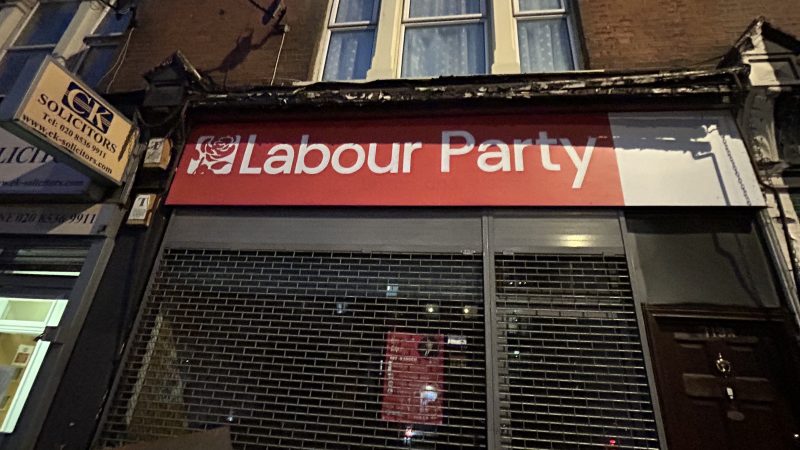

This is the third and final essay in a series by LabourList chair Karin Christiansen on the challenges facing Labour’s new General Secretary, Joe Fortune. Part one looked at the inheritance, Part two at the ‘machine’.
The social movements that built and defined Labour have thinned. The machine is set up for a politics that no longer exists. Both of those can be worked on, but only by an organisation capable of changing what it thinks, feels and does. Strategy is important but culture will eat it for breakfast, as the saying goes.
Labour has long had a problem with internal culture. Defensiveness and factionalism in the Labour Party long pre-dating the Corbyn years: the Blair–Brown feud, Benn vs. Healey, the Bevanite battles of the 1950s, and back further to 1931, when our own Prime Minister left to form a government with the Conservatives.
So we have a problem and it isn’t new. Bunker mentalities, “boys’ clubs”, anonymous briefings against colleagues, “toxicity”, leaks, monocultures and groupthink, accusations of bullying and turning a blind eye to the poor behaviour of those on our side, factional selections, deselections and hiring have been described in many eras and at all levels of the party. It is not a factional or ideological problem – it’s a cultural one.
But can we change?
The 2022 Forde Report was clear about where responsibility for cultural growth should rest: prime responsibility with the General Secretary and senior HQ staff and backed by the NEC – though the political leadership also has a role to play. The 2019 Labour Together Review reached similar conclusions. The current leadership has signalled that it wants to fix this, which gives the new General Secretary a genuine and potentially unique opportunity.
READ MORE: Labour Party Conference 2026: Full LabourList events programme, revealed
But large volunteer organisations often struggle to change, and they handle critique and feedback badly. People take it personally. As Emma Burnell has written, people in mission-driven organisations will often accept a poor culture because they believe the cause matters more – until, eventually, they do not.
Of course, the reality is that it is also about power, which does not always bring out the best in people, particularly, perhaps, in those not so used to wielding it. Labour adds its own history: real fears of entryism, and the strains of being a broad church. I believe that the most problematic consequence of this is that the organisation can be defensive towards new people and ideas, resistant to change, and quietly distrustful of its own members. The party is a place where everyone feels there is another room – or another WhatsApp group – that they are not in.
The answers to this are simple on paper; they are about openness and listening.
Why openness matters
Being open to new ideas is not just something that is “nice to have”. It is vital to Labour’s chances of winning the next election and of fending off the threat of Nigel Farage’s Reform. A party which is open to fresh voices has a chance of finding answers in the new era we are in. One which tries to just polish up the old offer, perhaps done better, is highly likely to fail.
This is not just a Labour problem nor even a British problem. It’s mirrored across Europe, where we see traditional left-of-centre parties struggling to find a response that’s adequate to the scale of the challenge from the populist right. After working for seven years on European elections and voter attitudes, the thing that struck me most was how badly political elites are misreading the public mood. Anti-system sentiment and the demand for change are far more widespread than most people inside politics assume.
The instincts that political establishments have are frequently out of step with the public they are trying to persuade. Asked why they back a party, voters in many countries rank “most likely to change things” above “has the best policies.” People are not generally drifting to the populist right because they have signed up to its ideology. They are reaching for the nearest port in a storm – for whoever voters feel really acknowledges their experiences and anxiety and offers some practical hope.
That is the space the populist right is occupying: bold, radical ideas that signal they are on people’s side. Those ideas are often neither realistic nor implementable, and voters frequently know it. The signal still lands. And before anyone gets badly carried away, it is worth noting there does also seem to be a nastiness penalty, as seen in the US on immigration enforcement. Meanwhile the centre-left, particularly parties used to governing, appears to be choosing from a self-imposed narrow suite of options. This has implications for how you run a manifesto process. It is not necessarily an argument for being “more left-wing”, but it is one for being more open and a lot bolder.
I am using policy as an example here as both a symptom and cause of our cultural problem. This applies to so many other things from electoral modelling to software procurement. But our defensive attitude to policy processes is instructive and is perhaps leading to one of the worst consequences for us. The Labour Party exists to change things for the better. When we shut ourselves off we greatly reduce the chances of finding answers that fit the moment. And we risk undermining our very purpose, of bringing about lasting change.
Stop running scared
Sometimes we run scared in anticipation, pre-emptively censoring ourselves over what the Mail or the Times might say about any given position. That is a 1990s problem. It mattered then, and the scars are real, but it is not what the public is worrying about now. Those papers still shape the weather in Westminster, which is why we flinch. They are not going to decide the next election.
None of that is a policy failure. It is a cultural one. An organisation that is closed to unfamiliar people is also closed to unfamiliar ideas. It filters them out using inherited assumptions about what is unsayable long before anyone decides whether or not they are undoable.
The General Secretary does not write policy. But they do have a vital role whether the processes that carry ideas upward are open or closed, who is in the room when options are shortlisted, and whether saying something awkward is treated as useful or as disloyal. That procedural and behavioural role is mirrored across many processes and functions of the party.
The big challenges
I’ve argued that there are several big challenges the Party needs to face and solve. These resolve around ensuring we have a party machine fit for the current context. And, if not, can we change and change quickly? You could summarise them as follows:
Is the machine fit for the context?
What will it take to run different campaigns in different seats, built around a variety of coalitions of voters and the different skills and resources of local candidates and parties? How do we get the most impact from incumbency? What replaces the national playbook? What decisions, roles, functions and resources can practically go to what level? How do we balance the risks? What central functions are needed in that strong core at HQ?
How do we build real two-way communications with voters? What does a genuinely digital first, localised engagement and comms operation looks like? How do we integrate and layer on- and offline communities?
Become a friend of LabourList and join our community. Our friends support our vital non-factional work and get access to exclusive content and events.
What central tech infrastructure is required and how much of this can be built in-house vs supporting high quality external integrations?
What does the rhetoric of members and activists as ‘a major asset’ mean in practice for the roles, responsibilities and rights of the people involved?
If persuasion really is so key, how do we figure out what actually works and find a way of testing and scaling new practices fast?
Can the Party change fast enough?
How do we have a structured and effective approach to culture change where we can hear hard truths and act on them? How do we challenge and bring out the best in each other? How do we reduce the barriers to entry for people and organisations with new ideas, energy, purpose, talent and how do we ensure accountability?
What needs to change in our processes to support cultural changes that widen and welcome the range of ideas and perspectives that reach the table? Get this wrong and it will sink every other change on this list, however well designed.
It’s also important to remember that the ground will have moved again by the election after next. What we need is a party that can keep noticing, keep testing and keep changing – a learning organisation.
Which is why I am hoping this is the start of a conversation rather than a verdict. None of this is one person’s doing and solving it is bigger than any one person’s job. The leadership in HQ and number 10 cannot do it from the centre alone, and they should not have to. Members should make up most of the means of delivering it. So the useful response is not to wait and see how the new General Secretary gets on. It is to get behind the change, be honest about what is not working, and be willing to try things even if some of them might fail and they seem scary. And we will need to resource it. That is definitely about giving our time but it is also about money. Which means the party needs contributions from the smallest to the largest level donors to create the space to do this. And while you are at it please do join me and become a Friend of LabourList and support our in-depth coverage and understanding of the Labour Party.
These essays are offered in the hope they help find solutions and build support for what needs doing. I would like to hear what other people make of all this — what I have got wrong, what I have missed and what do you agree with? Please email us with your thoughts [email protected].
But what I am sure about is that the Labour Party has to make radical changes in how it is organised if it is to have a chance of winning the next election. Those changes will be difficult and some will be painful, but we cannot afford to dodge them. The stakes for this country are too high for that.
Subscribe here to our daily newsletter roundup of Labour news, analysis and comment– and follow us on TikTok, Bluesky, WhatsApp, X and Facebook. You can also write to our editor to share your thoughts on our stories and share your own. The best letters are published every Sunday.
-
- SHARE: If you have anything to share that we should be looking into or publishing about this story – or any other topic involving Labour– contact us (strictly anonymously if you wish) at [email protected].
- SUBSCRIBE: Sign up to LabourList’s morning email here for the best briefing on everything Labour, every weekday morning.
- BECOME A FRIEND: If you enjoyed this, why not consider becoming a Friend of LabourList? Help sustain our journalism, and of course Friends do get benefits…
- PARTNER: If you or your organisation might be interested in partnering with us on sponsored events or projects, email [email protected].
- ADVERTISE: If your organisation would like to advertise or run sponsored pieces on LabourList‘s daily newsletter or website, contact our exclusive ad partners Total Politics at [email protected].



More from LabourList
Letters to the Editor – week ending 11th October 2026
‘Playing it safe on Europe is the riskiest thing Labour can do’
‘Jack Charlton and Labour’s rural tradition’