


What do a decade and a half of low growth, the rise of populism across the political spectrum, Brexit, the state of our public services, our high streets, the arts, France, Germany, the USA or the British state itself have in common? The answer is that much of what ails us can be traced back to the 2008 crash.
I am not a big one for grand unified theories and not one at all for conspiracy theories. I am not going to try to make a big sweeping claim either that the crash was a deliberately instigated ploy to destabilise Western democracy (though Putin could not have done a better job) or that life before 2008 was all bread and roses. Politics, time, history and progress – none of them work that smoothly.
But as we embark on yet another round of ‘Brexit – what a disaster!’ – which closely follows the bizarre argument about whether the one true economic model was to go back to the 1970s or 1980s – it just struck me how little we actually talk about the crash, its long and disastrous aftermath and the fact that no one has ever really been brought to justice for it.
I say bizarre because ever since Andy Burnham pointed out (quite rightly) that the economic model adopted in the 1980s might have given us growth in the relatively short term but left our society damaged, divided and deeply unfair to any but the economic winners the questions asked have not been about whether he is right or not – or even to what extent. But instead whether we were going back to the 70s or not and whether we were about to see another ‘winter of discontent’.
READ MORE: Back to the future?
I’ve written before about the waning power of scare stories about that period. But it still seems to be where so many retreat to as soon as there is any discussion about shifting the economic balance of power back from the vastly unequal society bequeathed by Thatcher’s ‘big bang’.
What is mentioned far less often is the fact that the drunken high of those years ended nearly two decades ago and we have been suffering from its hangover ever since. Never mind a season of discontent, we have been living through nearly two decades of it.
The philosopher Marshall McLuhan wrote: “One thing about which fish know exactly nothing is water, since they have no anti-environment which would enable them to perceive the element they live in.” In our post-crash world, discontent is the water in which we swim but we seem remarkably reluctant to name the ocean.
New Labour did far more good than its critics on the left are willing to acknowledge by using the proceeds of the system to rebalance the iniquity of its outcomes. But it is a reasonable critique to say that not enough was done to change the fundamentals that led to that crash and our economy’s vulnerability to it.
Become a friend of LabourList and join our community. Our friends support our vital non-factional work and get access to exclusive content and events.
This was excusable before the crash. They were doing their best within the environment in which we all lived. But for there to be so little concept of the need to change that environment over the many years since is both baffling and deeply damaging to our political and economic debate.
We are absolutely right to blame Tory austerity for so much of what is wrong now in the UK. The damage done to almost every part of society has been a slow-moving car crash that is beyond doubt as all of the bad seeds sown by Cameron and Osborne have become the weeds choking our society, our economy, our public services and our communities.
But as well as rejecting the wrong cure applied by the Tories in the 2010s, we must also deal with the root cause of the disease. Or we will only ever be able to ameliorate its effects – not effect a cure. The way the economy was shaped in the 1980s was what led to so much of what happened in 2008. That more Thatcherism wasn’t the answer is clear. But the obvious conclusion that we, therefore, need new answers is still deemed controversial.
Andy Burnham has been accused of nostalgic thinking by ‘harking back’ to the changes of the 1980s. I will probably be accused of being backward looking by tracing many of the problems John Healey faces as he approaches next week’s budget to the culmination of 80s economics in 2008. But we cannot allow accusations of backward thinking to blind us to the flaws of the present that have been built into the system by decisions made decades ago and their catastrophic failures.
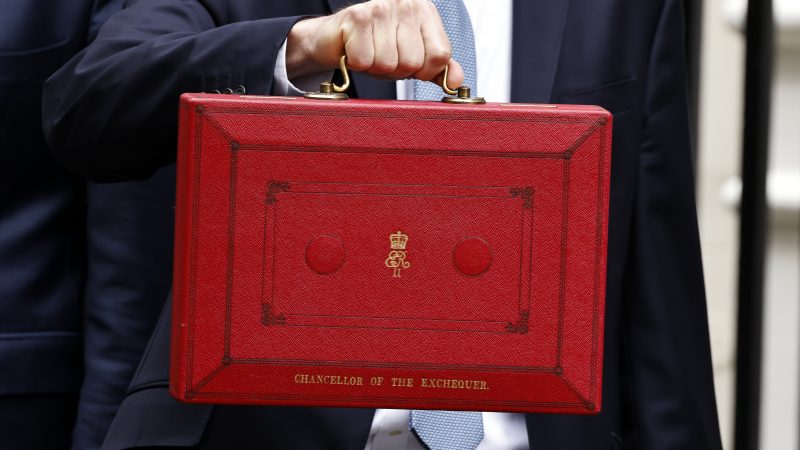
This is unlikely to be a budget that rewires the whole economic system in one ‘big bang’. But I do hope that we start to talk more honestly and openly about why this budget is so difficult and the Chancellor’s options so constrained.
We have to be the fish that learn to talk of water.
Subscribe here to our daily newsletter roundup of Labour news, analysis and comment– and follow us on TikTok, Bluesky, WhatsApp, X and Facebook. You can also write to our editor to share your thoughts on our stories and share your own. The best letters are published every Sunday.
-
- SHARE: If you have anything to share that we should be looking into or publishing about this story – or any other topic involving Labour– contact us (strictly anonymously if you wish) at [email protected].
- SUBSCRIBE: Sign up to LabourList’s morning email here for the best briefing on everything Labour, every weekday morning.
- BECOME A FRIEND: If you enjoyed this, why not consider becoming a Friend of LabourList? Help sustain our journalism, and of course Friends do get benefits…
- PARTNER: If you or your organisation might be interested in partnering with us on sponsored events or projects, email [email protected].
- ADVERTISE: If your organisation would like to advertise or run sponsored pieces on LabourList‘s daily newsletter or website, contact our exclusive ad partners Total Politics at [email protected].



More from LabourList
‘Devolution and social care are inextricably linked’
‘Healey should copy successful policies to support SMEs from our EU neighbours’
‘Europe is our future but only if we take voters with us’