


In Liverpool, the Prime Minister set a new direction on Europe and promised a clear-eyed assessment of the options – with all possibilities except the status quo squarely on the table.
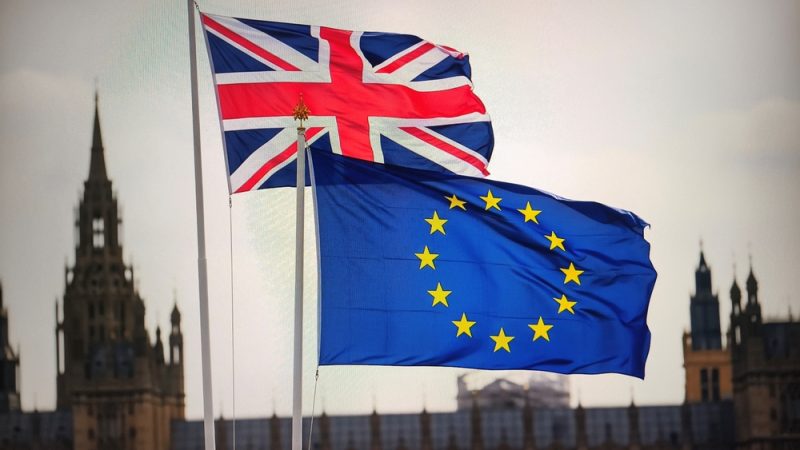
A new IPPR paper argues that the UK must again become a member of the European Union. In a rapidly shifting global order, increasingly characterised by geoeconomic blocs, the current series of individual deals with Europe is not enough. Only membership can deliver the economic, political, and geopolitical security the UK needs.
But the government can only deliver what the public will get behind.
On the face of it the numbers are compelling. When we asked people whether they wanted to join the bloc, 52 percent of people said yes, compared to 29 percent who wanted to stay out. Strip out voters who weren’t sure, and that is a sizeable 64 to 36 percent.
The picture was even stronger within Labour’s 2024 coalition. On average, support for membership was 68-21. But among 2024 Labour voters who are leaning towards the Greens, it was 83-11 – and even among those tempted by Reform, it was 54-36.
READ MORE: ‘Brexit was never a closed matter – it’s time to put the national interest first’
But if the 2016 referendum showed us – and David Cameron’s Conservatives – anything, it’s that a seemingly safe majority can be softer than it appears. A campaign on EU membership is very different from a headline poll. Over the course of several months, voters would be asked to consider what they’d be giving up and face the potential of a long negotiation. They would be shown the trade-offs inherent in membership, and be put through the wringer of the British media environment.
In our new opinion research, conducted alongside Persuasion UK, we put headline support for membership to the test. We showed participants versions of a deal on EU membership with the benefits and obligations of joining spelt out. Each person saw a different combination of benefits, trade-offs, negotiation timelines, and positive messaging as well as attack lines.
Then we asked whether they would accept the deal.
Our results show that even after being confronted with the realities of membership, and a simulated media environment, across all the options an average of 52 percent of people chose to accept, compared to 48 percent who didn’t.
Some of the attack lines most feared in Westminster – freedom of movement or betraying Brexit – only had a limited impact on support. When asked directly, 61 percent of voters said they would accept freedom of movement as the price of a deal, compared to 28 percent who would not. That included 42 percent of 2024 Reform voters. Classic 2016 Leave campaign fearmongering about migration – EU membership ‘opening the floodgates to migration’ – did still dent support, but overall the results suggest that any opposition campaign will not succeed on a platform that simply rehashes old arguments.
What lifted support were the practical benefits. The single market and the right to live and work in the EU ranked highest among the advantages voters saw. Messaging around closer security cooperation in a more dangerous world, greater public investment and ending travel chaos all moved the dial in favour of the deal.
Become a friend of LabourList and join our community. Our friends support our vital non-factional work and get access to exclusive content and events.
It wasn’t all rosy – any campaign to join would be vulnerable to the challenge of new trade-offs. As several pre-eminent European voices have made clear, if the UK were to target membership, the old deal would not be on the table. Our research found
that even a hypothetical commitment to ditching the pound for the euro hit support, sending it to 45 percent on average if part of the ‘deal’. When expressed neutrally, UK financial contributions didn’t affect support – but they did when framed as ‘cheques to Brussels start again’. Exiting post-Brexit trade deals was also damaging. As both are inescapable obligations of joining, they represent arguments that the government would need to win.
So our results reveal that support is softer than it first appears. But there remains a majority for membership that’s resistant to attack, and provides a strong basis from which the government can build consensus.
Joining commands a clear majority across Labour’s voter coalition and to its left flank – those who voted Labour, Lib Dem and Green in 2024, as well as among voters in Scotland. However Conservative and Reform voters have a clear preference for alternative options, from staying out, to a closer economic relationship. A more durable majority is to be found by building consensus which crosses the aisle.
Strong political leadership is essential and must tell a new story, about a new Europe, that speaks to voters’ present concerns, including around security, prosperity, and democratic values. It’s time to stop talking about Brexit and look to the future.
Subscribe here to our daily newsletter roundup of Labour news, analysis and comment– and follow us on TikTok, Bluesky, WhatsApp, X and Facebook. You can also write to our editor to share your thoughts on our stories and share your own. The best letters are published every Sunday.
-
- SHARE: If you have anything to share that we should be looking into or publishing about this story – or any other topic involving Labour– contact us (strictly anonymously if you wish) at [email protected].
- SUBSCRIBE: Sign up to LabourList’s morning email here for the best briefing on everything Labour, every weekday morning.
- BECOME A FRIEND: If you enjoyed this, why not consider becoming a Friend of LabourList? Help sustain our journalism, and of course Friends do get benefits…
- PARTNER: If you or your organisation might be interested in partnering with us on sponsored events or projects, email [email protected].
- ADVERTISE: If your organisation would like to advertise or run sponsored pieces on LabourList‘s daily newsletter or website, contact our exclusive ad partners Total Politics at [email protected].



More from LabourList
‘Devolution and social care are inextricably linked’
‘Healey should copy successful policies to support SMEs from our EU neighbours’
Hull East MP Karl Turner has Labour whip restored