


When I was at the Federation of Small Businesses, I saw a real passion for the micro economy from two of this country’s most capable chancellors.
Gordon Brown focused heavily on boosting UK productivity by fostering an enterprise culture. He reduced the main small firm’s corporation tax and also introduced the flat-rate VAT scheme for micro businesses.
Alistair Darling took office just as the global financial crisis struck. Darling quickly concentrated his efforts on crisis management and keeping small businesses afloat. With high street banks restricting loans, Darling launched the enterprise finance guarantee scheme, where the government underwrote bank loans to small businesses. He also introduced a ‘time to pay’ scheme that allowed struggling small businesses to defer their tax liabilities.
It would be so refreshing to see a stream of similar policies from Andy Burnham’s administration. However, John Healey has openly admitted that money the previous Labour government had is “simply not there” now. Healey is also facing a tricky economic situation ahead of his first Budget this month with city analysts saying that he has no fiscal headroom. Nevertheless, Healey can still back the business sector by copying successful SME policy interventions from abroad.
READ MORE: Good growth in every postcode 21st October 2026
Remember the famous catchphrase “Here’s one I made earlier” from the BBC’s Blue Peter programme? This phrase was used whenever a presenter was working on a complex arts-and-crafts segment and magically produced a finished version they had prepared beforehand. Many of our EU partners have these ready-made policies and we should not be shy about adopting them. Implementation of these policies will invariably mean lower costs to the chancellor; remove the risk of building something SMEs will reject; and give us the ability to help SMEs at a much faster pace.
There are two crucial issues facing Britain’s SMEs that can be resolved by looking to the answers from our EU friends in Germany and France.
One of those is access to credit at affordable rates.
Small and medium-sized British businesses continue to suffer from an acute shortage of finance from our very profitable clearing banks. The problem is made worse by the fact that the four big clearing banks dictate 90 percent of lending to the British SME sector. This then leads to decisions on lending being based on complex VAR-like processes beamed down from some remote central office.
In Germany however, the Sparkassen regional banking system has been providing SMEs with long-term secure finance for many years. They have the lion’s share of the market for SME financing in Germany. There are approximately 15,300 branch offices with 245,000 staff and a business volume of more than £1,000 billion. Money saved in these regional banks is then lent to support that region’s SMEs, benefitting that economy and that area’s population – financial devolution at work.
In Britain we used to have regional banks like the Union Bank of Manchester, established in 1836. This bank was in operation until 1940, when it was fully absorbed, centralised and rebranded as Barclays. It should not weigh too much on the public purse for Healey to ask officers at the state-owned British Business Bank to see how we here in Britain can emulate the German Sparkassen model.
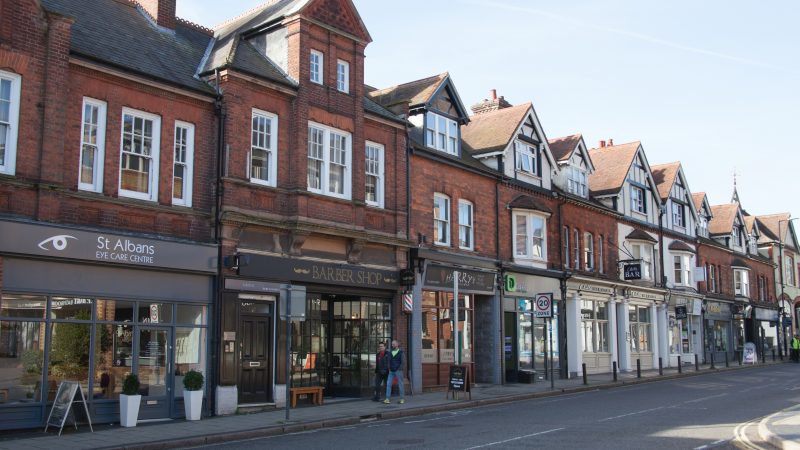
Aside from struggling to raise finance, SMEs are also finding it difficult to gain or retain micro premises in our high streets.
Andy Burnham’s promise to give councils powers to stop betting, vape and adult gaming shops in their onward march onto our high streets is welcome news. But the government must go much further than simply stemming the flow of vape shops. It must also give planners a say on the optimal physical size of individual retail units to ensure SMEs can thrive in our high streets. Copying planning laws from France would be a good start.
Become a friend of LabourList and join our community. Our friends support our vital non-factional work and get access to exclusive content and events.
French petits commerces are still at the heart of daily life, such as the abundant presence of thriving boulangeries, pâtisseries and the like across all of France.
There were similar shops in our high streets back in the day, such as Dewhurst the master butcher, Three Cooks bakeries and Mac Fisheries. We have lost these popular high street stores that were trading from modestly-sized – hence affordable – premises. This was because UK planning laws allow bulldozers to knock down three or four shops in a row to accommodate space for a bigger concern – typically a mini version of the supermarkets. Hence the proliferation of the real killers of our high street in the shape of Tesco Metro and Sainsbury Local.
The French have succeeded where we have failed miserably simply because their planning laws heavily restrict and regulate any proposals on combining shops. Such projects require full building permits for structural or facade changes.
Furthermore, French local authorities hold a legal safety net protecting their high streets and town centres. If a small shop owner sells their business or property, the local town hall has the right of first refusal to buy it at market value. The municipality can then intentionally lease it back to an independent trader like a butcher, a baker or even a candlestick maker. This prevents the space from being bought out by corporate franchises like the aforesaid supermarkets or developers looking to alter the property. John Healey should look at changing planning policy guidelines for the high street and give local authorities first refusal on shop disposals.
These are uncertain but also exciting times for this country, and we need all the friends we can get especially from within the European Union in places like Germany and France. John Healey can make a start by showing that we value and admire them. What better way than to latch onto some of their successful SME measures. After all, they do say that imitation is the sincerest form of flattery.
Subscribe here to our daily newsletter roundup of Labour news, analysis and comment– and follow us on TikTok, Bluesky, WhatsApp, X and Facebook. You can also write to our editor to share your thoughts on our stories and share your own. The best letters are published every Sunday.
-
- SHARE: If you have anything to share that we should be looking into or publishing about this story – or any other topic involving Labour– contact us (strictly anonymously if you wish) at [email protected].
- SUBSCRIBE: Sign up to LabourList’s morning email here for the best briefing on everything Labour, every weekday morning.
- BECOME A FRIEND: If you enjoyed this, why not consider becoming a Friend of LabourList? Help sustain our journalism, and of course Friends do get benefits…
- PARTNER: If you or your organisation might be interested in partnering with us on sponsored events or projects, email [email protected].
- ADVERTISE: If your organisation would like to advertise or run sponsored pieces on LabourList‘s daily newsletter or website, contact our exclusive ad partners Total Politics at [email protected].



More from LabourList
‘Devolution and social care are inextricably linked’
‘Europe is our future but only if we take voters with us’
Hull East MP Karl Turner has Labour whip restored