

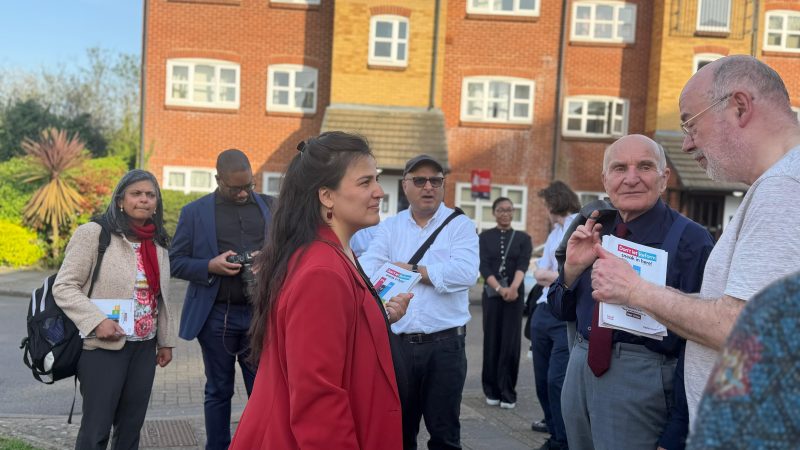

Six months ago, I was elected as a Labour councillor for East Acton during what was a difficult set of local elections for our party. At the time, I was also seven months pregnant.
Looking back, many people assumed that campaigning while heavily pregnant would be the biggest challenge. In reality, that was the easier part. The real balancing act began after I was elected, because, shortly after, I found myself navigating life as a newly elected councillor while caring for two children under two.
When I was elected, I made a conscious decision. Although I would be taking maternity leave from my job in the Civil Service, I would not be stepping back from my council duties. The residents who voted for me deserved representation, and I felt a deep responsibility to be present for them. Public service is a privilege, and one I do not take lightly. Six months on, that decision has meant juggling three committee appointments, ward surgeries, community events, campaigning, full council meetings and a growing casework load –ball alongside the demands of family life.
READ MORE: Delivering in local government: How Labour is building a better Britain everywhere
So far, we’ve dealt with around 70 to 80 pieces of casework. Some have been resolved, some remain ongoing, and others required no further action after advice was provided. What has struck me most is how much local government matters in people’s everyday lives. Behind every email or enquiry is someone looking for help, reassurance or simply someone willing to listen. Some of the most rewarding moments have come from receiving messages from residents thanking me for responding quickly, pursuing updates on their behalf or helping them navigate a challenge they felt unable to resolve alone. Those moments remind me why I stood in the first place.
That isn’t to say it has been easy. Local government was never designed around school runs, nursery pick-ups or bedtime routines. Many council meetings and political engagements take place in the evenings, which is entirely understandable given that most councillors balance their role alongside full-time employment. Yet there have been weeks where four evenings in a row have been taken up by meetings, events or Labour activities. There have been countless occasions when I’ve completed casework whilst my baby slept in my arms. There have been meetings attended after hurried bedtime routines and campaign sessions where my baby has come along in a carrier because that was the only practical way to make it work.
In many ways, however, these experiences have strengthened my belief that politics benefits when people with caring responsibilities are represented within it. Too often, women are still met with assumptions that pregnancy, motherhood or caring responsibilities somehow make them less capable or less committed. My experience has been the opposite. Becoming a mother has made me more organised, more focused and more determined. It has sharpened my understanding of the issues many families face and strengthened my motivation to improve the communities my children are growing up in.
What matters is not whether mothers can do politics. We can, and we do. The more important question is whether politics is doing enough to support mothers and other carers to participate fully.
One of the clearest examples of this for me was attending Labour Party Conference.
Become a friend of LabourList and join our community. Our friends support our vital non-factional work and get access to exclusive content and events.
Before going, I was regularly asked how I planned to manage conference with young children. The answer was simple: childcare. Because childcare was available, I was able to attend, participate, network and speak as a delegate. Without those provisions, my conference experience would have been far more limited. In fact, one of my most memorable conversations happened not at a fringe event or evening reception but in the childcare area itself. I got chatting to another mother about conference and parenting, only to later discover that she was Elsie Blundell MP. It was a reminder that networking and participation do not all have to look the same. Inclusive politics recognises different realities and creates different pathways for people to contribute.
That is also why I was particularly struck by Yvette Cooper’s Labour Conference speech, where she announced the restoration of Sure Start health services through family hubs and spoke about strengthening support available to parents and young children. Those commitments send an important signal about the value Labour places on families and early years support. Equally, Andy Burnham’s focus on care, carers and the need to properly recognise those who look after others reflected a wider truth: caring responsibilities are not an obstacle to participation in society – they are a fundamental part of life for millions of people.
I’ve also been fortunate to benefit from support networks that exist specifically to encourage women in public life. Through the Labour Women’s Network Jo Cox Women in Leadership programme and mentoring from Elect Her, I’ve seen the difference that encouragement, mentoring and practical advice can make. But while individual support matters, we must also continue building political cultures that recognise and accommodate the realities of modern life. That means understanding that some people care for children, others care for elderly relatives, and many have responsibilities outside politics that are every bit as important as the elected roles they hold.
Six months into my first term, there are still three and a half years ahead of me. I know there will be challenging weeks, competing priorities and moments when the juggle feels particularly difficult.
But if there is one lesson I have learned so far, it is that there is never a perfect time to stand for office. Had I waited for life to become less busy, I might never have stood at all.
Politics needs mothers. It needs carers. It needs people whose lives reflect those of the communities they represent. My experience as a new councillor has convinced me that family life and public service are not competing priorities. With the right support, they can sit alongside one another. And when they do, our politics is stronger, more representative and better connected to the people it exists to serve.
Subscribe here to our daily newsletter roundup of Labour news, analysis and comment– and follow us on TikTok, Bluesky, WhatsApp, X and Facebook. You can also write to our editor to share your thoughts on our stories and share your own. The best letters are published every Sunday.
-
- SHARE: If you have anything to share that we should be looking into or publishing about this story – or any other topic involving Labour– contact us (strictly anonymously if you wish) at [email protected].
- SUBSCRIBE: Sign up to LabourList’s morning email here for the best briefing on everything Labour, every weekday morning.
- BECOME A FRIEND: If you enjoyed this, why not consider becoming a Friend of LabourList? Help sustain our journalism, and of course Friends do get benefits…
- PARTNER: If you or your organisation might be interested in partnering with us on sponsored events or projects, email [email protected].
- ADVERTISE: If your organisation would like to advertise or run sponsored pieces on LabourList‘s daily newsletter or website, contact our exclusive ad partners Total Politics at [email protected].



More from LabourList
Good growth in every postcode 28th October 2026
‘Lessons from Brazil: What Labour can learn from Lula’s victory’
Reform’s grievance Budget wishlist shows just how out of touch their party is