

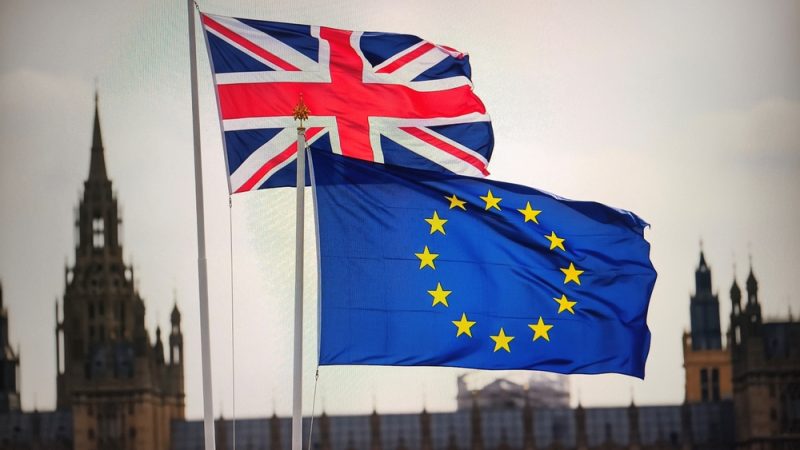

Britain’s debate about Europe has been trapped between two competing stories. One says Brexit liberated Britain from an inflexible political and economic structure. The other says Brexit inflicted lasting economic damage that can only be repaired through much closer integration. We voted to leave the European Union, and some of the strongest support for leave was in Labour constituencies.
The Prime Minister Andy Burnham has firmly challenged the first account. At the Party conference he argued that Brexit had done “more harm than good” and that Britain needed to determine its long-term relationship with its largest market, however, on many indicators we have performed better than France and Germany, outside the EU. Some within the Labour family are nervous about opening that debate again. Lucy Powell expressed concern that going beyond Keir Starmer’s reset plans was not “possible or desirable” and the Business Secretary has warned that renegotiating would lead to significant uncertainty for businesses.
Those arguments deserve serious consideration. But there is another question Labour should examine equally seriously: What would Britain lose by rejoining?
The freedoms acquired outside the EU are no longer theoretical. Labour is exercising them. Britain now operates an independent trade policy. The government has agreements with 74 countries. We have the best trading relationship with the EU of any non-member state. Britain has joined the Comprehensive and Progressive Agreement for Trans-Pacific Partnership, while Labour concluded the UK-India agreement negotiated in 2025. The Government estimates the latter could eventually increase trade by £25.5 billion annually and UK GDP by £4.8 billion. These are enormous achievements and have only happened because we are outside the EU.
The CPTPP is particularly significant. It gives British businesses preferential access across an 11-country partnership whose economies, including Britain, were worth almost £13 trillion in 2025 and growing fast. These agreements do not compensate automatically for barriers to Britain’s largest neighbouring market. Geography matters in trade, about 46 percent of UK trade is with the EU. But UK trade with non-EU countries now accounts between 54 percent and 59 percent of our exports. Our trade with non-EU countries is growing. This cannot simply be ignored.
There is similar freedom over industrial policy. EU membership did not prohibit our having an industrial strategy, and several EU countries demonstrate that. Britain nevertheless now operates its own subsidy-control system rather than the EU state-aid regime. It allows public authorities to provide subsidies subject to domestic principles and Britain’s international commitments. The government has established streamlined routes covering areas including local growth, research and development, housing and energy use. That matters as Andy Burnhams government seeks to reindustrialise Britain. A recent example is the excellent decision to determine that defence contracts will only be awarded to British firms and ports for naval procurement. Security, defence and growing the economy all in one.
The government is changing public procurement. Around £400 billion passes through government contracting annually, and ministers are developing procurement policy to strengthen strategically important industries including steel, shipbuilding, energy infrastructure and AI while improving access for smaller businesses. Leaving the EU does not magically produce good industrial policy. It simply changes where decisions can be made and British governments can determine policy that best suits our needs.
Regulation provides another example. Recent economic growth in the UK has largely been underpinned by huge innovations and investment in tech, AI, and professional services. The UK’s light regulatory framework has resulted in the UK leading in Europe in this field. Meanwhile, the EU has been rigid and top down, compared to the UK’s sector specific guidance. Returning to the EU would result in these crucial areas for future economic growth being constrained and the excessive regulation could deter investment.
Britain also possesses greater autonomy over tariffs. Since leaving the EU, businesses have been able to request UK-specific tariff suspensions on imported inputs, with more than 300 implemented following previous application round. We have also been able to escape some of the tougher sanctions placed on the EU by the US. Our agility in this area is crucial. Businesses have adapted to the new norm and are taking advantage of the best trading relationship with the EU, with customs checks completed online, minimising any border friction.
Sometimes common rules are preferable. A manufacturer selling into European markets may value one regulatory standard more than Britain’s theoretical freedom to devise another. Labour’s developing approach implicitly recognises this: align where alignment brings worthwhile economic benefits, retain autonomy where divergence serves a strategic purpose. This does not require us to rejoin the EU or tear up our trade deals by entering a customs union, or to lose control of our borders by accepting free movement in the Single Market. This third way is a more sophisticated stance than, “diverge from Brussels everywhere” or “follow Brussels everywhere”. Its British pragmatic.
Instead of seeking to re-open the Brexit debate, which was the most divisive and polarising period in British politics lets focus on being the best of allies, in cooperation but without membership. Labour’s 2024 manifesto offered precisely that settlement and provided business with the confidence that we would not return to the uncertainty of Brexit arguments. Our manifesto promised that Britain would stay outside the EU, Single Market and customs union while seeking to reduce unnecessary trade barriers and strengthen European security cooperation.
Brexit did not guarantee prosperity and progress. Nor does EU membership. Across Europe, the far right is on the march and economies are struggling. The AfD in Germany, Le Pen in France, Wilders in Holland and the populist parties of Eastern and Central Europe. If we were to rejoin, we would not be joining a progressive trading bloc, but one dominated by the hard right.
We have been outside the EU formally just six years. Before reopening the enormous constitutional question of membership, this Labour government should at least establish whether we can make a success of it as a serious nation, rather than create uncertainty, division and polarisation by re-opening a debate largely settled in the country.
Become a friend of LabourList and join our community. Our friends support our vital non-factional work and get access to exclusive content and events.
Subscribe here to our daily newsletter roundup of Labour news, analysis and comment– and follow us on TikTok, Bluesky, WhatsApp, X and Facebook. You can also write to our editor to share your thoughts on our stories and share your own. The best letters are published every Sunday.
-
- SHARE: If you have anything to share that we should be looking into or publishing about this story – or any other topic involving Labour– contact us (strictly anonymously if you wish) at [email protected].
- SUBSCRIBE: Sign up to LabourList’s morning email here for the best briefing on everything Labour, every weekday morning.
- BECOME A FRIEND: If you enjoyed this, why not consider becoming a Friend of LabourList? Help sustain our journalism, and of course Friends do get benefits…
- PARTNER: If you or your organisation might be interested in partnering with us on sponsored events or projects, email [email protected].
- ADVERTISE: If your organisation would like to advertise or run sponsored pieces on LabourList‘s daily newsletter or website, contact our exclusive ad partners Total Politics at [email protected].



More from LabourList
Friends of the Month: Amritpal Gill
‘From solidarity to accountability: why Labour must stand up for Hong Kong’
‘Why ‘Hugh’s Law’ should be the next step for working families’