


Have you had problems with parcels lately? More and more are getting lost, damaged or left in broad daylight, new Citizens Advice polling suggests.
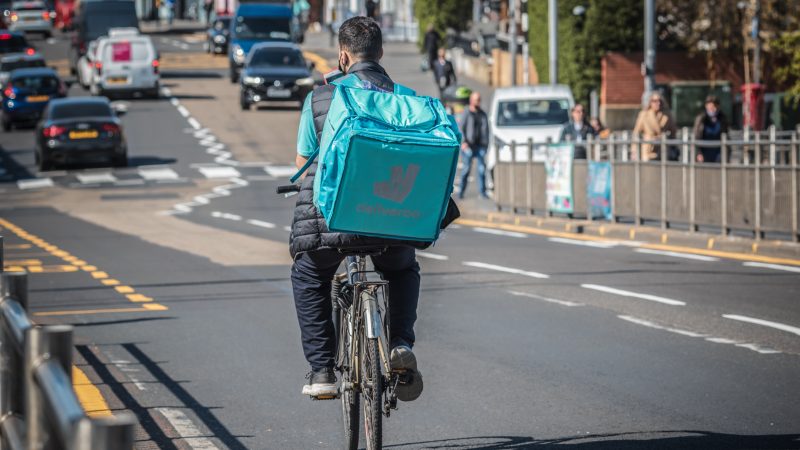
Intriguingly, the charity says a “crucial factor” is widely overlooked. Often self-employed drivers’ pay is not only low, but based on parcel numbers delivered or unreasonable targets, not actual hours worked or costs incurred. Unavoidable delays and costs go unpaid, from traffic, depot or parking problems to fuel and repairs. It means rushed, stressful work, leading to sub-standard deliveries. It means long hours and few breaks, leading more importantly to sub-minimum wage pay.
Fortunately, there’s an obvious solution, and Labour has just fired the starting gun. But it must be the start of a wider new electoral pitch to the self-employed.
Game-changing potential for gig workers
Many delivery drivers are among the estimated 900,000 people in “bogus self-employment” – legally entitled to the minimum wage, holiday pay, pensions and eventually guaranteed hours as ‘workers’, but denied it by firms.
At conference, Labour promised an imminent “clampdown”. Success would be game-changing for not only parcel and takeaway couriers, but private hire drivers, builders, carers and many more. Unreasonable hours or speed would no longer be needed just to reach the minimum wage. The strangely under-reported announcement finally progresses promises government made in 2018, when gig economy controversies forced the Conservatives to launch and act on the Taylor Review.
READ MORE: Usdaw urges the government not to break Labour’s manifesto commitment on secure guaranteed contracts
Author Matthew Taylor, now chair of the government’s Fair Work Agency, told me his personal view at an FWA-convened event this week: “That’s a major step forward, because this issue has simply been ducked for a very, very long time.” Lisa Pinney, CEO of the FWA, noted the labour rights watchdog sees “far too many cases where status and vague self-employment is a factor”.
Labour will consult on two of Taylor’s recommendations. First, putting the onus on organisations to prove contractors are self-employed at tribunal, not on workers to show they deserve rights. This should encourage forethought and fairness in contracting, and a slightly less uphill battle for low-income individuals fighting complex, costly, drawn-out cases against organisations with better lawyers and paperwork.
Second, tackling a loophole currently letting firms mostly control someone’s work but avoid employing them, if contracts let individuals send someone else. This clause helped Deliveroo see off a union’s bid for formal collective bargaining.
The elephant in the room
Yet Labour itself has warned something else is fuelling bogus self-employment too – something tweaking tribunal rules and substitution loopholes leaves untouched.
The problem? Ambiguous, arcane law on what employment is. Labour’s Plan to Make Work Pay, shortly before the election, promised to consult on a “simpler framework”. It noted working out someone’s status can require “encyclopaedic knowledge of case law”, quoting Taylor. “In some extreme cases, the ambiguity has been deliberately used to cut costs and avoid legal responsibilities.”
Labour’s plan made clear Britain’s unusual “three-tier system” exacerbates this complexity. We have not only the self-employed, but two tiers of worker – employees, and ‘dependent contractors’ or ‘limb (b) workers’ with fewer rights.
Crucially, Labour promised progress towards a “single status of worker”, pre– and post-election. This would hand dependent contractors the same unfair dismissal protections, redundancy pay, sick pay and parental leave and pay employees enjoy. It would not only boost equality and security, but tackle bogus misclassification of employees, and undercutting of good employers.
Labour’s forgotten promises
So will the consultation explore clearer, fairer employment law, too? I fear not.
Single worker status went unmentioned in Labour’s latest announcement. Ministers’ previous updates avoided the term. ‘Clarity’,‘certainty’ and new written statements are promised, but the legislation likely needed is not. Labour’s press team referred me to the relevant department; their press team didn’t reply. Legal ambiguity has become political ambiguity.
Ironically, Labour specifically promised to end “years of failure, dither and delay” on employment. The Tories promised clearer law too eight years ago. If the consultation is silent, our political class will have not only let down the most vulnerable workers for a decade, but needlessly betrayed their hope, too.
There are understandable excuses for delay, like capacity amid wider reforms, and perhaps for prioritising less thorny areas. But blithely promising the world to begin with, and blithely pretending you’ve not broken that promise, is inexcusable. If Labour can’t act, it can apologise.
Action is getting more urgent, not less
But action is becoming more urgent, not less. The Fabian Society and Joseph Rowntree Foundation are the latest to warn increases in wider employment rights, minimum wage levels and national insurance may further incentivise using freelancers and dependent contractors over employees. Technology and low unionisation are already fuelling its spread across sectors; MPs have highlighted retail and hospitality and Taylor highlighted hair and beauty.
Even non-partisan, normally moderate Citizens Advice said last week legislation must “sharpen the distinction” between categories, and grant delivery drivers not just dependent contractor but employee rights.
Further reforms may be needed too. The Fabian-JRF report argues high-risk sectors like parcel and takeaway delivery require information campaigns, tailored sector-wide agreements, and high-profile civil proceedings on individuals’ behalf to send a message.
Labour’s missing message to the wider self-employed
Conversely, policy and electoral success may require showing Labour isn’t against self-employment itself. It called itself “the party of the self-employed” and vowed to “champion” them in 2024.
Become a friend of LabourList and join our community. Our friends support our vital non-factional work and get access to exclusive content and events.
But self-employment has rarely featured in messaging since. 2.5 million factory workers still dominate Labour’s imagination over plumbers, shopkeepers, cleaners and creatives.‘Payslip Labour’ dominates fiscal policy over the 4.5 million self-employed. The sole trader still “confuses Labour’s intuitive sense of class”, like the ‘petit bourgeoisie’ and ‘lumpenproletariat’ frustrated Marx.
That matters. New polling shows the self-employed view Labour as the least supportive, and Reform the most. Far more of the public say Labour cares for civil servants and doctors than construction workers, Uber drivers and influencers.
New health and safety protections, blacklisting action and “freelance champions” for creatives are welcome. But more explicit championing and a wider self-employed agenda could help neuter recent Reform and Tory pledges to cut VAT and IR35 burdens respectively – and help a disproportionately poor workforce the left too often overlooks.
Fixing biases in universal credit could be a quick win. Parents earning £15,000 can get £3,500 more in top-ups annually as employees than some self-employed peers. Research shows reform is both popular and cheap. Aligning employment status for rights and taxes is vital, too. A new paper notes HMRC now taxes some individuals as payslip workers, while employment law treats them as sole traders – taxation without rights.
JRF and the Fabians also urge new parental and sick pay rights and pension reform for the self-employed. The public agrees, but the lowest and highest-earning sole traders may baulk at tax hikes. So would the Treasury or employees, given lower NICs already save the self-employed £10bn annually. Starting with smaller, popular ideas like Bright Blue’s state-backed opt-in sickness insurance feels less risky than suddenly equalising taxes.
Whatever Labour does, it cannot just pass the parcel to the next government. Or even worse, leave it in plain sight on Number 10’s doorstep.
Subscribe here to our daily newsletter roundup of Labour news, analysis and comment– and follow us on TikTok, Bluesky, WhatsApp, X and Facebook. You can also write to our editor to share your thoughts on our stories and share your own. The best letters are published every Sunday.
-
- SHARE: If you have anything to share that we should be looking into or publishing about this story – or any other topic involving Labour– contact us (strictly anonymously if you wish) at [email protected].
- SUBSCRIBE: Sign up to LabourList’s morning email here for the best briefing on everything Labour, every weekday morning.
- BECOME A FRIEND: If you enjoyed this, why not consider becoming a Friend of LabourList? Help sustain our journalism, and of course Friends do get benefits…
- PARTNER: If you or your organisation might be interested in partnering with us on sponsored events or projects, email [email protected].
- ADVERTISE: If your organisation would like to advertise or run sponsored pieces on LabourList‘s daily newsletter or website, contact our exclusive ad partners Total Politics at [email protected].



More from LabourList
Healey’s pre-Budget headache
‘Public water, local power’
SPONSORED: ‘Partnership is the key to making devolution deliver Northern growth and UK prosperity’