
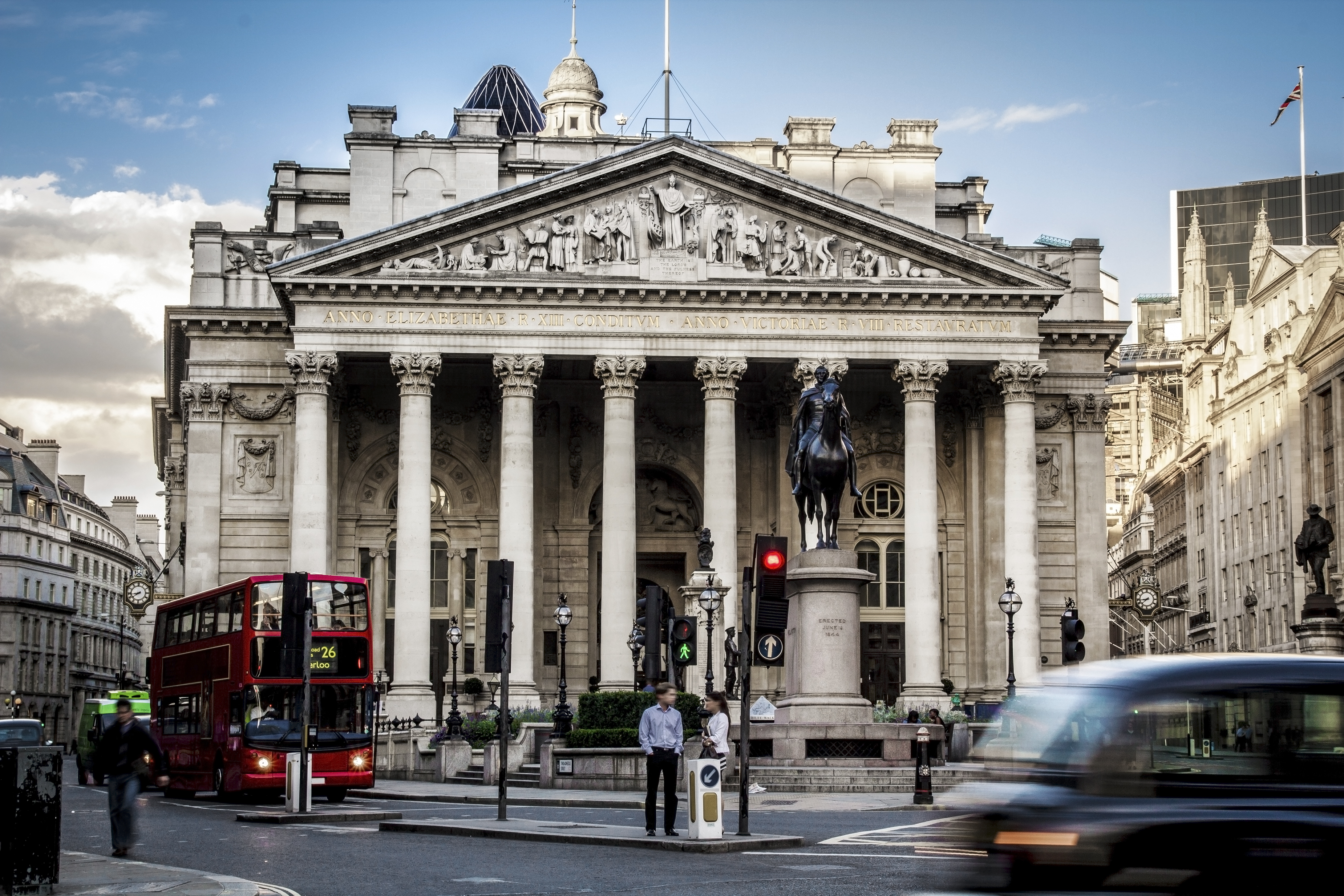
In the upcoming ten-year plan, this government will lay out how it plans to deliver on Andy Burnham’s bold vision to end 40 years of neoliberalism and reshape the country. The Prime Minister has pledged to restore public control over privatised utilities; to build hundreds of thousands of council houses; to re-industrialise the UK’s regions; and to establish a new national care service on a par with the NHS. But there is one rarely discussed institution that, if left unreformed, will stand in the way of these ambitions: the Bank of England, which last week voted to increase its headline interest rate.
A different world
When Gordon Brown made the Bank of England independent in 1997, its guiding principles were designed to suit an era of smooth, market-led globalisation. This is not the same world that Andy Burnham and John Healey face 30 years later, with volatile geopolitics, a deepening climate crisis, and a glaring need for state-led economic transformation. In this context, the old principles are failing to tackle inflation while harmfully pushing borrowing costs up for the government, businesses, and households – undermining any attempt to transform the economy. If the Bank hikes interest rates every time Trump or Putin invades somewhere new, or every time climate change causes harvests to fail, then the UK’s next decades will become a vicious cycle of economic self-harm.
A blunt tool
Under the current mandate, the Bank targets two percent inflation by raising or lowering its headline interest rate. Raising rates is a blunt tool for suppressing overall spending power in the economy. It arguably works well enough when inflation is driven by movements in domestic spending power, such as when wages rise and people can spend more. But it is self-destructive as a response to external shocks to the costs of imports. Interest rate hikes will do nothing to re-open the Strait of Hormuz, but they will make it more expensive to invest in renewables, heat pumps, batteries, and grid upgrades that would reduce our reliance on fossil gas imports in the first place.
Reforming the Bank’s approach would require two complementary changes. First, the chancellor should give the Bank greater licence not to raise rates in response to external supply shocks. We all want inflation to come down as soon as possible, but sometimes interest rate hikes are the wrong tool and will do more harm than good. The flip side of letting the Bank keep rates lower is that the government would, in turn, have to take more responsibility for managing inflation: smoothing out price spikes, building strategic stockpiles in key goods, intervening in disrupted supply-chains, and rapidly investing in making the country less vulnerable to import shocks. This coordinated approach would allow interest rates to be kept somewhat lower while still targeting low and stable inflation.
Rein in unaccountability
Secondly, in recent years the Bank of England has demonstrated scant regard for the impact of its policies on the public finances. A shocking yet under-reported figure from the Office for Budget Responsibility’s budget report is that the lifetime cumulative cost of the Bank’s quantitative easing programme is projected to be £140 billion. This is more than 23 times the £6 billion it would have cost to guarantee affordable energy to all UK households in the first half of 2026.
The Bank’s unaccountability must be reined in. One way to do this would be to give the Bank and the Debt Management Office a joint value-for-money objective, under which they would have to ensure that all public financial operations achieve best value for the taxpayer.
Crucially, both of these changes can be made while protecting the Bank’s independence. As a government anxious to demonstrate its economic credibility, it is perhaps understandable that the previous administration was cautious to question the Bank. But Burnham’s approach so far has been committed to the idea that fear of a sensitive topic should not be allowed to prevent sensible discussion of reform. What he and the chancellor must realise is that well-designed reforms to the Bank’s mandate would lower government borrowing costs, not raise them.
A review of the monetary policy framework is long overdue. The treasury last conducted an internal review in 2013, promising another one five years later – which never materialised. But parliament’s treasury committee has just announced an inquiry into whether the monetary policy framework is still fit for purpose. The government should follow this inquiry with a major commission.
In the absence of any of these reforms, Burnham’s 10-year plan will struggle to become a reality.