
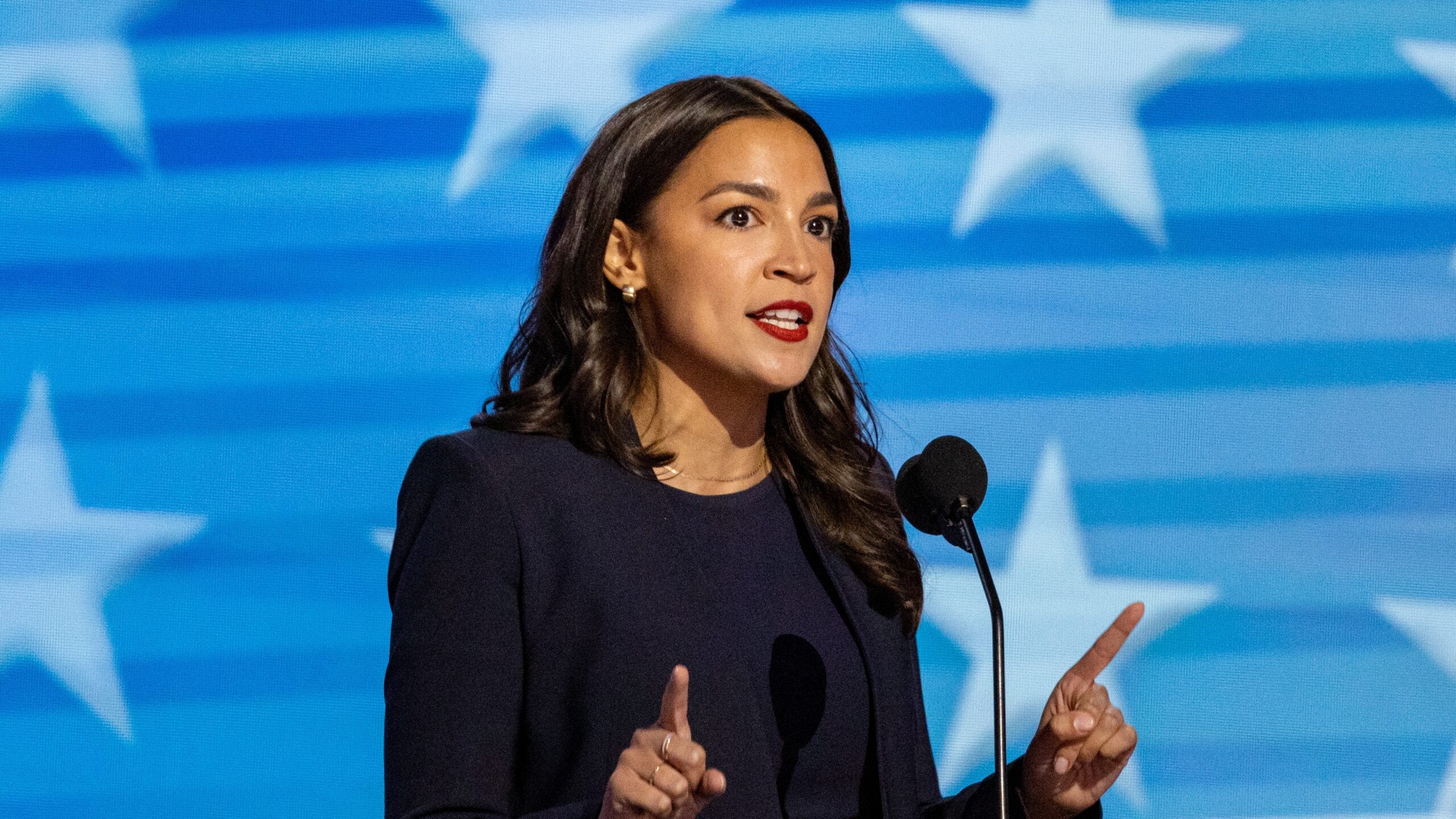
From progressive Abdul El-Sayed’s win in Michigan to James Talarico turning Texas blue, Democrats scored huge victories across the US in a stunning rebuke to Trumpism. All corners of the Democratic Party came together amid a blue tsunami, proving that a big tent party can represent the broad coalition of the left needed to defeat the far-right.
It follows on from Lula’s spectacular re-election campaign during the Brazilian presidential election last month, where a divisive, far-right figure – Flavio Bolsonaro – was defeated by a broad left coalition, before fleeing in exile. In Brazil and the US, the left coalesced around an inspiring and hopeful political vision: tackling the cost of living crisis and protecting democracy at all costs.
It takes a broad movement
In the case of the US – partly aided by their highly democratic primary system – the Democratic Party has become more pluralistic than ever: centrist, centre-left, progressive and democratic socialist candidates all ran and all won in races across the country.
While the Democratic Socialists of America made significant breakthroughs in getting candidates elected on platforms of universal healthcare, workers’ rights and taking on big money donors, centre-left Democrats like Annie Andrews and Scott Colom have been able to achieve unbelievable results in their red states. It takes a broad movement, not a narrow one, to win.
Throughout the history of the Labour Party, we’ve been a broad church with a vibrant, heterodox and dynamic internal culture. This has sustained us as the primary party of the left for over 100 years.
In recent years, however, our tradition of the broad church has been neglected. Given what we now know about the selection process for the 2024 general election it is hard to believe a British equivalent of Zohran Mamdani, Alexandria Ocasio-Cortez and Abdul El-Sayed would have been allowed to run for Labour even if a CLP wanted them to.
The result of this political flattening? Parts of our voter coalition peeling away, unable to identify with Labour.
With our new prime minister, our voting coalition has given us a second hearing. But if we want to remain the hegemonic party of the British left, we have to take a leaf out of the Democrats’ book.
Disagreeing well
Andy Burnham has united the Labour Party and labour movement behind a bold, progressive vision for Britain: undoing 40 years of neoliberalism. We must use this moment to unite the party and bring the breadth of our coalition together to secure the future we need, whether that’s in industrial heartlands in the Red Wall or urban seats in major cities.
That doesn’t mean everybody in the Labour Party agreeing: it means disagreeing well.
It means debating the ideas and policies, rather than shouting down and smearing internal opponents,
It means appreciating that there is talent across all the factions, and in some areas it takes different politics to win than others.
Ahead of elections to Labour’s National Executive Committee earlier this year, Momentum supported the Reset the Labour Party initiative. The signatories to that statement called for an end to top-down control in the Labour Party, and for us to embrace democracy, pluralism and fair process within our party.
Momentum is happy to discuss with any Labour member how we can make this happen.
Andy Burnham’s promise to change Labour and Britain, as well as the Democrats’ astonishing victory in the US, can act as a blueprint for a better kind of left politics.
A broad church cannot simply be a slogan. In the words of Democratic National Committee Chair Ken Martin: “We are a coalition party. And that means you win through addition, not subtraction.” For Labour to become the galvanising force that defeats Reform for good, it’s time we were a broad church once more.