
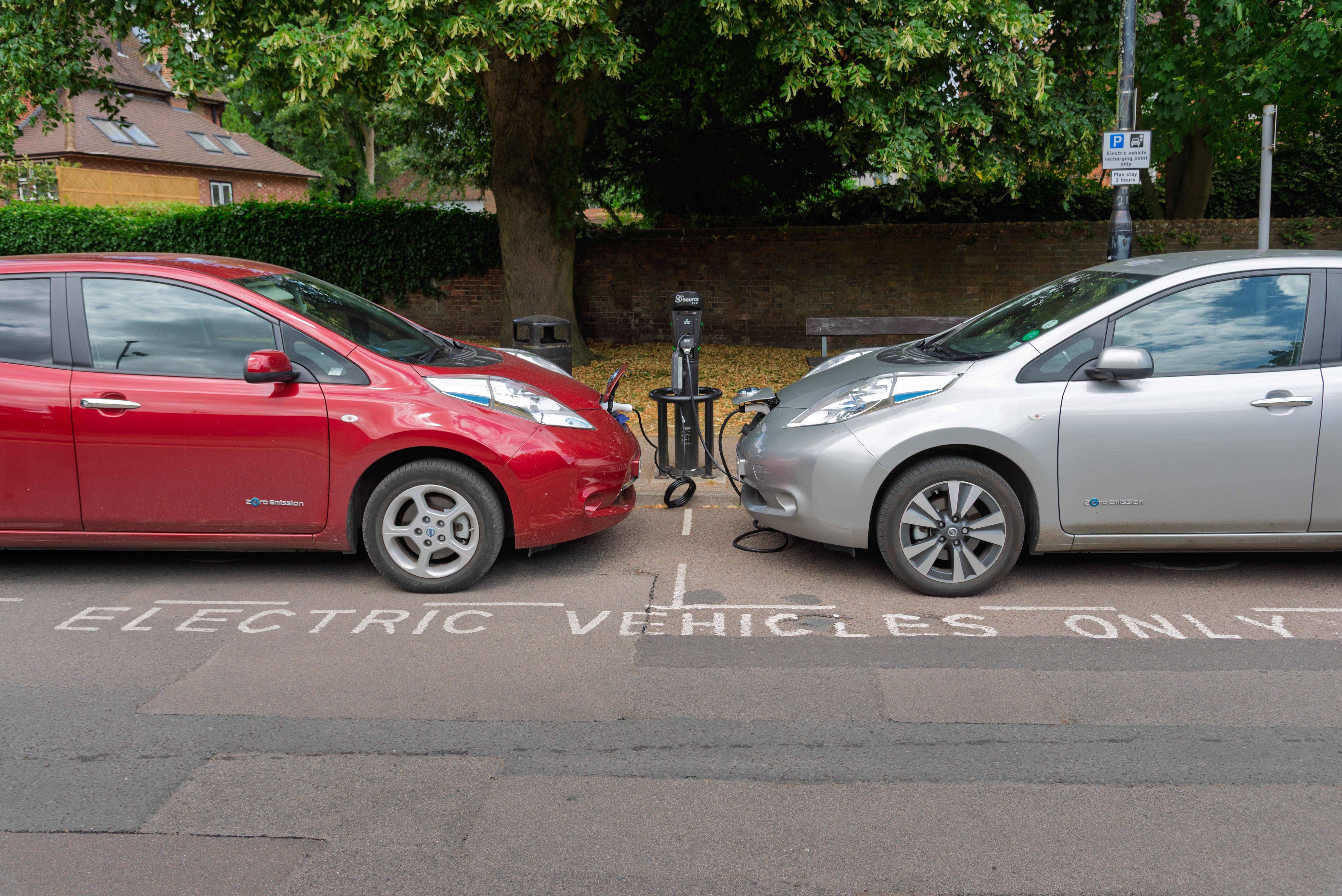
Today, ministers will decide the future of the zero emission vehicle (ZEV) mandate that sets targets for electric car sales. A cut to the 2030 target is on the table. This would keep Britain’s drivers tied to oil prices for another generation.
Following the approval of the Jackdaw gas field and budget cuts to warm homes, it risks making this government the worst on climate in over a decade.
The timing couldn’t be worse – a decision on the ZEV mandate could land while the prime minister is at COP31. Summer 2026 was the UK’s hottest on record and this year is set to be the second above 1.5C global warming. Ministers are asking the world to believe in their climate leadership while quietly discarding it at home.
That’s why I wrote to Louise Haigh MP, explaining why weakening the mandate would raise costs for drivers, do virtually nothing for jobs, worsen public health and add millions of tonnes of carbon to the atmosphere.
What’s puzzling is that the mandate is working. Almost a third of new cars sold in October were electric, outselling petrol for the seventh month running, and carmakers met their targets in 2024 and 2025. Meanwhile, our analysis found that cutting the targets to 50 percent could push emissions 13 percent over the seventh carbon budget.
The ZEV mandate protects our health too. The deepest cut on the table would mean 12,000 life years lost to air pollution by 2050, and doctors have urged ministers to hold firm.
So why weaken it?
Cheaper driving is not a distant promise
A handful of Labour MPs argue that towns they represent are being left behind. They are right to want those gaps in charging and affordability closed, but weakening the mandate would leave those same towns worse off. Today’s new EVs are the affordable second hand cars of the 2030s. The average car now lasts 17 years, so every petrol or diesel car sold now ties a future owner to the oil price well into the 2040s. Slowing down the transition means families will keep paying the bill for conflicts far beyond their control.
The average new EV is now cheaper to buy than a petrol car and charging overnight at home can be nine times cheaper than filling up with petrol or diesel. The government’s own review of charging costs puts typical public charging at 17 to 20p a mile, against 22p for petrol. It also warns that any slowdown in EV uptake will push public charging prices up, hitting hardest the very drivers without driveways that these MPs want to protect.
The ‘driveway divide’ is real, but fixable. Home electricity is currently VAT-free, while public charging is taxed at 20 per cent. The budget’s £100 million for cheaper local charging and work on letting people use their home tariff at chargers on their street are good, but painfully slow, first steps. Revisiting VAT equalisation and introducing a French-style social leasing scheme would go further. Slowing the switch will only turn the divide into a chasm.
And everyone benefits, not just the people who drive an EV. Our analysis shows the mandate as it stands will cut the petrol and diesel the UK burns by an average of 7.5 million tonnes a year to 2040 – almost half of what we import today. That leaves the whole economy less exposed to the next oil shock.
The real threats to car jobs
Some carmakers have lobbied to weaken the mandate, claiming it threatens jobs. This is misleading. When JLR, a mandate critic, announced redundancies earlier this year, it did not cite the policy as a reason. After all, it only applies to cars sold in the UK and, with the majority of UK-made cars exported, most production and jobs are unaffected by it.
Those exports mostly go to Europe, where buyers are going electric fast. New ECIU research shows that if UK plants do not keep up with the transition to EVs, up to 163,000 UK jobs could be at risk. If they move quickly, 182,000 could be supported.
The real pressures on carmakers are energy costs, tariffs and international competition – and a weaker mandate fixes none of them.
What would keep Britain on the right track?
Ministers should build on the British Industrial Competitiveness Scheme to cut industrial power costs further and help workers move into EV manufacturing. They should also secure the UK’s inclusion in the EU’s Made in Europe scheme, which France and Germany now back. That would let British-built cars and parts count as European in our biggest export market and avoid the 10 percent import tariff.
The prime minister rightly called for an end to sticking plaster politics. Cutting the mandate to ease the problems of a few carmakers would be exactly that, unsettling drivers and the investors who have committed billions to batteries and charging. In 2024, when transport secretary, Louise Haigh said the mandate would not be weakened. She was right then, and the evidence is stronger now.
The government should keep the mandate and support its implementation. Britain cannot lead on electrification at COP while slowing down at home. Those making that case in government should hold firm. They have the evidence and the market on their side.