

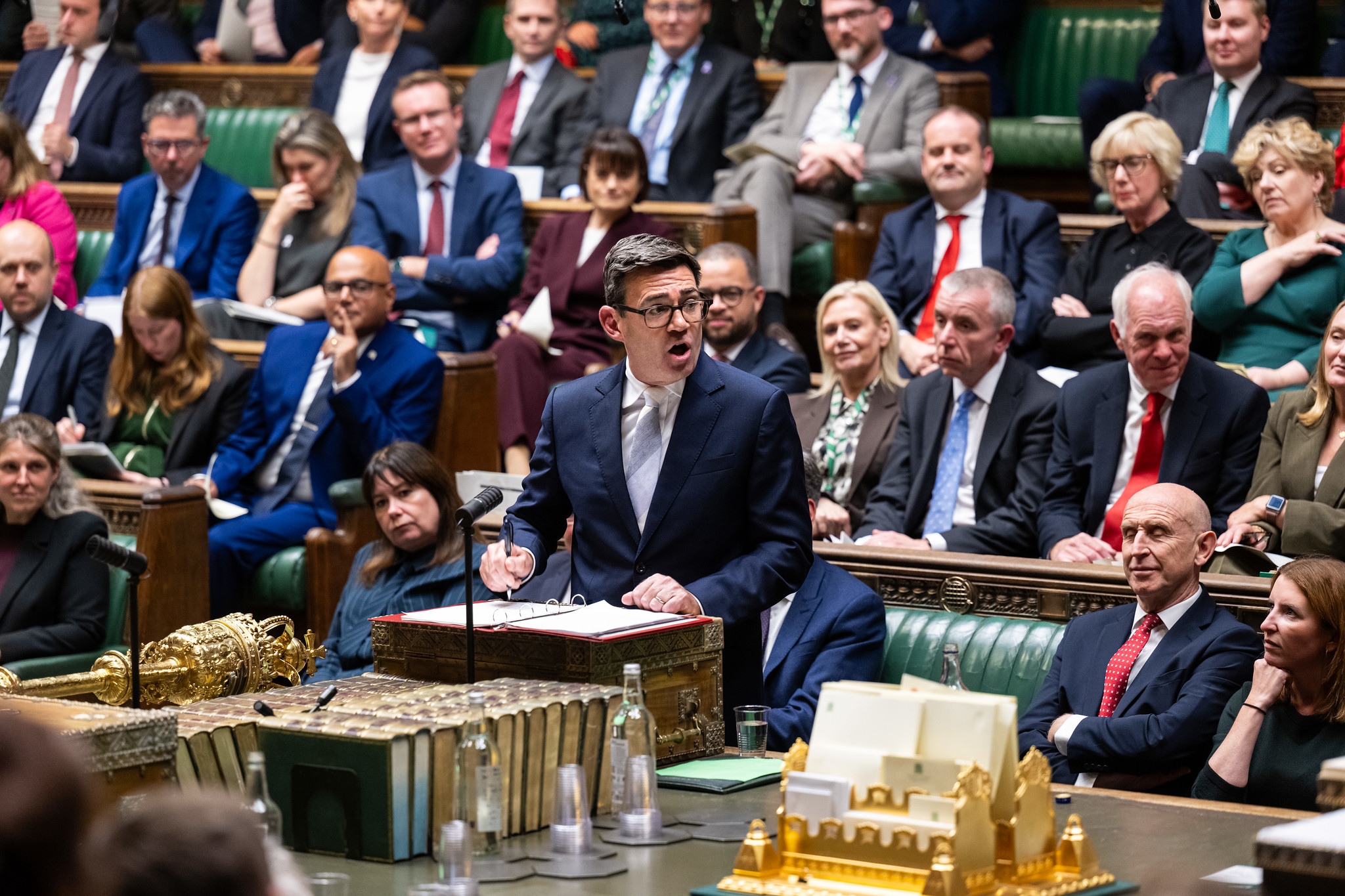
Andy Burnham said that Brexit had diminished Britain’s standing in the world – and that the British people would help forge a new long-term relationship with the EU “at every stage”.
In a speech at the Lord Mayor’s Banquet, ahead of a summit in Brussels later this week, the Prime Minister stressed that Labour’s ‘red lines’ on Europe would not be crossed ahead of a general election. But it is expected he will begin to set out broad options for a closer relationship with the bloc.
It comes as two Leave-supporting organisations have revived to combat calls for Britain to rejoin the European Union.
Here are four main takeaways from Burnham’s speech.
Foreign policy led by values and the national interest
Burnham said that there is “too often” a false choice between British values and the national interest on the geopolitical stage – and said that he believes one reinforces the other.
“Britain should always lead with our values – and a clear sense of what’s right and wrong – and, by doing that, we put ourselves in a stronger position to secure our interests in the long term.
“The more we lead with our values, the greater goodwill we build around the world and the more we secure our interests.”
Britain as a ‘coalition builder’
The Prime Minister said Brexit had “diminished” the UK’s place on the world stage, with its effects stretching beyond Europe. He cited a failure to invest in the Commonwealth, an inconsistent relationship towards China, and a response to the Israel-Gaza conflict that “left many questioning our moral compass”.
Burnham said: “We created the impression that the Britain the world thought it knew had changed. It hadn’t – the people of this country are still as great and decent as they ever were.
“But the political turbulence of our times created the impression that we had changed, causing confusion, and that is why now is the right time to set out our new approach.”
He said that, despite the UK’s difficulties over the last decade, “people around the world still look to Britain to lead with its traditional sense of fair play, of decency”.
“As the outlines of a new global order are being drawn – we must ensure that we are at the table, our voice multiplied by our alliances, shaping the future according to shared values and interests.
“That is how I want the world to see Britain once again – in our traditional role as an honest broker and coalition builder.”
Rapprochement with Europe
Britain’s relationship with the EU dominated Burnham’s address – and he set out the tests he would have for a possible agreement at the UK-EU summit on Friday. In particular, he said any deal struck would need to pass the ‘Makerfield Test’: “producing real improvements in people’s everyday lives in areas of the country that have felt neglected for too long”.
While he said that the government would not cross red lines on EU relations set out in Labour’s manifesto “this side of a general election”, Burnham said: “After the summit, we will initiate a discussion with our EU partners about options for our long-term relationship, recognising that both Britain and the EU are very different to what they were.”
Tough but constructive approach outside of Europe
Burnham repeated his commitment to a two-state solution in Israel and Palestine, and said he would work with the new Israeli government if they “end the violence, stop building settlements on Palestinian land, and allow humanitarian aid into Gaza in the volumes that are needed”.
He also stressed that Iran must not be allowed to develop a nuclear weapon, but that the ongoing conflict could not be allowed to continue indefinitely “as it drives the prices of energy through the roof for ordinary people”.
On the Commonwealth, Burnham promised a more engaged relationship, including a more structured dialogue on slavery. However, he ruled out paying for reparations, as some Caribbean nations have called for.
LabourList Daily Email
Sign up to our morning email and get the latest news, views and comment from across the labour movement.