


Over the last few months, we all know or have heard about a child being sent home from school because it was too hot to learn safely. Children are estimated to have missed over seven million school days after extreme heat in June saw more than a thousand schools close.
We’ve probably all worked in, been cared for in, or read about hospital infrastructure struggling to hold up through heatwaves, too. And a lot of us have been lying awake at night in homes that have become unbearably warm during the hottest days of summer.
We are on course to enter our fifth extreme heat event of the year. It is increasingly clear that our climate is changing drastically, our summers are getting hotter and we must react accordingly.
That starts, of course, with continuing the fight against climate change by lowering our carbon emissions. But it also requires something else: climate adaptation.
READ MORE: ‘Working class communities deserve a bold climate plan from Labour’
As the recent extreme heat has shown, the reality of global warming is already here – and the science indicates that this summer’s heat could be here to stay.
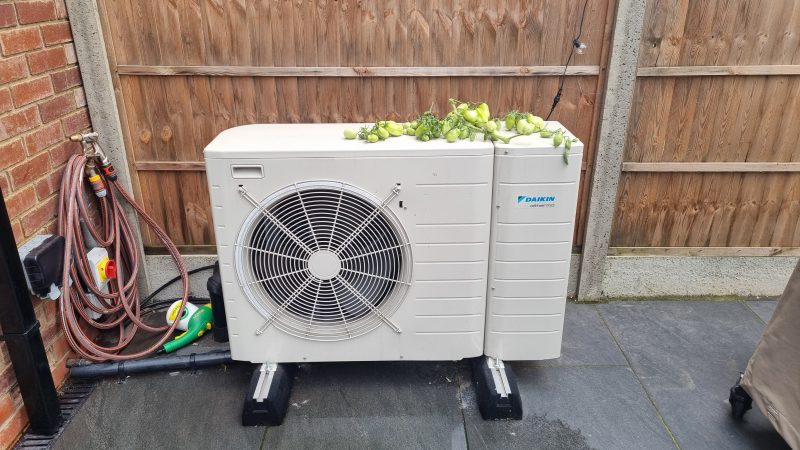
That is why more than 50 Labour MPs have joined me in calling for urgent action to accelerate the rollout of air-to-air heat pumps.
Air-to-air heat pumps can keep homes cool in summer, warm in winter, and reduce our reliance on fossil fuels – all at the same time.
The previous Conservative government neglected this vital technology when they designed the grants for the Boiler Upgrade Scheme – but our Labour government extended the scheme to include air-to-air heat pumps last November.
Now we need to ensure that decision translates into action. That is the purpose of our letter to the regulatory bodies, who are yet to decide upon the proper form of accreditation for this technology.
We are urging them to move quickly so that households can actually access these technologies. If a grant exists but consumers cannot use it because the necessary certification pathways are not in place, then we are failing to deliver on the policy’s promise. Britain has spent years discussing how to decarbonise home heating affordably and at scale, knowing that this will both cut bills and emissions. Over the decades, schemes have been picked up and laid down again by governments and regulators, leading to a patchwork approach to decarbonisation. With this government, we finally have real capital behind the ambition that everyone deserves to live in a safe and comfortable home – with our world leading Warm Homes Plan. We must not dither and delay in the same way with home cooling – leaving families to battle increasingly dangerous temperature levels alone. We must show urgency when it comes to protecting people from climate impacts.
Become a friend of LabourList and join our community. Our friends support our vital non-factional work and get access to exclusive content and events.
That does not mean abandoning passive cooling measures. Shading, good ventilation and plentiful tree canopy cover must be central to how we build homes and communities. These measures are a cost-effective way of reducing overheating, and they make our neighbourhoods nicer to live in.
But we should also be honest about the limits of passive measures. As temperatures continue to rise, there will be weeks when ventilation and shade is simply not enough, particularly for vulnerable groups like young children and elderly people.
Preparing Britain for future extreme heat should sit alongside our efforts to lower bills and cut emissions. These goals are not in competition. They are mutually reinforcing. There is a correct urgency to our government’s commitment to decarbonisation – it is incumbent on all serious politicians to grasp the scale of the climate crisis and work with each other to tackle it. We must apply that same urgency, and the same elbow grease to the levers of the state that can make climate adaptation accessible to those who desperately need it.
Helping more households access effective, low-carbon cooling is one practical step towards meeting that responsibility. We should get on with it.
Subscribe here to our daily newsletter roundup of Labour news, analysis and comment– and follow us on TikTok, Bluesky, WhatsApp, X and Facebook. You can also write to our editor to share your thoughts on our stories and share your own. The best letters are published every Sunday.
-
- SHARE: If you have anything to share that we should be looking into or publishing about this story – or any other topic involving Labour– contact us (strictly anonymously if you wish) at [email protected].
- SUBSCRIBE: Sign up to LabourList’s morning email here for the best briefing on everything Labour, every weekday morning.
- BECOME A FRIEND: If you enjoyed this, why not consider becoming a Friend of LabourList? Help sustain our journalism, and of course Friends do get benefits…
- PARTNER: If you or your organisation might be interested in partnering with us on sponsored events or projects, email [email protected].
- ADVERTISE: If your organisation would like to advertise or run sponsored pieces on LabourList‘s daily newsletter or website, contact our exclusive ad partners Total Politics at [email protected].



More from LabourList
‘Why Iceland’s EU referendum matters to British progressives’
‘Beyond recruitment: a new fostering plan that offers real hope’
Reform’s rotten culture is exposed