

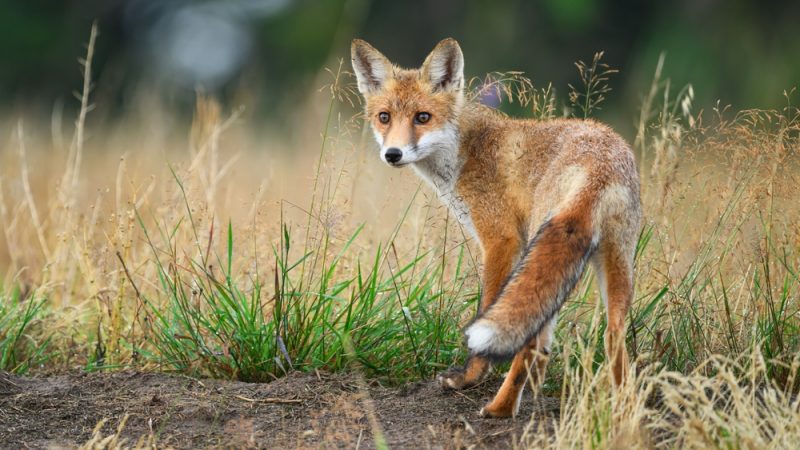

There are plenty of things Labour can be proud of from its years in government. Among them is banning fox hunting.
At its 2006 Conference, the party presented a video celebrating its “50 Reasons to be Proud of Labour”, including the declaration: “We’ve banned fox hunting.” It subsequently listed “Banned fox hunting” as number 35 in its top 50 achievements since 1997.
The Hunting Act 2004 was the culmination of years of campaigning and parliamentary battles and represented a significant victory for animals and for the principle that cruelty should not be justified as sport. But there is an important qualification. The Act prohibited hunting with dogs but also contained a series of exemptions and has proved difficult to enforce. Twenty years on, hunting hasn’t disappeared. Instead, hunts have adapted their practices and sought to exploit weaknesses in the legislation.
That leaves today’s government with an opportunity both practical and political: to strengthen the law so that the ban works as intended. If it is to do that, it needs to act sooner rather than later.
Why the Hunting Act needs strengthening
Trail hunting emerged after the Act as a purported alternative to hunting wild mammals, in which hounds follow a pre-laid animal-based scent. It provides a cover for illegal hunting. Even were an animal-based scent really laid, it would clearly risk dogs finding and pursuing the scent of live wild mammals.
The government’s 2024 manifesto committed to banning trail hunting, and it reiterated that commitment in its Animal Welfare Strategy. A consultation on how the ban should work closed in June this year.
That consultation also asked whether other legislative changes would be needed to make prohibition effective. The League Against Cruel Sports argued that banning trail hunting in isolation risks leaving many of the weaknesses in the Hunting Act untouched. If the legislation remains difficult to enforce, or if exemptions can be used to provide cover for hunting, there is a danger that the practice once again simply changes its name or method.
The League’s recommendations therefore include strengthening the law around reckless or so-called accidental hunting, requiring those organising hunts to take reasonable steps to prevent wild mammals being chased or killed, and addressing the responsibilities of landowners and those responsible for dogs. There is also a need to remove exemptions which can be exploited, expanding the definition of hunting to include searching for a wild mammal, and more robust penalties.
This may sound technical, but it comes down to a simple question: does the law prevent the activity Parliament intended to prohibit? At present, there are too many ways for hunts to argue that what they are doing is something other than hunting.
Labour’s unfinished business
In its 1997 manifesto, Labour promised a free vote on whether hunting with hounds should be banned. The Commons subsequently voted repeatedly for prohibition. By 2001, the manifesto acknowledged that the Commons had made its position clear and promised to give the new Parliament an early opportunity to express its view and to “enable [it] to reach a conclusion” on the issue.
In September 2004, 318 Labour MPs voted for the Hunting Bill, with just three voting against. Resistance in the Lords ultimately led to the Parliament Acts being used to secure passage.
Determination is once again the order of the day.
Become a friend of LabourList and join our community. Our friends support our vital non-factional work and get access to exclusive content and events.
The problem isn’t just fox hunting
The government should resist treating trail hunting as a self-contained problem.
Exemptions in the Act are being used in relation to a range of animals, including foxes, deer, hares and mink. In the case of deer claims relating to activities such as research, observation or rescuing wild mammals provide routes around the prohibition.
Stag hunting remains a stark example. Hunts continue to chase deer with hounds in the South West. This should make us cautious about assuming that a new prohibition on trail hunting, by itself, will solve the wider problem.
The lesson is that legislation needs to anticipate how those determined to continue hunting will try to operate around it.
The government has a chance to do something more valuable than simply delivering one manifesto commitment. It can use the legislative opportunity to make the Hunting Act clearer, more comprehensive and more enforceable.
This is not a battle between town and country
The debate must not be framed as if strengthening the Hunting Act means imposing an urban agenda on rural Britain. Polling has repeatedly found majority support for stronger restrictions on hunting among people living in rural areas. Most recently, polling found that 58 percent of rural residents supported banning trail hunting, compared with 28 percent who opposed it.
Subscribe here to our daily newsletter roundup of Labour news, analysis and comment– and follow us on TikTok, Bluesky, WhatsApp, X and Facebook. You can also write to our editor to share your thoughts on our stories and share your own. The best letters are published every Sunday.
The government needs to move quickly
There is a clear thread running through Labour’s history. The question is what happens next.
The government should now publish its consultation response and bring forward legislation as soon as possible. There is good reason for urgency. If Labour wants to deliver its manifesto commitment and strengthen the Hunting Act, it should introduce legislation early enough in this Parliament to give it a realistic opportunity to complete the process. And the legislation should be ambitious enough to solve the problem rather than simply address its most visible symptom.
The Hunting Act was not a failure. It was indeed a major achievement. The problem is that, as with much legislation, the real world has exposed weaknesses that were not fully anticipated when Parliament passed it.
To the question – does this pass the Makerfield test? – the answer is clear. Some 76 percent of voters there support strengthening hunting laws, as do voters up and down the country, including in rural areas.
The government should move now to ban trail hunting and strengthen the wider legislation so that exemptions cannot be used as cover for hunting. It should improve the prospects of effective enforcement and ensure that those who organise and facilitate hunting cannot exploit gaps in the law.
Labour itself once said, proudly, “We’ve banned fox hunting.” Now it should be equally proud to say it made sure the ban actually worked.
-
- SHARE: If you have anything to share that we should be looking into or publishing about this story – or any other topic involving Labour– contact us (strictly anonymously if you wish) at [email protected].
- SUBSCRIBE: Sign up to LabourList’s morning email here for the best briefing on everything Labour, every weekday morning.
- BECOME A FRIEND: If you enjoyed this, why not consider becoming a Friend of LabourList? Help sustain our journalism, and of course Friends do get benefits…
- PARTNER: If you or your organisation might be interested in partnering with us on sponsored events or projects, email [email protected].
- ADVERTISE: If your organisation would like to advertise or run sponsored pieces on LabourList‘s daily newsletter or website, contact our exclusive ad partners Total Politics at [email protected].



More from LabourList
Delivering in local government: How Labour is building a better Britain everywhere
‘Changing our voting system is fundamental to Burnham’s agenda’
‘Labour has a chance to make the socio-economic duty mean something’