

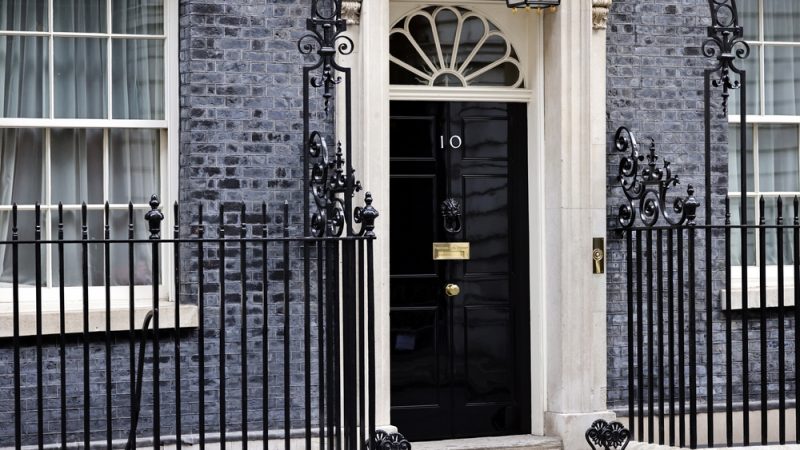

Standing outside its famous black door, Andy Burnham promised foundational change for the country. Why doesn’t he begin with the foundations beneath his new office?
Running a country from a building with the external appearance of a cramped two-bed is challenging enough. Inside, it is even worse. It was reported that, during his tenure, Keir Starmer struggled with the building’s labyrinthine layout. It is hardly an ideal place from which to govern.
It also happens to be on the brink of collapse.
Number 10 Downing Street is not, structurally speaking, in good shape. Churchill was so alarmed by its condition that he commissioned a survey that revealed the scale of the damage, ranging from crumbling foundations to dry rot and beetle damage. Were it any other office, it would likely have been demolished decades ago.
WATCH: New LabourList Podcast – NEC Election Special
Successive governments have either ignored the issue or opted for quick, cheap fixes. One such attempt, commissioned by Harold Macmillan in 1958, quickly ballooned from £400,000 to £3,000,000, and the results were lacklustre to say the least. Raymond Erith, the architect, was bitterly disappointed with the government’s insistence on thrift, suggesting this had postponed rather than ended the question of future repairs. He was right. Each successive prime minister has inherited the unpalatable possibility of the roof falling on their head.
Enter Burnham.
Manchesterism is built on the idea that politics should reject the tired habits of Westminster in favour of practical, effective government. One recent manifestation of this doctrine is Number 10 North, which has seen part of the Prime Minister’s Office move from London to Manchester. Burnham will even live and work in Manchester for part of the week. Few politicians have spent longer arguing that Britain’s political culture is too reliant on Westminster symbolism, and fewer still would be brave enough to vacate Number 10 after decades of work to get there.
But temporarily vacating Downing Street while it undergoes proper restoration would send a simple message: this is a government willing confront problems head on. In taking action, he would be the first prime minister since Thatcher to meaningfully address the fact that the building is rotting from the inside out. Rather than leaving the problem to whoever comes next, he could be the man that fixes Number 10 – a political legacy none before him can claim.
Become a friend of LabourList and join our community. Our friends support our vital non-factional work and get access to exclusive content and events.
He could join Churchill, Macmillan, and Major in moving temporarily to Admiralty House while renovations take place. Ultimately, Burnham promised a ‘circuit-breaker’ for Britain – this selfless act would show the electorate he wants more than the office. If anything, the sight of builders entering Number 10 to fix it may be a more convincing symbol of renewal than any number of speeches could be.
And why shouldn’t the public share in the restoration?
Number 10 hasn’t opened its doors to the public since 1989. Once restoration is complete, opening parts of the building could help offset costs while reconnecting the public with one of Britain’s most important buildings. It must be said that repairs are not an easy sell to the taxpayer – but they could be an investment in public access as well as preservation for future generations.
Keeping Number 10 alive matters. It has become synonymous with the job of Prime Minister. Tourists strain their necks and cameras at the gates for a glimpse of the place. Foreign leaders and diplomats eagerly pose for photographs outside the door. For generations of politicians, it has represented the peak of a life in public service. That it has been left to rot mirrors a political culture that increasingly rewards quick fixes over long-term leadership.
The fact is, Britain cannot continue to govern from broken buildings. The churn of prime ministers in recent years risks these essential works falling by the wayside. Andy Burnham must differentiate himself from his predecessors, and preserve Number 10 for his successors.
Subscribe here to our daily newsletter roundup of Labour news, analysis and comment– and follow us on TikTok, Bluesky, WhatsApp, X and Facebook. You can also write to our editor to share your thoughts on our stories and share your own. The best letters are published every Sunday.
-
- SHARE: If you have anything to share that we should be looking into or publishing about this story – or any other topic involving Labour– contact us (strictly anonymously if you wish) at [email protected].
- SUBSCRIBE: Sign up to LabourList’s morning email here for the best briefing on everything Labour, every weekday morning.
- BECOME A FRIEND: If you enjoyed this, why not consider becoming a Friend of LabourList? Help sustain our journalism, and of course Friends do get benefits…
- PARTNER: If you or your organisation might be interested in partnering with us on sponsored events or projects, email [email protected].
- ADVERTISE: If your organisation would like to advertise or run sponsored pieces on LabourList‘s daily newsletter or website, contact our exclusive ad partners Total Politics at [email protected].



More from LabourList
SPONSORED: Cheaper energy bills and new unionised jobs delivering the government’s goals
Goggleboxing clever
Inside the Fabian Society: ‘Ideas matter and change is possible’