

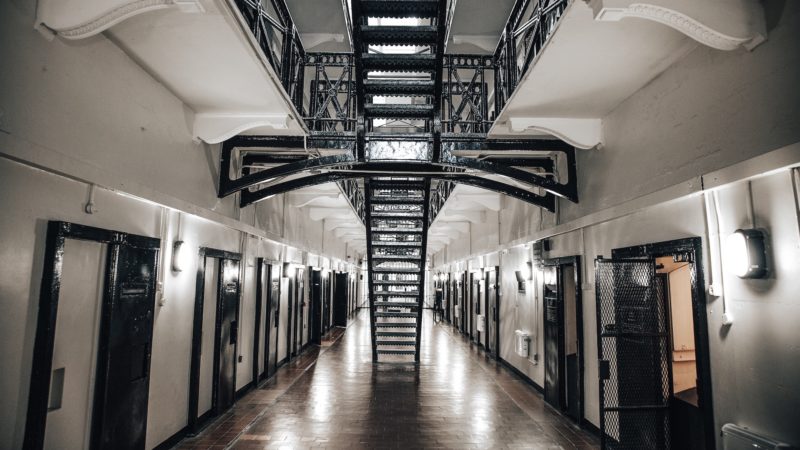

There can be no starker evidence of the crisis in criminal justice system than the early emergency release of prisoners who have served only 33% or 40% of their sentences to relieve a collapsing prison and wider criminal justice system. Recent public and policing outrage at the proposed early release of two of those convicted of the manslaughter of PC Harper highlights the political risk of this policy.
But this focuses only on prisons as one part of the failing criminal justice system. Prisons sit at the end of the criminal justice process. They absorb the consequences of policy failures elsewhere, including weak prevention, inadequate drug treatment, court delays and ineffective rehabilitation.
Focusing only on managing the current Prison Service capacity is a sticking plaster to conceal a wider criminal justice system in serious decline.
READ MORE: ‘Labour has the chance to save our prison system after years of inaction from the Tories’
The statistics are telling. According to the National Audit Office, at close of 2023, there was a backlog of 67,573 cases in the Crown Court representing a 78% increase on 2019 levels. 18,000 of these had been outstanding for more than one year and represent a timescale of 683 days on average from offence to completion with 16,000 people remanded into prison and awaiting trial. According to the Ministry of Justice, on 29 July 2024, the prison population was 87,500 against a total capacity of 88,900. It has not improved since and projections point to collapse if not addressed.
27,000 of those were in prison for illicit drug related offences (convicted and remanded) of which 16,000 were there for low level acquisitive crimes which fund addiction; drive repeat offending; and mean repeated application and waste of police, court, prison and probation resources.
Additionally, there are 3,000 illicit drugs deaths a year and 15% of the prison population test positive for illicit drugs use creating substantial additional prison security requirements.
Illicit drug markets contribute to violence and drive vulnerable juveniles and others into criminal exploitation as part of the County Lines and other distribution chains. They drive youth knife, gun and gang violence and large numbers of deaths.
It is arguable that illicit drug dependence should therefore be addressed primarily as a health and social care issue going forward. That alternative safe drugs should be provided, and safe legal treatment and rehabilitation centres should be set up.
This does not mean tolerating criminal organised supply, trafficking violence and exploitation. But enforcement resources should be concentrated on those who profit from – and control – illicit drug markets
For many, prison has a revolving door. 30% of adults and 38.4% of juveniles released reoffend within 1 year. A 2019 Ministry of Justice paper estimated that the annual cost of re offending is £18bn.
Become a friend of LabourList and join our community. Our friends support our vital non-factional work and get access to exclusive content and events.
According to World Prison Brief, in England and Wales, we jail up to 145 persons per 100,000 population. This compares to a European Union average of 113 per 100,000. The Netherlands has only 67 per 100,000 population having drastically reduced its rate over the past two decades by prioritising rehabilitation over custody. Similarly, Norway’s rate is 55 per 100,000 reflecting its strong restorative justice model. These countries face similar criminal threats to the UK but have adopted very different responses to delivery of justice. There may be lessons here from which we can learn.
It seems clear from this evidence that there is substantial scope to reduce overcrowding and escalating costs within the criminal justice systems and arguably improve justice outcomes. It seems equally clear that restricting responses to only drug policy changes and early release changes will not resolve the crisis.
The government should therefore, in addition to illicit drug policy reform, undertake a rapid, wider, end-to-end criminal justice policy and delivery review covering:
- Prevention including youth services, school exclusions, family support and early intervention
- Policing and charging including further use of diversion for appropriate low-level offences
- Courts with a funded plan to reduce delays and the remand population
- Sentencing including the use of shorter custodial sentences and stronger community alternatives
- Prisons with greater emphasis on safety, education, treatment and preparation for release
- Probation with staffing and caseloads matched to the demands placed on the service and the desired outcomes
- Resettlement particularly access to housing, employment, mental health care and drug treatment.
No single department can deliver this programme. Decisions made by the Home Office, Ministry of Justice, Department of Health and Social Care, Department for Education, Department for Work and Pensions, Treasury and local government all affect demand on the criminal justice system.
The scale and political sensitivity of the challenges justify strong leadership from the centre of government. A properly supported and resourced Cabinet committee or Cabinet Office task force should bring together the relevant departments, operational leaders and independent experts. It should publish measurable objectives, monitor delivery and identify where savings in one department create costs in another.
Emergency releases may provide temporary relief, but they cannot substitute for reform. Without a coordinated strategy to reduce avoidable demand, improve rehabilitation and strengthen every stage of the system, the pressure will soon return.
Subscribe here to our daily newsletter roundup of Labour news, analysis and comment– and follow us on TikTok, Bluesky, WhatsApp, X and Facebook. You can also write to our editor to share your thoughts on our stories and share your own. The best letters are published every Sunday.
-
- SHARE: If you have anything to share that we should be looking into or publishing about this story – or any other topic involving Labour– contact us (strictly anonymously if you wish) at [email protected].
- SUBSCRIBE: Sign up to LabourList’s morning email here for the best briefing on everything Labour, every weekday morning.
- BECOME A FRIEND: If you enjoyed this, why not consider becoming a Friend of LabourList? Help sustain our journalism, and of course Friends do get benefits…
- PARTNER: If you or your organisation might be interested in partnering with us on sponsored events or projects, email [email protected].
- ADVERTISE: If your organisation would like to advertise or run sponsored pieces on LabourList‘s daily newsletter or website, contact our exclusive ad partners Total Politics at [email protected].



More from LabourList
Paul Nowak column: ‘Britain needs a living standards Budget’
‘Brexit was never a closed matter – it’s time to put the national interest first’
‘Older renters can’t wait: local housing allowance must be uprated now’