

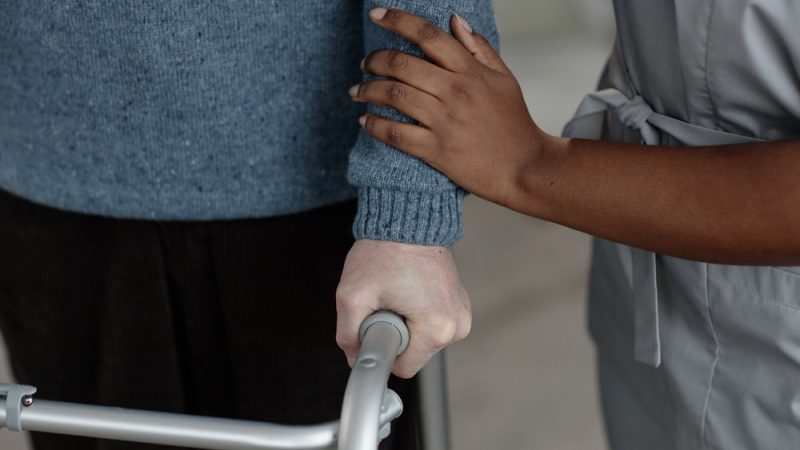

The provision of adult social care is disgraceful. Successive governments have been unable, and mostly unwilling, to address the scandal.
It is unlikely that further investigations are needed but education of the public about the scandal is vital. Around half of voters think social care is free as with the NHS. Few families understand enough to have made adequate provision for care of older loved ones.
A National Care Service would be one where entitlement was decided nationally, terms and conditions set nationally, care standards set nationally and a single national contract for provision would be used and enforced.
Making care free is a separate issue and could best be resolved once the care provided has greatly improved.
READ MORE: Labour Party Conference 2026: Full LabourList events programme, revealed
Under the National Care Service banner, major improvements could and should be made now. It just needs political will, and the new Prime Minister has promised that. It is easy to set out what could be improved quickly, without legislation or organisational changes.
Improvements would require additional funding; but the level of extra funding needed would be modest compared to the huge sums spent on a struggling NHS.
More people need better care
It is shocking that some 2 million people who could benefit from support are denied it by the criteria for needs being set too high. Over the last two decades entitlement has reduced by 50%.
There is poor support for millions of informal carers (mostly women). Much can be done to assist them, yet local authorities have no funding to even provide decent support and advice.
The quality of domiciliary care, for example the notorious 15 minute visits, is too often poor. Some care homes, more likely to be those owned by profit seeking hedge funds, offer poor or variable care.
The treatment of those who rely on care to support their independence feel they are treated badly, never involved in decisions about their care and often forced through unnecessary and intrusive processes to no obvious benefit. These things can be changed.
It is recognised that raising quality can be best addressed by raising the pay of social care staff. Progress is being made on a Fair Pay Agreement.
What else could be done?
All contracts for provision of care should require all staff to be employed on at least the minimum nationally agreed terms and conditions. Better pay starts a journey towards a career – something NHS staff have, but social care staff do not.
The systems and processes used to try and obtain social care are ridiculously complicated and there is little practical support offered to those applying. This complexity appears to be deliberate – a way to reduce demand.
Become a friend of LabourList and join our community. Our friends support our vital non-factional work and get access to exclusive content and events.
The processes for accessing care could be greatly simplified with employed staff (perhaps augmented by trained volunteers) available to offer support and help people navigate the complexity. There should be one single process – defined nationally, applied locally.
A national financial threshold for free care could be progressively increased to enable more to receive free care.
A national assessment of needs criteria could be improved, to be more person-centred and thresholds could be lowered consistently.
If the processes, requirements and thresholds are set nationally then entitlement is the same everywhere (as with NHS) and would be portable across local authorities.
Some conditions, such as dementia, could be defined as being within the scope of NHS care.
The absurd resource wasting arguments between the NHS and local authorities about who pays for care (the whole Continuing Health Care saga) could be resolved by pooling budgets and integrating services.
Provision of both residential and domiciliary care has become almost entirely privatised. Local authorities could be enabled to directly provide services as well as purchasing them and they should be funded so they can effectively manage contracts and drive out poor providers.
Contracting for provision could all be put through a national contract based on national service standards (as with NHS).
Local authorities could be funded to enable them to employ far more staff to actively manage contracts as well as offer support to service users and carers. Funding for social care should be allocated to local authorities based on a better understanding of ‘needs’ and it should then be ring-fenced, whilst allowing for simple ways to allow pooling with NHS funding.
Devolution should be embraced and local accountability encouraged to oversee real improvements. The commissioning of adult social care services should be integrated with that of primary and community care and aligned with benefits provision. This can only be done in a joined up way by giving local authorities (and/or mayoralties) accountability. The NHS, which is top down, not local, and has no democratic oversight, cannot expand to do it.
Maybe not everything can be done quickly, and affordability cannot be as easily ignored as happens with the NHS. But a huge amount can be done, should be done, and hasn’t been done – due to lack of political will power.
The societal costs of poor care need to be recognised as does the obvious reality that some of the remorselessly increasing costs in the NHS and in the wider benefits system could be reduced if social care worked better.
Subscribe here to our daily newsletter roundup of Labour news, analysis and comment– and follow us on TikTok, Bluesky, WhatsApp, X and Facebook. You can also write to our editor to share your thoughts on our stories and share your own. The best letters are published every Sunday.
-
- SHARE: If you have anything to share that we should be looking into or publishing about this story – or any other topic involving Labour– contact us (strictly anonymously if you wish) at [email protected].
- SUBSCRIBE: Sign up to LabourList’s morning email here for the best briefing on everything Labour, every weekday morning.
- BECOME A FRIEND: If you enjoyed this, why not consider becoming a Friend of LabourList? Help sustain our journalism, and of course Friends do get benefits…
- PARTNER: If you or your organisation might be interested in partnering with us on sponsored events or projects, email [email protected].
- ADVERTISE: If your organisation would like to advertise or run sponsored pieces on LabourList‘s daily newsletter or website, contact our exclusive ad partners Total Politics at [email protected].



More from LabourList
Letters to the Editor – week ending 11th October 2026
‘Playing it safe on Europe is the riskiest thing Labour can do’
‘Jack Charlton and Labour’s rural tradition’