


Political nostalgia is a powerful thing. We see the politicians of our time as pygmies beside the giants of the past. We remember the great orators, Nye Bevan and Michael Foot, and wonder where their successors are. Then one of our own breaks through to touch greatness.
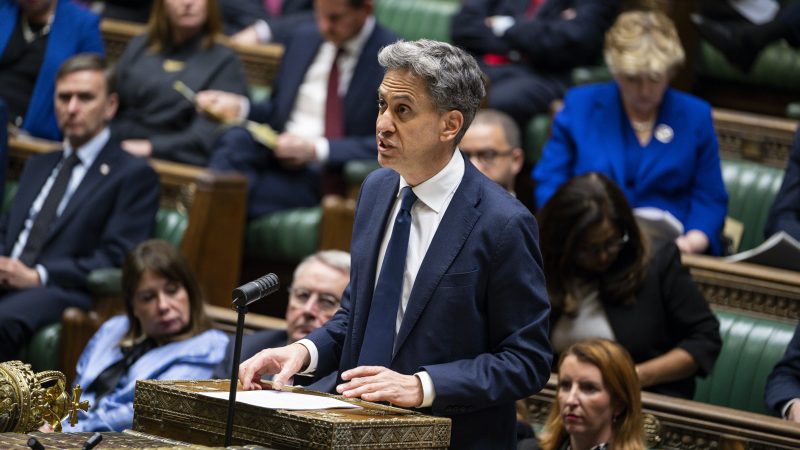
In the third act of his political career, Ed Miliband has given a career-defining speech as Foreign Secretary. His Commons statement on 8th September cut through because of what he said and the way he said it: he has clearly told the FCDO not to tell him what he cannot do but show him how it could be done.
It also followed the classic rhetorical movement of me, you, us.
READ MORE: Labour Party Conference 2026: Full LabourList events programme, revealed
First, me: Miliband the British Jew, whose grandmother found sanctuary in Israel after the Nazis murdered her husband and dozens of relatives and his conviction that Jewish security and Palestinian freedom were codependent was clear.
Then you, his audience, a Labour Party painfully divided over Palestine. He acknowledged the Government’s failure to do enough. He gave campaigners who had watched the gap between Labour’s principles and actions widen a reason to believe the government could change, and acknowledged their decades of campaigning.
Finally, us: Britain, accepting responsibility for its own choices saying: “we cannot outsource our political and moral responsibilities to the Israeli Opposition.” And that means a full acceptance of the ICJ Advisory Opinion on the illegality of the occupation and an acceptance of the appropriateness of the South African case against Israel under the genocide convention.
For the first time since George Brown in 1967, a UK Foreign Secretary has said a firm no to Israel. That is why the package has been attacked from both the left (too little too late) and the right (too much, too soon).
From the right, the measures were called impossible to implement, a dark day for British Jews, a threat to trade, medicines and intelligence, and the start of an Israel-wide boycott. In fact, the goods ban is settlement-specific; the Government has committed to preserve trade inside the Green Line, protect medical supplies and continue security cooperation. The planned corporate measures target particular facilitators of settlement expansion, not Israeli business as such: Miliband rejected a general boycott.
Nor is enforcement impossible. HMRC has differentiated settlement origin for tariff purposes since 2005. The real work is drafting: a clear documentary burden on importers, audit powers, meaningful penalties, workable rules for mixed-origin goods, and guidance that polices over-compliance as firmly as evasion, so that legitimate Palestinian commerce is not the collateral damage.
The charge of singling out Israel ignores that Britain already prohibits trade, investment and financial services connected with Russian-occupied Ukraine, following precedents from multiple other sanctions regimes. What has been exceptional is the decades in which the illegal occupation of the State of Palestine by the State of Israel has avoided the sanctions regimes routinely applied in other cases.
Critics say Britain is interfering in Israel’s election. There is no neutral moment to resist annexation. Expansion and displacement continue through elections; the E1 tender closes on 19 October, a week before Israelis vote, and Netanyahu’s principal challenger has also ruled out Palestinian statehood. Britain must decide what it will support, whoever Israelis elect.
From the left, the package was dismissed as the bare minimum, performative politics and a diversion from continuing arms links. Bloomberg reported that British diplomats had privately described the measures to American counterparts as largely symbolic. That criticism can only be answered by implementation. No bank has been named, UK-made components still enter the F-35 pool, and the export-licence review has no published timetable. The task is not to explain the Bloomberg report away but to disprove it.
Become a friend of LabourList and join our community. Our friends support our vital non-factional work and get access to exclusive content and events.
Monday’s debate gave the policy precision. Stephen Doughty said more than 80 export licences had been suspended or refused in relation to Gaza, and reaffirmed that the expanded human rights sanctions regime would arrive within weeks, with the wider settlement regime in six to nine months, sooner if possible. Uma Kumaran added enforcement detail: settlement postcodes identified, compliance checked by HMRC, breaches carrying civil penalties, prosecution and confiscation of criminal proceeds.
How does the package measure against what the Britain Palestine Project asked for before Andy Burnham became leader? Our Pledges on Palestine called for a ban on settlement goods and services, including finance; criminal liability for marketing or financing settlement property; penalties for E1 bidders; suspension of all arms transfers, including through multinational programmes; suspension of the UK-Israel Trade and Partnership Agreement; and Russia-style targeted sanctions. The package delivers the core of the first pledge: the goods ban, the advertising prohibition, and designation powers reaching construction, infrastructure, finance and real estate. The double lock on exports and the extension of human rights sanctions to violations of international humanitarian law move toward the second. But the F-35 supply chain, the trade agreement, and access for journalists and investigators remain. On our own tests, this is a good beginning.
E1 will be the immediate test. Its development threatens to sever East Jerusalem from its Palestinian hinterland and end the possibility of a viable Palestinian state. Kumaran confirmed that preventing settlement expansion, including E1, is the immediate priority for designations. Civil servants will now prepare evidence against the businesses materially enabling expansion, including banks, insurers and construction companies. Settlements depend on mortgages and project finance; the credible prospect of designation can change commercial behaviour before construction proceeds. Success must mean projects delayed or abandoned, financing withdrawn and Palestinian communities able to remain on their land.
For Andy Burnham, this is a political gift before conference: a cause around which the party can rally and evidence that a Labour government can act on its convictions. But reducing the speech to narrow party interest would underestimate Miliband. The political benefit is a consequence of the moral seriousness, not its motive. Miliband has given Labour an Israel policy it can defend with conviction, and reminded it that political leadership is making civil servants redefine what they say is possible.
Subscribe here to our daily newsletter roundup of Labour news, analysis and comment– and follow us on TikTok, Bluesky, WhatsApp, X and Facebook. You can also write to our editor to share your thoughts on our stories and share your own. The best letters are published every Sunday.
-
- SHARE: If you have anything to share that we should be looking into or publishing about this story – or any other topic involving Labour– contact us (strictly anonymously if you wish) at [email protected].
- SUBSCRIBE: Sign up to LabourList’s morning email here for the best briefing on everything Labour, every weekday morning.
- BECOME A FRIEND: If you enjoyed this, why not consider becoming a Friend of LabourList? Help sustain our journalism, and of course Friends do get benefits…
- PARTNER: If you or your organisation might be interested in partnering with us on sponsored events or projects, email [email protected].
- ADVERTISE: If your organisation would like to advertise or run sponsored pieces on LabourList‘s daily newsletter or website, contact our exclusive ad partners Total Politics at [email protected].



More from LabourList
Reform’s grievance Budget wishlist shows just how out of touch their party is
‘Delivering growth in every postcode relies on good logistics’
‘In a budget of winners and losers, Labour must not let schools come last’