

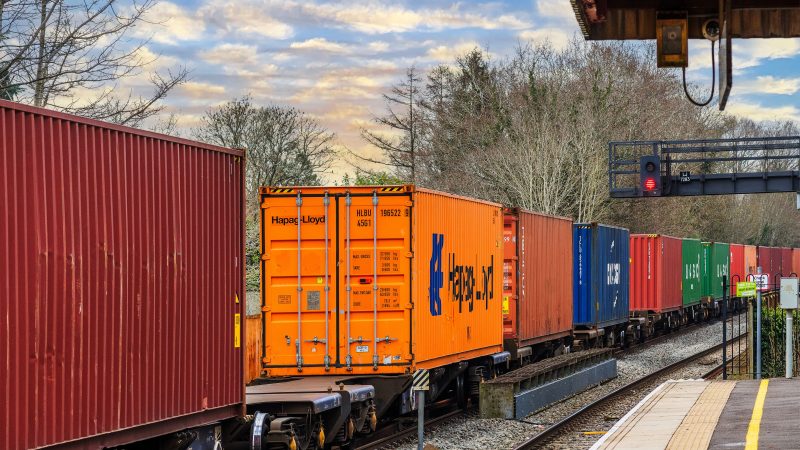

Have you ever wondered how food gets to your local supermarket’s shelves, or how medicines get to your local hospital? For over 16,000 people in my constituency, they don’t wonder, they do it. They work in the logistics roles that keep our country and economy moving. Put simply, nothing moves without logistics, and so nothing moves without constituents like mine in North Warwickshire and Bedworth.
This matters to me as a local MP, but it also needs to matter to everyone who cares about the future of the UK economy, and how to achieve our Prime Minister’s ambition to deliver growth in every postcode. He is making the case for that goal, and the message is cutting through. If you were at the Labour Party conference, you will have come across businesses, charities and ordinary people setting out why it’s vital that the economy grows and that growth is truly felt in all communities.
Achieving growth means getting the basics right, including good local infrastructure, schools and colleges, aspirations and opportunities for our young people, a preventative health system that helps people get and stay healthy, and businesses that have rewarding jobs with career progression. It then means working together to get beyond the basics, from developing and introducing innovations to connecting local business to new markets in the UK and around the world.
Logistics is central to this story, as it is not simply something that happens in the background, and not prioritising logistics creates a real risk – a risk that, when the government is working out how to get the basics right, or boost UK productivity, it ignores this economy’s engine. It’s also a risk that, in a new era of heightened global insecurity, policymakers don’t consider the role logistics plays in maintaining the nation’s resilience.
READ MORE: ‘Our regional theatres are engines of growth. Labour should help them thrive’
The government recognised through the Industrial Strategy and National Planning Policy Framework that freight and logistics makes a vital contribution to the UK economy, and the Prime Minister also recognised it when he appointed Keir Mather earlier this year as the UK’s first dedicated Logistics Minister. And now we have new independent research, produced by Capital Economics for Logistics UK, which shows the scale of that contribution.
The logistics sector directly generates £175 billion in GVA. When activity through its supply chains and the spending of logistics workers are included, the sector generates a whole lot more. It supported £356 billion in GVA, 5.3 million jobs and almost £65 billion in tax revenues. In other words, every £1 of GVA generated by logistics supports a further £1.04 elsewhere.
These figures highlight why logistics matters. It is not simply another industry. It is the golden thread connecting manufacturers, retailers, exporters and public services with their suppliers and customers. Its strength affects the UK’s ability to attract investment, rebuild its industrial capacity and compete internationally.
A factory cannot contribute fully to growth if it cannot receive components or get its products to market; homes cannot be built without construction materials; and high streets, hospitals and schools depend on reliable deliveries. As a result, the costs facing logistics businesses cannot be viewed in isolation either.
Become a friend of LabourList and join our community. Our friends support our vital non-factional work and get access to exclusive content and events.
So, what do we do with this new knowledge – how do we put logistics at the centre of the UK’s reindustrialisation?
Firstly, we must ensure decision-makers understand the role logistics plays at the heart of UK manufacturing. It means that we have to consider the increasing costs borne by logistics businesses, recognising that if we do not tackle them, there will be increased costs for everyone. It means understanding that, as the government and regions invest in transport to create new opportunities, that includes investment in the transport infrastructure that freight relies on. And we ensure that when we are helping the next generation into rewarding jobs, that includes the well-paid jobs in the logistics sector. To fail in this, would be to fail to deliver the growth that we have promised.
There is a real opportunity here. Logistics can provide technical routes into secure employment and progression for young people, including those currently not in education, employment or training. It can also support the government’s ambition to rebuild Britain’s industrial strength, because modern manufacturing depends on skilled people operating efficient and sophisticated supply chains.
The prize is not simply a stronger logistics sector. It is a more productive and innovative economy, more resilient supply chains and good jobs in communities across the country. If we want to build homes and infrastructure, expand exports, strengthen domestic manufacturing and defence capacity, revitalise high streets and reduce cost pressures on consumers, we need reliable, productive and cost-effective supply chains.
This is not a matter for government alone – the logistics sector is largely in the private sector. But government can create the conditions in which businesses have confidence to invest, across infrastructure planning, the skills system, energy, and of course tax. So, as the Chancellor delivers the Autumn Budget tomorrow and takes the next steps in delivering growth, the case is clear: logistics is an essential part of the economic foundations on which better jobs, stronger public services and renewed communities will be built.
And sorry for bringing up Christmas in October, but the UK’s logistics sector is gearing up for its busiest time of the year. And that’s after one of its hardest years, keeping goods moving amidst the impacts of the conflict in the Middle East and other global pressures. So, next time a parcel lands on your doormat, think about the people keeping the economy going, the same people who will play a central role in delivering growth in every postcode.
Subscribe here to our daily newsletter roundup of Labour news, analysis and comment– and follow us on TikTok, Bluesky, WhatsApp, X and Facebook. You can also write to our editor to share your thoughts on our stories and share your own. The best letters are published every Sunday.
-
- SHARE: If you have anything to share that we should be looking into or publishing about this story – or any other topic involving Labour– contact us (strictly anonymously if you wish) at [email protected].
- SUBSCRIBE: Sign up to LabourList’s morning email here for the best briefing on everything Labour, every weekday morning.
- BECOME A FRIEND: If you enjoyed this, why not consider becoming a Friend of LabourList? Help sustain our journalism, and of course Friends do get benefits…
- PARTNER: If you or your organisation might be interested in partnering with us on sponsored events or projects, email [email protected].
- ADVERTISE: If your organisation would like to advertise or run sponsored pieces on LabourList‘s daily newsletter or website, contact our exclusive ad partners Total Politics at [email protected].


More from LabourList
‘In a budget of winners and losers, Labour must not let schools come last’
Budget 2026: What MPs, union leaders and think tanks want to see from Healey
Delivering in local government: How Labour is building a better Britain everywhere