

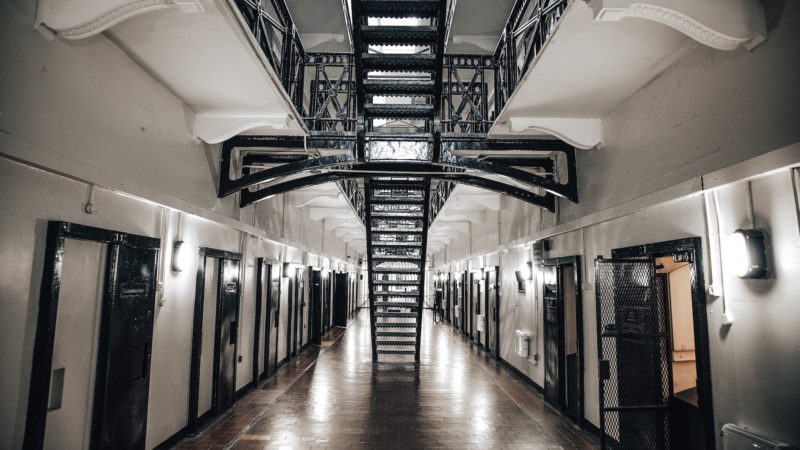

There are around 85,000 people in prison in England and Wales. Over 12,000 of them are people who had been released from prison in accordance with the terms of their sentence but have been recalled to prison for a breach of the conditions on which they were released.
Some of those recalled have rightly been returned to prison because they have committed another serious offence, or because their behaviour demonstrates that they cannot safely be managed in the community. But the majority of people recalled to prison do not fall into that category. Only 22 percent have committed a further offence. Of the 78 percent who have not committed a further offence, many have been recalled for failing to comply with licence conditions, despite often posing little or no direct risk to the public.
“Sometimes, instead of recall, you just need more support,” said one person with lived experience of recall.
READ MORE: ‘The broken criminal justice system and the need for radical end-to-end reforms’
A missed appointment or a change of address can be treated as non-compliance. But these breaches often arise amid homelessness, insecure accommodation, poor mental health, addiction, debt and fractured support networks. Those pressures can make it difficult to meet licence conditions even when someone is trying to rebuild their life.
Recall can then disrupt the very things that make a successful return to the community possible: treatment, housing, employment and family relationships. People can become caught in a cycle of ‘release, recall, release, recall’, with prison interrupting progress without resolving the problems that led to the breach.
“If you’re clean and released from prison into an HMO rife with drugs, do you stay and risk relapsing, or leave and risk being recalled for breaching your licence conditions?” asked another person with lived experience. “People are being recalled simply for trying to protect their recovery.”
We need a problem-solving approach that asks what has happened, what risk it presents and what response will best protect the public. Where someone misses appointments because they are homeless, relapses into substance use or disengages as their mental health deteriorates, the first response should be to address the underlying problem wherever that can be done safely.
This is not a call to remove recall or to discount risk. It is a call to use it proportionately, with the right support available to probation staff and people under supervision.
That distinction is not always straightforward. Probation officers must make difficult judgments about whether a breach signals a heightened risk or a crisis that can be managed in the community. They need the confidence, training and organisational support to make those judgments, especially in a relatively inexperienced workforce working under significant pressure.
The combination of prison overcrowding, rising recall numbers and evidence that recall can undermine rehabilitation means the current approach requires reform. Policy should continue to support recall where there is a significant risk of harm to the public or a specific individual.
The most immediately useful reform would be an early review of every existing recall, with a duty to explain why continued custody is still necessary. This matters – particularly under the current system. The April 2026 policy framework records that most adults serving standard determinate sentences now receive a 56-day fixed-term recall. It also expressly permits release before the fixed term ends where probation assesses release as safe and submits the required report. Making that route prompt and routine could reduce unnecessary detention without indiscriminate release.
There is also a strong case for preventing recall from destroying the arrangements that were keeping someone stable. Where possible accommodation, employment and treatment should be preserved during a recall. Otherwise, a person can emerge with fewer protective factors than before. Recall will often interrupt community psychiatric programmes.
Become a friend of LabourList and join our community. Our friends support our vital non-factional work and get access to exclusive content and events.
And a specific analysis should be undertaken in relation to women who have been recalled. The prisons inspectorate found that at Foston Hall about 60 percent of women leaving short fixed-term recalls were homeless, compared with 20 percent of the general population leaving that prison (Revolving Door have proposed an urgent analysis of what is different for women offenders).
Alongside that, recall reforms should;
- Introduce a presumption against recall for minor and technical breaches where risk remains manageable.
- Require a recorded explanation of why community-based responses are insufficient before recall is authorised.
- Ensure that breaches linked to homelessness, addiction, mental ill-health or other forms of multiple disadvantage trigger a support response before a custodial response wherever possible.
- Embed recall decisions in local, multi-agency approaches that can quickly mobilise housing, treatment, peer support and crisis services to stabilise people in the community.
There is already useful work to build on. Greater Manchester’s Whole System Approach to Diversion, the West Midlands’ Offending to Recovery programme and work in Nottingham on Operation Brandberg show different ways of bringing services together around people whose needs cross the boundaries between criminal justice, housing, health and treatment. They are not identical models. Their shared principle is that no single service can solve a problem that spans the whole system.
This is also a practical case for devolution. Local leaders are better placed to bring local services together and respond to local needs. But that coordination needs to sit alongside a clear national framework, so probation staff can draw on local support and have confidence that a proportionate, community-based response is recognised as a legitimate way to manage risk.
At its heart, reform should focus recall on people who pose a genuine risk of harm, while providing meaningful support where a breach reflects unmet need rather than escalating dangerousness. The goal is not simply to reduce the number of people in prison. It is to make communities safer by breaking the cycle of crisis and crime.
The people presenting the greatest risk should be recalled. Where risk can be safely managed, a person’s crisis should prompt help, not an automatic return to custody.
Subscribe here to our daily newsletter roundup of Labour news, analysis and comment– and follow us on TikTok, Bluesky, WhatsApp, X and Facebook. You can also write to our editor to share your thoughts on our stories and share your own. The best letters are published every Sunday.
-
- SHARE: If you have anything to share that we should be looking into or publishing about this story – or any other topic involving Labour– contact us (strictly anonymously if you wish) at [email protected].
- SUBSCRIBE: Sign up to LabourList’s morning email here for the best briefing on everything Labour, every weekday morning.
- BECOME A FRIEND: If you enjoyed this, why not consider becoming a Friend of LabourList? Help sustain our journalism, and of course Friends do get benefits…
- PARTNER: If you or your organisation might be interested in partnering with us on sponsored events or projects, email [email protected].
- ADVERTISE: If your organisation would like to advertise or run sponsored pieces on LabourList‘s daily newsletter or website, contact our exclusive ad partners Total Politics at [email protected].



More from LabourList
Delivering in Government: your weekly round up of good news Labour stories
‘The Budget must not leave renters out in the cold’
Several Labour MPs warn Jackdaw approval could undermine climate progress