

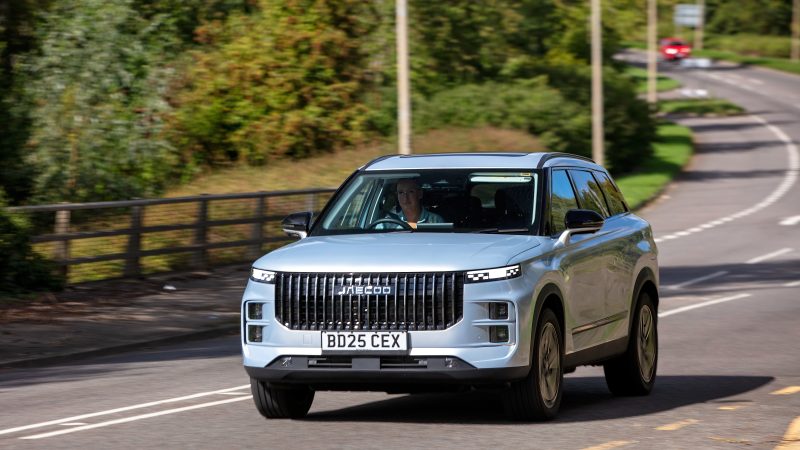

Seen an electric vehicle lately? Chances are it’s a Jaecoo, the “Temu Land Rover”, or an MG4. Chinese electric vehicle (EV) brands new to the British market, but part of the huge switch to Chinese EVs of the last two years – a switch that threatens the UK’s automotive industry, and the PM’s promise of reindustrialisation.
Stood on the steps of Downing Street as he took up office, the Prime Minister made clear that he is setting out to reverse the last forty years of deindustrialisation.
Nearly fifty years ago, Thatcher’s extreme deindustrialisation experiment was unleashed on towns like mine in the Black Country. It tore the heart out of our communities, stealing well-paid, secure union jobs and the dignity of a day’s work. It sent key industries overseas and left the UK dependent on far-flung supply chains in a global market.
Towns like Tipton have known for decades that deindustrialisation left us poorer and lacking in the capabilities a sovereign nation needs. Now politics is finally catching on, as global instability disrupts the smooth flow of trade and our allies become less reliable.
Since this government was elected, we have prioritised rebuilding British industry – with the cross-government plan set out in our industrial strategy, which names eight sectors where Britain can lead the world. At last, government procurement will back British firms. The Supercharger and British Industrial Competitiveness Scheme will finally start to cut the sky-high energy costs that threaten to put manufacturers out of business. And Drive35 is putting £4bn into supporting the automotive transition.
Stopping further deindustrialisation requires more action, though – and the threat to automotive and the wider industrial supply chain from an uncontrolled flood of Chinese EVs is real.
UK plants build vehicles for Jaguar Land Rover, Mini, Nissan, Toyota, BMW, Aston Martin, Leyland Trucks and the London EV Company. The supply chain of more than 2,500 companies provides everything from steel and aluminium pressings, castings and fasteners to engines, batteries, electronics, glass, tyres and advanced powertrain systems – supplying not just automotive, but defence, clean energy and aerospace too. I know those companies – many of them are concentrated in the Black Country and the wider West Midlands, the UK’s home of advanced manufacturing.
Automotive manufacturing generates around £25bn GVA to the UK economy and supports more than 183,000 manufacturing jobs. In 2025, UK factories produced more than 717,000 cars, 47,000 commercial vehicles and 1.6 million engines, with nearly eight in ten cars exported to markets around the world.
UK automotive is in the middle of a tricky transition to EVs and buffeted by a tricky trading environment. Volumes have fallen from a peak of 1.6m in 2016. But with the right government policy and support, trading environment, and subject only to fair competition, the industry can grow again, and the supply chain can thrive across all advanced manufacturing.
Right now, that means ending the perverse situation where the UK has a hands-off approach to the vast number of EVs coming in from China.
In the US, Chinese EVs are essentially banned. The EU has announced tariffs of up to 45 per cent since 2024. The UK levies just ten per cent on cars from anywhere in the world – so Chinese EVs are dumped in their hundreds of thousands in the UK market.
Already one in four electric vehicles sold in the UK are Chinese-made, according to the SMMT, with sales rising a staggering 50 percent in just one year.
This poses an existential threat to the British automotive industry. Even where Chinese EVs are not direct competitors – for example at the luxury end of the market – the Chinese state subsidies they enjoy distort UK car prices in both the new and second-hand markets.
Become a friend of LabourList and join our community. Our friends support our vital non-factional work and get access to exclusive content and events.
Some will say we need cheap Chinese cars to tackle the climate emergency. We need tough action to cut carbon emissions – and EVs are a huge part of that. But we need to transition with good union jobs and livelihoods protected – giving communities where manufacturing is a huge employer a chance to reskill and transition.
That’s why I support tariffs on Chinese EVs – to make sure our domestic industry survives and to preserve fair competition. And a clear signal that we are happy to align with European neighbours on Chinese tariffs will help overcome the obstacles to including UK automotive in the EU’s Made in Europe programme.
Tariffs would give UK automotive some breathing space. But to reindustrialise we also need a huge expansion of BICS to all manufacturing, and reform of the energy system to permanently lower industrial energy costs. We need to back the innovators who start out here in the UK, but have to look abroad when it’s time to scale up. We must spend every pound of public money on buying British. And we need a target for reindustrialisation: the Reindustrialisation Research Group recently called for one million jobs in production sectors over the next decade.
Britain making things again – that is the vision which secured Andy Burnham victory in Makerfield. Backing British automotive and supply chains and introducing tariffs on Chinese EVs would be the clearest sign yet that his government is delivering that ambition.
Subscribe here to our daily newsletter roundup of Labour news, analysis and comment– and follow us on TikTok, Bluesky, WhatsApp, X and Facebook. You can also write to our editor to share your thoughts on our stories and share your own. The best letters are published every Sunday.
-
- SHARE: If you have anything to share that we should be looking into or publishing about this story – or any other topic involving Labour– contact us (strictly anonymously if you wish) at [email protected].
- SUBSCRIBE: Sign up to LabourList’s morning email here for the best briefing on everything Labour, every weekday morning.
- BECOME A FRIEND: If you enjoyed this, why not consider becoming a Friend of LabourList? Help sustain our journalism, and of course Friends do get benefits…
- PARTNER: If you or your organisation might be interested in partnering with us on sponsored events or projects, email [email protected].
- ADVERTISE: If your organisation would like to advertise or run sponsored pieces on LabourList‘s daily newsletter or website, contact our exclusive ad partners Total Politics at [email protected].


More from LabourList
Good growth in every postcode 21st October 2026
‘Labour must put culture at the heart of their youth mental health plan’
The Thames Valley is driving growth. Devolution can turbocharge it.