


Beds, Bills, Build, Boats, Bombs
When commentators talk about the Labour government’s priorities, they often focus on the ‘Five Bs’ – shorthand for Labour’s mission to rebuild Britain’s foundations, from infrastructure and industry to public services and opportunity.
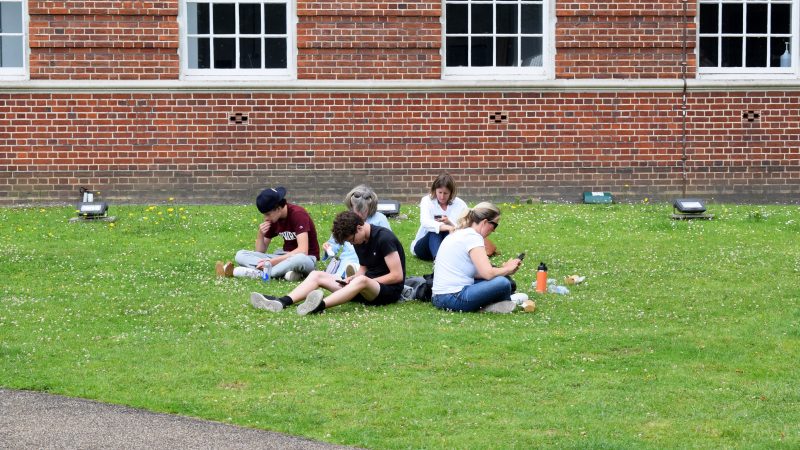
To deliver on any of these, Labour urgently needs to add an extra ‘B’ – Brains. Britain’s long-term growth will be determined by the focus, learning and creativity of our next generation and one simple measure gives these precious commodities an instant boost – genuinely removing smartphones from schools.
That’s the goal of Generation Focus – a broad coalition of parents, educators and campaigners working with school leaders to champion a statutory national ban on smartphones in schools. Backed by hundreds of headteachers and multi-academy trust CEOs, the campaign highlights a clear truth – the current smartphone guidance is failing our children, and schools need help to make classrooms calm, safe and focused once more.
READ MORE: ‘School readiness is rising – but so is the gap between poorer kids and their peers’
Teachers across Britain tell the same story: the single biggest barrier to calm and focused classrooms is no longer just funding or staffing – it’s the smartphone.
Smartphones have come to dominate school life. They fragment attention, fuel anxiety, and expose young people to harmful content. Teachers spend hours policing devices and online disputes; parents feel powerless; and pupils themselves admit they struggle to focus.
As one headteacher told us: “Every lesson is a battle for attention – and we’re losing.”
While 97% secondary schools say they “ban” phones, 89% rely on the least restrictive “no see, no hear” option in the guidance. This requires children to keep their smartphones off and away in bags or blazers. Everyone knows it does not work. Pupils conceal phones behind books, disappear to toilets to check social media, send messages under the desk. It’s little wonder the few schools with a genuine on-site ban report transformational change – better educational outcomes, calmer behaviour, teachers free to teach again.
The Department for Education’s own National Behaviour Survey launched last month revealed only 9% of pupils and 13% of secondary leaders say their school smartphone rules are followed “all of the time”. This confirms what every teacher already knows – the current approach is simply not working.
At Prime Minister’s Questions on 19 November, Keir Starmer acknowledged that the current guidance must be kept under review and that what matters is whether the steps taken to deal with smartphones are effective. The Education Select Committee stated the same last year, recommending that if non statutory guidance is shown to be ineffective, the government should ‘move to a statutory ban as soon as possible’.
This test has now been met and it is time for decisive national leadership to ensure every school implements the policy that is proven to be effective – a complete on-site ban of smartphones in all school settings, with simple call and text (brick) phones permitted for travel where needed. As well as protecting the school day, this policy supports the majority of parents who feel under pressure to give their child a smartphone at a younger age than they would prefer, reversing the current trend of younger and younger children owning smartphones.
Why aren’t more schools already implementing complete on-site bans?
Shouldering this alone on an individual school-by-school basis is exhausting and time-consuming for already over-stretched headteachers. Without a national directive, parents view phone restrictions as a ‘personal’ choice made by the headteacher, rather than a safeguarding necessity.
The overwhelming majority of parents are silently supportive but heads often end up in conflict with a vocal minority of parents who are unwilling to forgo the convenience or perceived benefits of their children taking a smartphone to school.
As evidence continues to mount, a recent study from the University of West England found parents often underestimate the harm smartphones are doing to their children and therefore may not understand the need for tighter restrictions. Dealing with parents who object – and delivering the education required to quell dissent – is a colossal time burden for school leaders.
A national safeguarding issue that hits vulnerable children hardest
In a recent case that made national headlines, 17-year-old Flossie McShea launched legal action after being shown violent and pornographic videos on a classmate’s phone in a school with a “not seen or heard” policy. She’s not alone. Harmful content is routinely shared in classrooms and on school buses because teachers cannot safeguard children everywhere school has a duty of care so long as smartphones are allowed on site.
Removing smartphones from the school day also gives children a break from addictive-by-design technology. Snapchat, for example, reaches 90% of 13-24 year olds and OFCOM data shows 13-14 year old Snapchat users spend more than 2 hours a day on the app. That’s 14 hours a week before they’ve even opened TikTok, YouTube or WhatsApp.
Subscribe here to our daily newsletter roundup of Labour news, analysis and comment– and follow us on Bluesky, WhatsApp, X and Facebook.
Vulnerable children benefit the most from protection during the school day. The UWE research also found that pupils already struggling academically are most likely to experience smartphone-related harm – from self-harm and eating disorder content to toxic group chats. Smartphones widen the attainment gap.
Parents and teachers want national action
Public support for much tighter restrictions could not be clearer. A national survey by Parentkind found:
- 84% of parents who have not given their children smartphones support a full school-day ban.
- 83% believe smartphones are harmful to young people.
- 89% are worried about online bullying.
Teachers agree. A recent TeacherTapp survey shows:
- 70% of primary teachers would prefer that smartphones were banned altogether
- 82% of secondary teachers would prefer an outright ban on bringing smartphones to school
This is a popular, common sense policy with big public momentum.
What Labour can do to act
Labour’s mission for growth depends on productivity and productivity begins with focus. Protecting children’s brains is foundational to learning, wellbeing and our country’s long term opportunity. Young people, teachers, heads and parents are all asking for urgent help from a Labour government and there are clear routes forward:
- Listen to pioneering headteachers who have gone genuinely smartphone-free to understand the most cost-effective, pragmatic ways to implement effective bans (Generation Focus has requested meetings with the Secretary of State and her advisors)
- Move from voluntary guidance to a clear, statutory national standard
Share your thoughts. Contribute on this story or tell your own by writing to our Editor. The best letters every week will be published on the site. Find out how to get your letter published.
This would empower headteachers, take conflict out of the school gates and give protective cover to teachers doing their jobs.
And, crucially, it would give our children the freedom they need to focus on learning, socialising, and developing the real world skills they need to become a generation of healthy, productive adults.
-
- SHARE: If you have anything to share that we should be looking into or publishing about this story – or any other topic involving Labour– contact us (strictly anonymously if you wish) at [email protected].
- SUBSCRIBE: Sign up to LabourList’s morning email here for the best briefing on everything Labour, every weekday morning.
- DONATE: If you value our work, please chip in a few pounds a week and become one of our supporters, helping sustain and expand our coverage.
- PARTNER: If you or your organisation might be interested in partnering with us on sponsored events or projects, email [email protected].
- ADVERTISE: If your organisation would like to advertise or run sponsored pieces on LabourList‘s daily newsletter or website, contact our exclusive ad partners Total Politics at [email protected].





More from LabourList
Deficits, disaffiliation and internal democracy – what we know about today’s NEC meeting
‘The Government’s earned settlement policy is built on a fiction. It should be scrapped’
‘Standing side by side with people’: Cymru reflections from Cardiff Bay