

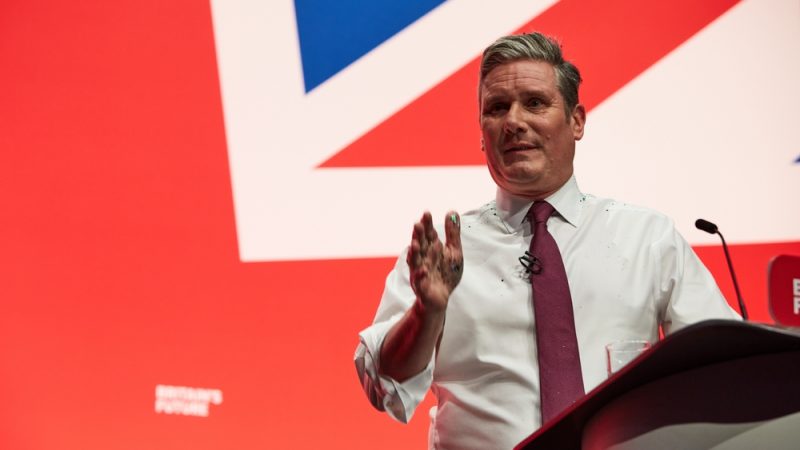

It was a busy week for the Labour government.
While tensions brewed on the global stage, there was plenty of tangible progress towards fixing problems closer to home.
Here are the seven most exciting breakthroughs and announcements this week that you can use, whether you’re on the doorstep, sparring on social media, or debating in the pub.
1. Slashing energy bills for good
Labour is launching a £15 billion plan to upgrade up to 5 million homes with solar panels, batteries, heat pumps, and insulation.
Low-income households will receive fully funded upgrades worth up to £12,000, including free solar panels and batteries. The plan will help lift up to one million families out of fuel poverty by 2030.
All homeowners will be able to access government-backed, zero and low interest loans to install solar panels, batteries and heat pumps. There’s also a £7,500 universal grant for heat pumps, including air-to-air models that can cool homes in summer.
2. Overhauling the water system
Labour is creating a new water regulator with new powers to identify problems before they happen and force companies to fix failures quickly.
A Chief Engineer will sit inside the regulator, ending the days of water firms marking their own homework. The regulator will also introduce an ‘MOT’ for water infrastructure, requiring health checks on pipes and pumps to prevent shortages and disruption.
Separately, water companies who broke environmental rules are now funding the recovery of England’s waterways. The government is reinvesting £29 million of fines into over 100 local projects to improve 450km of rivers, restore 650 acres of natural habitats, and plant 100,000 new trees.
3. £1.5 billion in new private investment
The Chancellor has secured £1.5 billion in private investment for the UK at the World Economic Forum in Davos.
Savings giant M&G will invest £1 billion in 225 communities across Britain, including the North, Midlands, Wales, and the South East. The money will fund housing, transport, town-centre renewal, and infrastructure to support net zero.
Global pharmaceutical company UCB confirmed £500 million for UK research and manufacturing in Surrey, developing medicines for immunological diseases at a new world-class research hub in Windlesham.
Subscribe here to our daily newsletter roundup of Labour news, analysis and comment– and follow us on Bluesky, WhatsApp, X and Facebook.
4. Tackling phones and social media
The government is launching a consultation on restricting children’s access to social media.
Measures being considered include restricting addictive features like infinite scrolling, banning social media access for children, and better age checks.
Ofsted will also start checking that mobile phone bans are properly enforced during every school inspection. Schools will be expected to be phone-free by default, with pupils unable to access devices during lessons, breaks, or lunch.
5. Mandatory SEND training for teachers
Labour is requiring every teacher to be trained to support children with special educational needs and disabilities (SEND).
Almost half of teachers say more training would help their confidence in supporting pupils with SEND. The government is investing £200 million in new courses to teach all school staff how to adapt their teaching for pupils with needs like visual impairments, and speech and language difficulties.
The new requirement will be written into the SEND Code of Practice, making it mandatory for every nursery, school and college nationwide.
6. Getting people back to work
Labour is rolling out its health and employment support service across England after a successful pilot.
Up to 250,000 more people with health conditions will now get support to stay in, or return to, work through WorkWell.
The programme connects people to local services like physiotherapy, counselling and workplace adjustments. During the pilot, over 25,000 people were supported, with 48% citing mental illness as their main barrier to work.
7. Free sentencing transcripts for victims
Labour is giving all victims free access to judges’ sentencing remarks in their case, helping them process what happened and move forward with their lives.
Previously, victims had to pay at least £40 to access sentencing remarks, and it could sometimes end up in the hundreds of pounds. The change removes this barrier and means victims who can’t attend sentencing hearings in person can still understand the outcome on their own terms.
Share your thoughts. Contribute on this story or tell your own by writing to our Editor. The best letters every week will be published on the site. Find out how to get your letter published.
_____________________________________________________________________________
- SHARE: If you have anything to share that we should be looking into or publishing about this story – or any other topic involving Labour– contact us (strictly anonymously if you wish) at [email protected].
-
- SUBSCRIBE: Sign up to LabourList’s morning email here for the best briefing on everything Labour, every weekday morning.
- DONATE: If you value our work, please chip in a few pounds a week and become one of our supporters, helping sustain and expand our coverage.
- PARTNER: If you or your organisation might be interested in partnering with us on sponsored events or projects, email [email protected].
- ADVERTISE: If your organisation would like to advertise or run sponsored pieces on LabourList‘s daily newsletter or website, contact our exclusive ad partners Total Politics at [email protected].



More from LabourList
‘The politics of the Gambling Levy money’
Starmer attempts to reassure Britons amid fears of inflation spike, but did he go far enough?
‘From referee to coach – Labour needs a new theory of what it’s for’