

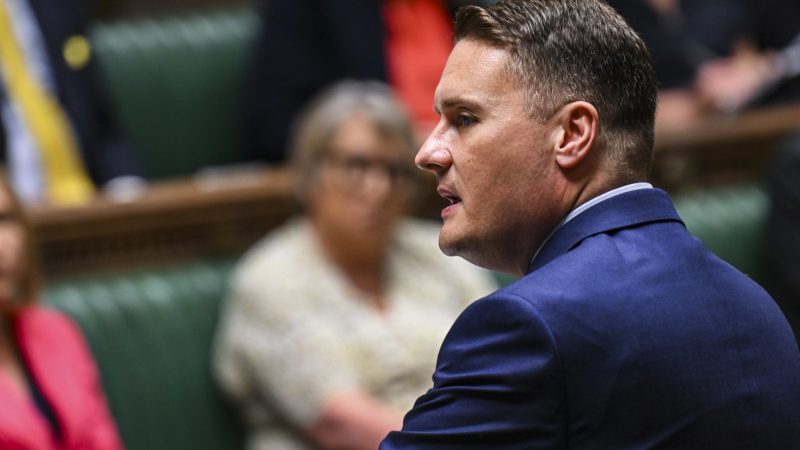

At this week’s Progress (or Progressive Britain… the name changed back to the original halfway through dinner) anniversary event, Wes Streeting set out his clearest stall yet for how he might seek to unite the Labour membership behind him were a leadership contest to arise.
As ever, Streeting walked a narrowing tightrope – praising the government, gently tweaking those who lead it, and sketching his own alternative vision.
The tweaking, at least on the surface, landed in good humour. Morgan McSweeney was in my eyeline, laughing along with the crowd as Streeting “live-edited” his speech, theatrically discarding sheet after sheet of paper. The gag has only improved with the benefit of hindsight, given the farcical chain of events that allowed Kemi Badenoch to steal the wind from Robert Jenrick’s resignation sails.
What McSweeney made of the implicit — though not that implicit — critique of the current regime, and of Streeting’s alternative approach to Labour’s internal politics, was harder to divine.
At the heart of Streeting’s speech was a simple but pointed argument – Labour needs its internal arguments. The Campaign Group MPs on the party’s left, he argued, broadly share the same values as everyone else in that room — even if they differ on how to realise them. Change begins with disagreement, and progress does not happen without argument. Given that one of the loudest criticisms of Keir Starmer is that he has no vision — or no interest in articulating one — it was hard not to read this as a challenge to Streeting’s allies on the Labour right as much as an olive branch to the left.
That made Streeting’s contribution stand out. Other speeches that evening focused on either the defeat of the left or the enduring factional divide. When speakers celebrated Progress — or progress — many of the achievements cited were very specifically Blair-era ones.
Some nostalgia was inevitable. This was, after all, an anniversary party. Marking past success is natural, and learning from it essential. New Labour did change Britain for the better. But some of the policies once championed by Progress remain deeply contested. Like an awkward first marriage tactfully omitted from a birthday toast, the Iraq war went unmentioned. More eyebrow-raising was the praise by one speaker of Public Private Partnerships — a Blairite policy few now regard as a triumph.
READ MORE: Starmer would lose leadership contest to Streeting, Rayner, Burnham and Miliband – poll
This speech was also a challenge to Progress itself to live up to its new-old name. If the Labour right becomes — or is seen as — a 1990s New Labour tribute act, it will fail to meet the very different challenges of politics three decades on.
What are the moderate Labour answers to AI? How do we fund public services in an age shaped by Amazon Prime expectations? How do we move people off welfare and into not just any work, but good, healthy, sustainable and fulfilling jobs? How do we build post-fossil-fuel infrastructure in ways that are both politically and economically viable? How do we protect the UK in a world where NATO may yet prove a paper tiger?
These are questions the entire Labour Party — from the hardest left to the most centrist moderate — must grapple with. And they should be talking to each other as they do so.
Both wings of the party are prone to nostalgia. Both should resist it. If Labour is to make progress, it must move forward — and a serious, open debate about how we do that together will only strengthen both our politics and our policy.
It is fair to say that while Streeting’s audience went further than the room itself, his intended target was probably not the actual Campaign Group and their supporters who are highly unlikely to ever be reconciled to Wes or to Progress. However, as McSweeney himself discovered in his strategy to make Starmer leader, the Labour membership is not made up of two irreconcilable groups. The vast majority sit somewhere in the middle and want the best of both. With considerably less internal bloodletting and punishments of their fellow members over political disagreements.
Streeting’s speech will inevitably be read as a leadership pitch, and he is far too politically astute not to know that. But its significance should outlast the leadership gossip cycle. If Progress takes up his challenge — to be more forward-looking and less factional — it may yet find it has more to say, and a far more receptive audience within the party at large.
Subscribe here to our daily newsletter roundup of Labour news, analysis and comment– and follow us on Bluesky, WhatsApp, X and Facebook.
Share your thoughts. Contribute on this story or tell your own by writing to our Editor. The best letters every week will be published on the site. Find out how to get your letter published.
-
- SHARE: If you have anything to share that we should be looking into or publishing about this story – or any other topic involving Labour– contact us (strictly anonymously if you wish) at [email protected].
- SUBSCRIBE: Sign up to LabourList’s morning email here for the best briefing on everything Labour, every weekday morning.
- DONATE: If you value our work, please chip in a few pounds a week and become one of our supporters, helping sustain and expand our coverage.
- PARTNER: If you or your organisation might be interested in partnering with us on sponsored events or projects, email [email protected].
- ADVERTISE: If your organisation would like to advertise or run sponsored pieces on LabourList‘s daily newsletter or website, contact our exclusive ad partners Total Politics at [email protected].



More from LabourList
‘From referee to coach – Labour needs a new theory of what it’s for’
Ben Cooper column: ‘Labour must intervene to tackle the causes of the cost of living crisis’
Labour launch major attack ad campaign exposing Reform’s record