

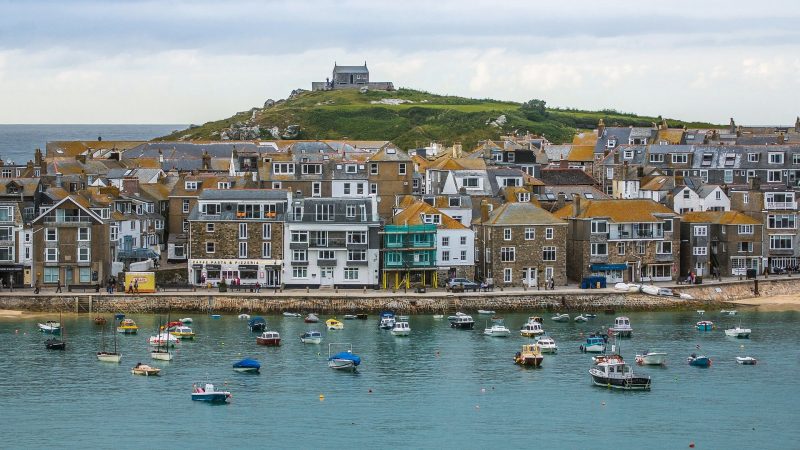

There is a truth my constituents in East Thanet know all too well: our coastal towns have too often been forgotten. While national conversations about decline tend to focus on post-industrial northern areas or big city regions, places like Thanet, Blackpool, or Weston-Super-Mare have too often been left on the margins. I came into Parliament determined to change that — and recent changes to the Treasury’s Green Book show that this effort is bearing fruit.
Tackling inequality and standing up for left behind parts of the country should be at the absolute core of what Labour is about. Yet for decades, the Treasury’s infamous ‘Green Book’ – the rulebook that dictates which government investments are the most worthwhile – has systematically favoured areas that were already wealthy, densely populated, and economically productive. In practice, that meant investment flowed towards London and its commuter belt, while coastal and post-industrial towns were judged as offering ‘poor value for money’.
READ MORE: ‘Britain’s coastal towns are the front line of national renewal’
The result has been a vicious cycle of neglect. Less investment led to weaker infrastructure, fewer opportunities and lower wages — which then made it even harder to justify future investment. Austerity turbocharged that injustice; when there was even less money to go around, even less of it found its way to coastal parts of the country like mine. In short, coastal communities got trapped by a system that stacked the odds against us.
That is why when I entered parliament I revived the Coastal PLP, the parliamentary group of Labour MPs representing deprived coastal constituencies. Dormant since the New Labour era, we now boast more than 60 Labour MPs representing places by the coast that have suffered neglect and indifference from Whitehall for too long. Many of these constituencies bear more similarity with each other than they do with their nearer neighbours. Thanet has a lot more in common with Scarborough or Rhyl than it does with leafy Kent towns like Tunbridge Wells or Sevenoaks.
As MPs, we are united by a simple message: that the challenges facing coastal Britain are not quirks or footnotes. They are profound, structural, and demand a focused national strategy. As Chair of the group, I have spent months with my coastal colleagues pressing ministers to rethink how investment decisions are made, and to recognise the unique barriers coastal communities face.
Subscribe here to our daily newsletter roundup of Labour news, analysis and comment– and follow us on TikTok, Bluesky, WhatsApp, X and Facebook.
Now, that pressure is paying off.
The government’s reforms to the Treasury Green Book, announced this week, are designed to ensure that every part of the UK gets a fair hearing when competing for public investment. Instead of narrow economic calculations that reward already-successful areas, the new approach will properly account for long-term social value, regional inequality, and the transformational impact of investing in overlooked communities.
In Thanet and so many other coastal areas like it, the need is clear. Our high streets bear the scars of years of neglect. Too many young people feel that the only way to build a future is to leave. Our transport links, housing stock, and public services have all been stretched to breaking point. At the same time, we face deep health inequalities, higher seasonal unemployment, and a shortage of secure, well-paid work.
But we also have extraordinary potential: a stunning coastline, thriving creative communities, a proud hospitality sector, rich history, and people who care deeply about where they live.
In plain English: this is about fairness. It means places like Thanet will no longer be penalised for already struggling. It means projects that strengthen communities, tackle deprivation, and unlock long-term opportunity will finally get the backing they deserve. It’s a recognition that tackling inequality between our wealthiest areas and our most deprived is vital for building a stronger and more resilient economy for all of us, and not just for those in our big cities.
And it’s a recognition of what the Coastal PLP has been saying for months: that with the right investment and support, our coastal towns can thrive again. This matters enormously for places like Thanet, where the returns on investment are measured not just in pounds and pence, but in healthier lives, stronger communities, better jobs and renewed pride.
Share your thoughts. Contribute on this story or tell your own by writing to our Editor. The best letters every week will be published on the site. Find out how to get your letter published.
Of course, no single reform will fix decades of neglect overnight, but for coastal communities this is a genuine game-changer. For the first time in a generation, the system itself is beginning to change to favour our left behind coastal areas, and it is a Labour government that is delivering it.
-
- SHARE: If you have anything to share that we should be looking into or publishing about this story – or any other topic involving Labour– contact us (strictly anonymously if you wish) at [email protected].
- SUBSCRIBE: Sign up to LabourList’s morning email here for the best briefing on everything Labour, every weekday morning.
- DONATE: If you value our work, please chip in a few pounds a week and become one of our supporters, helping sustain and expand our coverage.
- PARTNER: If you or your organisation might be interested in partnering with us on sponsored events or projects, email [email protected].
- ADVERTISE: If your organisation would like to advertise or run sponsored pieces on LabourList‘s daily newsletter or website, contact our exclusive ad partners Total Politics at [email protected].



More from LabourList
Starmer attempts to reassure Britons amid fears of inflation spike, but did he go far enough?
‘From referee to coach – Labour needs a new theory of what it’s for’
Ben Cooper column: ‘Labour must intervene to tackle the causes of the cost of living crisis’