

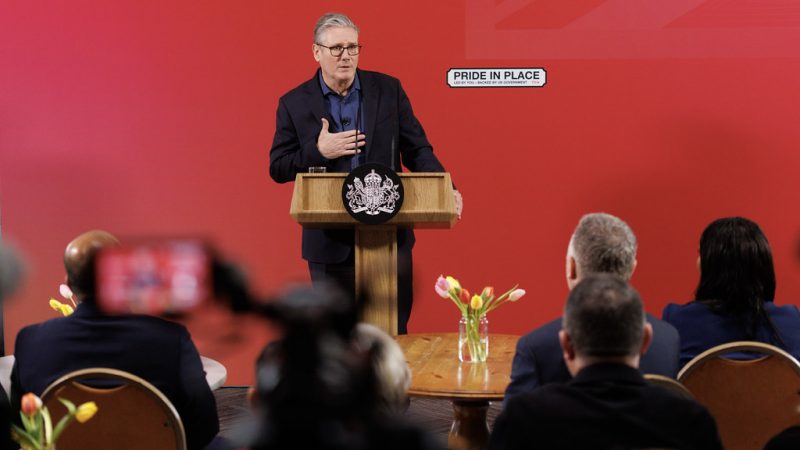

The events of recent weeks have been widely framed as a story about personalities. They are not. They are about strategy — and whether the approach that helped Labour win power is now holding the government back from governing effectively. Labour’s challenge is no longer how to secure power, but how to use it in a way that rebuilds trust and delivers change.
Labour entered office in July 2024 with a clear mandate for change. After years of instability and decline, the public expected not just competence but a visible shift in how power is exercised and how decisions are made. That expectation has not diminished. But the way in which the party now governs will determine whether trust is renewed — or quietly eroded — over the course of this parliament.
As a Labour backbencher who wants the government to succeed, I believe we need to be honest about a growing problem: a governing culture shaped too heavily by the instincts of opposition, rather than the demands of delivery.
READ MORE: Starmer the class warrior? PM pivots focus towards ‘class divide’
The controversy surrounding Peter Mandelson over the past couple of weeks matters not because of the individual involved, but because of what it revealed. For many voters, it reinforced a sense that too much political energy remains focused on control, messaging and tactical positioning, rather than on the harder work of governing in the open. It exposed a style of politics that may once have felt necessary, but now looks increasingly out of step with the task at hand.
In opposition, discipline and centralisation are often rational responses to a hostile environment. In government, they can become constraints. The challenge of office is not simply to avoid mistakes, but to enable action — across departments, across regions, and alongside local government and civic institutions that understand their communities better than any central team ever can.
Too often, policy ambition is narrowed by an instinct to minimise political risk rather than maximise public benefit. Decisions take longer than they should. Innovation is discouraged. Local leaders are invited to deliver outcomes without being trusted with the means to do so. This is not a failure of intent, but of approach.
Subscribe here to our daily newsletter roundup of Labour news, analysis and comment– and follow us on TikTok, Bluesky, WhatsApp, X and Facebook.
The public feels this not as an abstract governance debate, but as delay: in housing that is promised but not built, in public services that improve too slowly, in a sense that change is being managed rather than made. Governments rarely lose because they are criticised too harshly. They lose because people conclude that progress is not happening fast enough — or clearly enough — in their own lives.
There is also a deeper democratic risk. When governing strategy is shaped primarily by electoral caution, it can crowd out the pluralism that strengthens decision-making. Labour is a broad movement, rooted in local places and collective endeavour. Governing well means drawing on that strength, not constraining it.
None of this requires abandoning discipline or clarity of purpose. It requires recognising that the skills needed to win an election are not the same as those needed to run a country. A government confident in its direction should be able to tolerate debate, decentralise power, and trust delivery beyond the centre.
With a general election likely in 2029, Labour’s task is not to recreate the conditions of opposition in anticipation of another campaign. It is to govern now in a way that demonstrates purpose, pace and openness — and that leaves people feeling their lives are materially better as a result.
Share your thoughts. Contribute on this story or tell your own by writing to our Editor. The best letters every week will be published on the site. Find out how to get your letter published.
Winning power was necessary. Using it well is the real test. If Labour is willing to reflect, adapt and change course where needed, this government can still meet the expectations that carried it into office. If not, the risk is not internal disagreement, but public disappointment — and that is far harder to recover from.
-
- SHARE: If you have anything to share that we should be looking into or publishing about this story – or any other topic involving Labour– contact us (strictly anonymously if you wish) at [email protected].
- SUBSCRIBE: Sign up to LabourList’s morning email here for the best briefing on everything Labour, every weekday morning.
- DONATE: If you value our work, please chip in a few pounds a week and become one of our supporters, helping sustain and expand our coverage.
- PARTNER: If you or your organisation might be interested in partnering with us on sponsored events or projects, email [email protected].
- ADVERTISE: If your organisation would like to advertise or run sponsored pieces on LabourList‘s daily newsletter or website, contact our exclusive ad partners Total Politics at [email protected].



More from LabourList
Labour launch major attack ad campaign exposing Reform’s record
‘It is time for the Lords Spiritual to leave the House of Lords’
‘MattGPT and Me’