

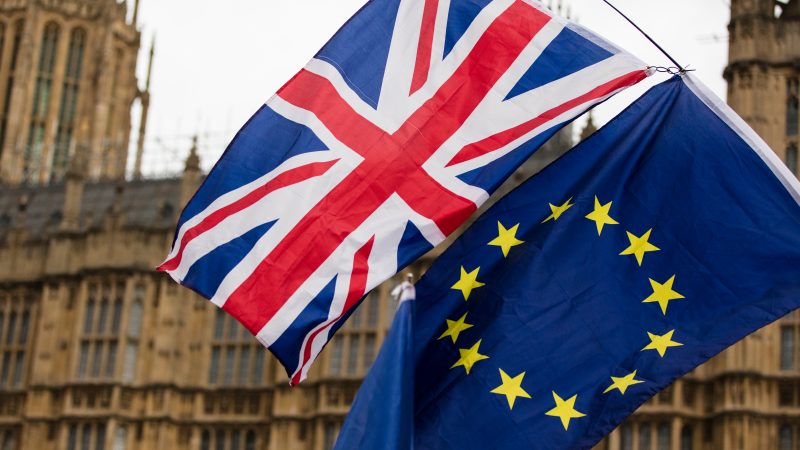

In June, it will be 10 years since the Brexit referendum. At the time, I was a political advisor to the relatively new Labour MP for Holborn & St Pancras.
The day after, as the dust settled and the result became clear, I remember being sat in Keir’s garden discussing what this all meant – for Labour, for Britain, and for our place in the world. Suffice to say, neither of us was best pleased with the result. Keir least of all.
After a little rumination on the shortcomings of the Remain campaign, he sketched out what he felt should come next.
First, Keir saw that the referendum had exposed something beyond people’s views on the EU. It had shown that for millions of Britons, the country was not working for them – that control had indeed been lost, and that it was the job of politicians to deliver the change the country was crying out for.
Second, he saw that Britain’s national interest lay in minimising the economic, cultural and diplomatic dislocation that would inevitably follow our exit from the EU: to be outside the EU, but close to it. To protect British businesses, supply chains and employment standards. To cooperate wherever we could on trade, security, culture and much more, and – as he would emphasise as shadow Brexit secretary – to prevent a hard border in Northern Ireland.
In time, this approach would come to be known as ‘making Brexit work’. But it mattered for little as we watched from the irrelevance of opposition as successive Conservative prime ministers struggled to drive through their own visions of the post-Brexit world. Worse still, those governments also saw their domestic ambitions crushed on the altar of “getting Brexit done”. That is perhaps the silent tragedy of the last decade – that the big reforms this country was crying out for, and the referendum had exposed, went unaddressed.
And so, when Labour was elected in 2024, it was no surprise to me that Keir set about rebuilding a new, stronger and closer relationship with the EU. Within a few months, the prime minister had hosted the first UK-EU summit, where we agreed a Common Understanding and a new framework for UK-EU relations. It includes a new security and defence partnership, because, as the prime minister has said, there is no British security without Europe, and no European security without Britain.
It also includes a mandate to negotiate a sanitary and phytosanitary (SPS), or agrifood, agreement. This will materially reduce burdens, barriers and costs for cross-border trade on food, drink and much more. It will also go some way to addressing the absurdity that, since Brexit, agrifood exports to the EU are down 21 per cent.
Become a friend of LabourList and join our community. Our friends support our vital non-factional work and get access to exclusive content and events.
We are also negotiating access to the EU’s internal electricity market, which will cut bills for businesses and consumers, and we are close to agreeing a youth experience scheme, which will allow young people to live, work and train abroad.
I am also delighted that we have agreed associate membership of the Erasmus+ programme from 2027, which will benefit over 100,000 young people from all backgrounds, overturning one of the most short-sighted and self-defeating decisions of the last government’s Brexit deal.
The progress this Labour government has made in the last 18 months has its roots in the closer relationship Keir sketched out in our discussion in his garden 10 years ago. So when, last September, he asked me to be a minister in the Cabinet Office and to work alongside Nick Thomas-Symonds on this hugely ambitious EU reset, I knew instinctively the destination he had in mind.
Because the Common Understanding we are already negotiating – SPS, electricity sharing and youth experience – is just the start. There will be another UK-EU summit this summer, with new and more ambitious negotiating mandates. And there will be legislation before parliament to deliver this shortly.
Progressives should welcome this – and be under no illusion that we are no longer the Britain of the Brexit years. We want a closer relationship with the EU. We want deeper integration. We want to work with, not against, our EU partners. And we will choose – as is our sovereign right – to align with the single market where it is in our national interest.
Subscribe here to our daily newsletter roundup of Labour news, analysis and comment– and follow us on TikTok, Bluesky, WhatsApp, X and Facebook. You can also write to our editor to share your thoughts on our stories and share your own. The best letters are published every Sunday.
This new partnership with the EU will be in line with the manifesto we were elected on – and it will help repair the unnecessary, national self-harm of the deals negotiated in the last decade. Better still, it will come alongside, not instead of, tackling the forgotten issues of the last decade – whether on special educational needs and disabilities, child poverty, workers’ rights or planning.
I don’t underestimate the scale of the task ahead of us in forging a new relationship with the EU. Those who have shaped Brexit over the last decade will not see it remoulded without a fight. But it is a prize worth fighting for – economically, culturally and diplomatically. And it is a prize the prime minister has had in mind since the day after the referendum result some 10 years ago.
This article will be published in an upcoming edited collection from the Fabian Society and Labour Movement for Europe, ‘Pressing Reset – Our future with the EU’.
-
- SHARE: If you have anything to share that we should be looking into or publishing about this story – or any other topic involving Labour– contact us (strictly anonymously if you wish) at [email protected].
- SUBSCRIBE: Sign up to LabourList’s morning email here for the best briefing on everything Labour, every weekday morning.
- BECOME A FRIEND: If you enjoyed this, why not consider becoming a Friend of LabourList? Help sustain our journalism, and of course Friends do get benefits…
- PARTNER: If you or your organisation might be interested in partnering with us on sponsored events or projects, email [email protected].
- ADVERTISE: If your organisation would like to advertise or run sponsored pieces on LabourList‘s daily newsletter or website, contact our exclusive ad partners Total Politics at [email protected].



More from LabourList
SPONSORED: ‘What’s the problem with game shooting?’
‘Labour must not weaken democratic accountability in the NHS’
Letters to the Editor – week ending 29 March 2026