

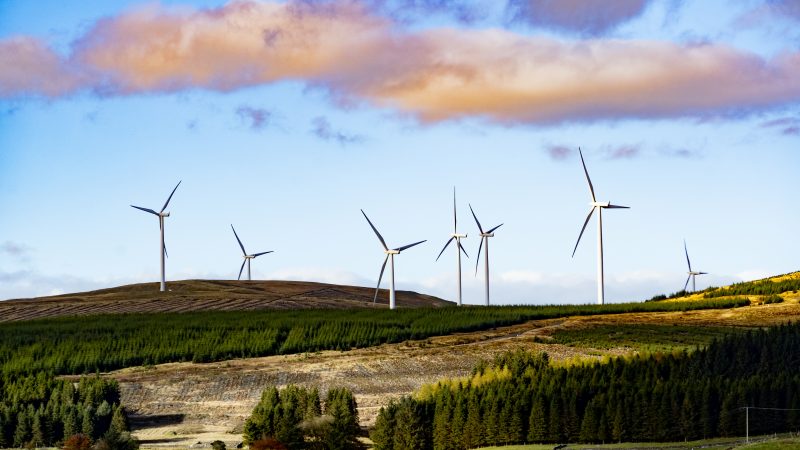

The pressure is growing and not from the usual suspects. The pressure is coming from some corners of the renewables industry, and now even from the chair of Great British Energy itself. These voices are calling for more North Sea drilling.
It is tempting, in the current geo-political climate abroad and the domestic political weather at home, for the government to change tack. It must not.
Ed Miliband, Rachel Reeves and Keir Starmer should hold their nerve and go further. The case for accelerating the clean energy transition has never been stronger – and the cost of retreat has never been higher.
The Noise Around North Sea
We should be honest about what is happening. Juergen Maier, chair of GB Energy, posted on LinkedIn suggesting more North Sea production could slow job losses and support tax revenues. Greg Jackson, chief executive of Octopus Energy, argued that imported LNG is considerably dirtier than locally produced gas. And Tara Singh, the newly appointed CEO of RenewableUK, wrote in the Telegraph that Britain should produce more energy “of every kind” and called for energy to be taken “out of the culture wars.”
These are serious people making serious points, and they deserve a serious response rather than dismissal.
But here is what none of them are arguing: that more North Sea drilling will bring down energy prices, improve energy system resilience or insulate British households from global price shocks. Juergen Maier was explicit on that point. Even Greg Jackson’s argument is environmental rather than economic. And Miliband was absolutely right when he told the Parliamentary Labour Party on Monday that “anyone who tells you that new licences in the North Sea will make any difference to price is not telling you the truth.”
Oil and gas are traded on international markets. Drilling more does not decouple us from those markets. It never has and it never will.
The Real Threat
We are living through a moment of profound geopolitical instability. Russia has weaponised energy against Ukraine, targeting thermal infrastructure to break civilian morale through bitter winters. In the Gulf, the strategic leverage of the Strait of Hormuz hangs over global supply chains. Grey zone operations, including cyberattacks, sabotage and suspicious activity around undersea cables and pipelines, have become a constant feature of modern sub-threshold competition.
The UK is exposed. Around 30 per cent of our electricity still depends on gas. That dependence, whether the gas is imported or domestically extracted, ties us directly to volatile global markets and to the decisions of hostile states and unpredictable regimes.
After Russia’s invasion of Ukraine, the British government spent approximately £50 billion shielding households from soaring energy costs. That burden continues to weigh on public finances. With fresh instability in the Gulf, another price shock is now being predicted, potentially worse than 2022. We cannot keep absorbing global volatility and calling it a strategy.
RenewableUK’s own recent report, New Threats and New Tools: Reinventing Energy Security for an Era of Instability, sets out clearly how exposed our current system is. The answer it points towards is not more of the same.
The Case for Doubling Down
Real energy security means energy independence. A modern, resilient system built on renewables, long-duration storage, green hydrogen, demand flexibility and smart interconnection is not just cleaner – it is structurally more secure. Distributed generation is harder to knock out. The evidence from Ukraine itself is striking: decentralised wind and solar assets have proven far more resilient than thermal generation under sustained attack.
This is the direction Rachel Reeves must fund boldly in her spending decisions. This is the direction Keir Starmer must champion as a matter of national security, not merely climate policy. And this is the direction Ed Miliband must continue to defend with confidence rather than apology.
The enormous opportunity is in new technologies. The North Sea basin has been in decline for twenty years. The future lies elsewhere and we should be building it.
The Dividing Line
There is a clear choice on offer here and Labour should not be shy about highlighting it.
The Conservatives and Reform UK want to drill more, promise energy security they cannot deliver, and leave British households exposed to the next price shock and the one after that. Their position is not an energy strategy, but nostalgia dressed up as pragmatism.
Labour should embrace the path of accelerating the transition, building Great British Energy, unlocking private investment in renewables and storage, and beginning to genuinely decouple from international gas markets. It is the path to resilience.
It is also a jobs story. The clean energy sector is one of the most significant employment opportunities of this decade.
But to make the most of this great opportunity of our time, investors need certainty. That certainty comes from a government that stays the course.
Energy Sector voices calling for drilling in the North Sea reflect genuine anxieties about the pace of transition and the employment consequences of getting it wrong. Those anxieties deserve to be heard and addressed through serious industrial policy.
But they are not an argument for abandoning the destination. They are an argument for getting the journey right. We need a new National Energy Security Strategy and a plan for Clean Energy Independence; this way we will have the foundations and the signals to drive us towards energy and economic security in an increasingly unpredictable future.
We must hold firm. Clean energy independence is not just about the climate. It is energy resilience. It is economic resilience. It is national resilience. And right now, it is exactly the kind of bold, long-term thinking that distinguishes this Labour government from any other party.
Stay the course. Then go further. This is the route to being the Clean Energy Superpower we promised
READ MORE:
Become a friend of LabourList and join our community. Our friends support our vital non-factional work and get access to exclusive content and events.
Subscribe here to our daily newsletter roundup of Labour news, analysis and comment– and follow us on TikTok, Bluesky, WhatsApp, X and Facebook. You can also write to our editor to share your thoughts on our stories and share your own. The best letters are published every Sunday.
-
- SHARE: If you have anything to share that we should be looking into or publishing about this story – or any other topic involving Labour– contact us (strictly anonymously if you wish) at [email protected].
- SUBSCRIBE: Sign up to LabourList’s morning email here for the best briefing on everything Labour, every weekday morning.
- BECOME A FRIEND: If you enjoyed this, why not consider becoming a Friend of LabourList? Help sustain our journalism, and of course Friends do get benefits…
- PARTNER: If you or your organisation might be interested in partnering with us on sponsored events or projects, email [email protected].
- ADVERTISE: If your organisation would like to advertise or run sponsored pieces on LabourList‘s daily newsletter or website, contact our exclusive ad partners Total Politics at [email protected].



More from LabourList
‘We built a game that lets you run a council. Nobody can win it’
‘The fight against online conspiracy theories starts in schools’
Assisted dying bill ‘will fall’, claim House of Lords critics of legislation