

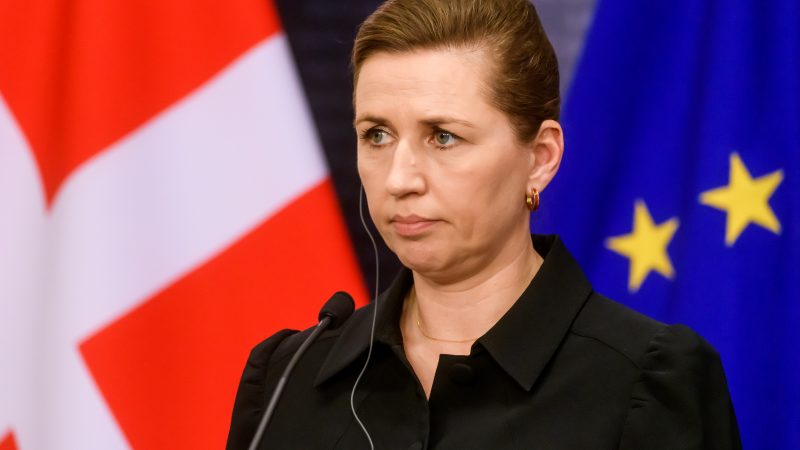

On 24th March, the Danes went to the polls, but no clear winner emerged. While it looks like Mette Frederiksen will continue as prime minister, the Social Democrats polled their lowest proportion of votes for over a century. For years, other centre left parties – including Labour – have looked to learn lessons from one of Europe’s longest sitting progressive leaders. So, what are the takeaways from this election?
Frederiksen: Right leader, wrong election?
From the outside, Frederiksen seemed almost untouchable. In December 2025, Politico ranked her the second most powerful person in Europe. She stood up to Trump when he threatened Greenland, becoming a symbol of European resistance at a moment when it was badly needed. She has been a consistent and vocal supporter of Ukraine and pushed Denmark to dramatically increase its defence spending.
READ MORE: ‘Labour’s lesson from Denmark: immigration alone won’t save you‘
Hoping to capitalise on her leadership during geopolitical uncertainty, Frederiksen called the election early. The logic was understandable; in a world that feels increasingly uncertain and unstable, who better to lead Denmark than the woman who had already proven herself on the world stage time and time again?
While Frederiksen’s international efforts had universal support, it did not translate into electoral gain. Instead, the election ended up being fought on bread-and-butter issues.
Eggs, butter and bacon first
A French foreign minister once remarked that “Denmark thinks about eggs, butter and bacon – and not Europe”, and this election showed that there is a grain of truth in that. Yes, there is a war on the continent. Yes, there is a looming global recession. Yes, Trump threatened to annex Greenland only months ago. But what about pig welfare? Can we get back the bank holiday that was cancelled in 2023? And how about the chemicals in our drinking water and fjords?
These are by no means trivial concerns. They remind us that when we vote, we often think about the near first – the food on our plates and the water in our taps.
Political trust tends to scale: if a governing party – be it the Social Democrats or Labour – is seen as not being able to deal with the potholes on our roads and the price of our groceries, why trust it to manage public service reform or geopolitical turmoil?
Labour is well aware of the importance of delivering on voters’ cost-of-living concerns. But living standards are not just about ‘pounds in pocket’. People also want to feel like they live good lives in strong communities. They want clean water, access to nature, children who are not addicted to social media, and high streets that are not dominated by vape shops. The Social Democrats underplayed the importance of these and got stuck talking about a wealth tax that did not seem to be a priority for voters.
A warning from the Danish playbook
The UK government likes to tell the story of how Frederiksen “defeated” the populist right by getting ‘tough on migration’. But the Danish election result should give them pause. The Social Democrats, while remaining the biggest party, suffered their worst result in over a century, losing voters in both directions: 18% of their 2022 voters went to other left-wing parties, many citing the strict immigration policies that had defined Frederiksen’s premiership, while 14% drifted to the right.
Become a friend of LabourList and join our community. Our friends support our vital non-factional work and get access to exclusive content and events.
As I have argued here previously, getting ‘tough on migration’ did not result in the Social Democrats winning over the voters of the populist far-right party, the Danish People’s Party. Instead, those voters scattered across other right-wing parties in 2019 and 2022. But at this election, they started to flock back to the Danish People’s Party, who became the party with the biggest vote increase. In other words, the populist right challenge was never solved. Although the Social Democrats introduced some of Europe’s strictest migration policies, the can was merely kicked down the road.
The wider election result is also worth noting. The result produced a record 12 parties in parliament, with votes spread more evenly across them than ever before, leaving neither the left-wing nor right-wing bloc with a majority.
This fragmentation is not purely a Danish story. Across Europe, voters tired of mainstream politics not delivering have been drifting towards the fringes, producing ever more fractured parliaments and councils. The Dutch and Belgians know this lesson well, and the French and Germans are learning it. The UK may experience this too after the May elections.
Looking ahead to May
While we wait to see what the next Danish government will look like, the Social Democrats’ result has already offered key insights for Labour to keep in mind. At a time of great geopolitical uncertainty, politics is still experienced strongest closer to home. And at a time where politics across Europe is fragmenting, getting too caught up in trying to win back voters by ‘out-toughening’ the right, might be a way of losing others in the process.
Subscribe here to our daily newsletter roundup of Labour news, analysis and comment– and follow us on TikTok, Bluesky, WhatsApp, X and Facebook. You can also write to our editor to share your thoughts on our stories and share your own. The best letters are published every Sunday.
-
- SHARE: If you have anything to share that we should be looking into or publishing about this story – or any other topic involving Labour– contact us (strictly anonymously if you wish) at [email protected].
- SUBSCRIBE: Sign up to LabourList’s morning email here for the best briefing on everything Labour, every weekday morning.
- BECOME A FRIEND: If you enjoyed this, why not consider becoming a Friend of LabourList? Help sustain our journalism, and of course Friends do get benefits…
- PARTNER: If you or your organisation might be interested in partnering with us on sponsored events or projects, email [email protected].
- ADVERTISE: If your organisation would like to advertise or run sponsored pieces on LabourList‘s daily newsletter or website, contact our exclusive ad partners Total Politics at [email protected].



More from LabourList
‘Tom Belger column: ‘Starmerism’s officially empty. It’s why he won but may be why he’s done’
£4bn NHS investment, £2 bus fares and 100,000 new homes: Welsh Labour’s manifesto summarised
Can Welsh Labour defy the odds and win control of the Senedd again?