


This week the Crime and Policing Bill will reach its last stages in Parliament, and with it a proposal to significantly restrict the fundamental right to protest in this country. Along with others, I spoke out strongly against this new clause when it was first put forward by the Government in the Lords. It would grant yet more powers to police to restrict and effectively ban repeat protests on the basis of their ‘cumulative disruption’. These plans should give us all cause for alarm. If the Government cannot be prevailed upon to think again and withdraw this flawed and damaging attack on our liberties, it must be opposed.
Freedom of expression and the right to peaceful assembly and protest form the bedrock of any liberal democracy like our own. These rights are not a mere courtesy granted by the state; they are a fundamental part of our liberty and enshrined by the European Convention on Human Rights and the Human Rights Act. These freedoms are deeply woven into our history, through iconic protest movements from the Tolpuddle Martyrs and Peterloo to the Chartists, the Suffragettes and the Anti-Apartheid Movement. Each of these causes were by their nature disruptive and vilified in their time, but are now recognised and celebrated as vital movements of which we are rightly proud. They won fundamental rights for millions of citizens in Britain and abroad. We cannot allow this long tradition of assembly and free protest to be threatened – as it currently is.
READ MORE: Inquiry launched into events of Battle of Orgreave to establish truth
Introducing the concept of so-called ‘cumulative disruption’ imposes a sweeping duty on the police to restrict or prohibit protests based not on their conduct, but on their frequency or persistence in a particular area. Restricting protest simply because it disrupts daily life undermines the very mechanism that gives protest its power. It was precisely cumulative action over many years that made early trade unionists, the suffragettes and the civil rights and anti-apartheid movements so effective. No protest movement has ever brought about change through a single demonstration, but through cumulative protests. To criminalise that principle is to hollow out that very right itself.
The new clause re-characterises protest as an inconvenience to be managed rather than a democratic right to be protected. Its language is dangerously broad and vague. It fails to define when disruption becomes ‘cumulative’, over what timeframe this is to be assessed or how significant that disruption must be. Such elasticity gives the police sweeping powers to apply arbitrary and inconsistent enforcement and creates a serious chilling effect on free expression. It would allow the police to relocate protests to areas of minimal visibility or impact, permitting demonstrations for politically favourable causes in prominent locations while pushing unpopular dissent to the margins.
If this power had been statutorily available from 1969, when I was leading protests at Twickenham rugby stadium and Lord’s cricket ground, among many other sporting venues right across Britain, against touring apartheid all-white South African teams, they would have been surely have been blocked. This would have prevented the subsequent sports boycott being almost universally imposed against whites-only sports tours from apartheid South Africa. Nelson Mandela, among others, judged this protest action to have been decisive in bringing about the downfall of apartheid.
The proposal also uses the broad term ‘area’ in which repeated protests may be deemed disruptive. This can be widely interpreted to mean restrictions could be imposed on entire towns, or the whole of central London.
Non-violent protest is often the only way that marginalised communities and civil rights activists can make themselves heard by those who would otherwise ignore them. Neutral policing is a principle that I upheld when I was Secretary of State for Northern Ireland, because it was a central plank of the Good Friday Agreement. Yet this new clause would make policing politically oppressive.
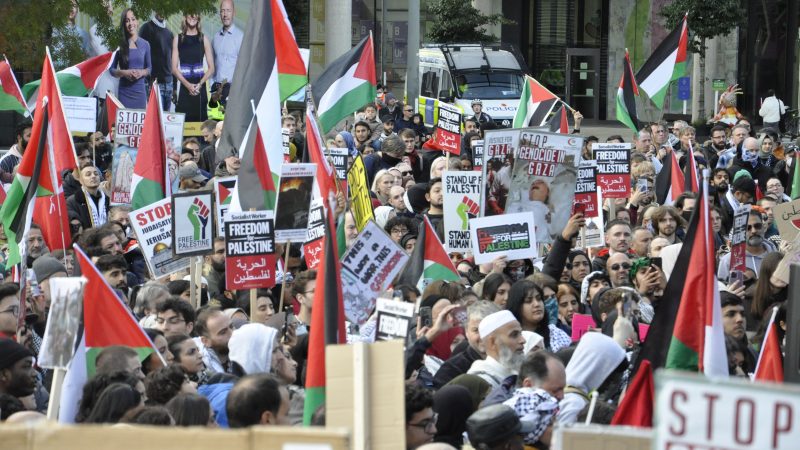
These plans have not arisen in a vacuum. They continue to be framed as a response to the national demonstrations in support of Palestinian rights. These marches, which have been some of the largest and most sustained protests ever seen in this country, have been repeatedly and wrongly labelled as hate marches. They have never targeted places of worship; they never would and indeed never should. The police themselves acknowledge that there has been no evidence of any threat to places of worship linked to the marches and, across more than 35 national demonstrations, not one has targeted or even directly passed a synagogue. By their mass nature, they involve many different people, from many walks of society. Jewish campaigners and organisations have been integral to many of the marches, alongside people of all faiths and none. Despite hundreds of thousands of people taking to the streets, arrests have been fewer, on average, than at football matches or music festivals. That is surely a testament to a peaceful protest movement, and something we should celebrate, not seek to restrict and criminalise.
Our Jewish citizens and all religious communities must, of course, be properly protected, as recent horrific incidents have underlined. Crucially, the police already possess robust and extensive powers to safeguard places of worship and individuals under threat. We have seen alarming racist far-right mobilisations, including outside asylum hotels, and in towns and cities, deliberately targeting and intimidating vulnerable refugee communities. Existing laws must be used far more vigorously to protect all those who face threats from these hate mobilisations. The proposed new clause will not serve this purpose.
I strongly opposed the unlawful proscription of Palestine Action and warned the government that this was a colossal mistake. It has been no surprise to many of us who took this stance that hundreds of peaceful protesters, including disabled people, older people, the young, retired vicars and magistrates and many more, have ludicrously been arrested as terrorists – wasting precious resources in the process. This is a shameful and wholly unnecessary stain on this Government and on Parliament.
The new oppressive and unjust clause risks further compounding those injustices rather than correcting them. Importantly, it will not just be marches for Palestinian rights that are affected — the impact will be far more wide-ranging, as the TUC, Liberty and many others have pointed out.
Become a friend of LabourList and join our community. Our friends support our vital non-factional work and get access to exclusive content and events.
In February 2023 the House of Lords rejected a similar Conservative amendment to the Public Order Act, which also sought to restrict protests on the basis of cumulative disruption. In May that year the then Home Secretary, Suella Braverman, attempted to introduce the same concept by statutory instrument, only for the High Court to rule it unlawful a year later. Sadly, we now have a Labour government bringing this back.
Freedom of expression is not absolute, and the police already possess a huge range of extensive powers to deal with hate speech, incitement to violence and serious threats—as indeed they should. We cannot allow the state to pre-emptively silence thousands of people based on an ill-defined and speculative concept of disruption that is disproportionate, dangerous and profoundly undemocratic. Eroding protest rights weakens accountability between elections and risks fostering authoritarianism. Once such powers exist, they rarely contract and often expand, as they could do under any future Governments less committed to the right of democratic dissent.
At a time of immense challenges for the government, and for the people in this country, this is a wholly unnecessary and damaging course of action that the government does not need to be taking. I hope that every Member of Parliament, when debating this for the first time in the Commons this week, will consider this, and have the chance to vote down the proposal, honour our democratic heritage and safeguard our hard-won freedoms for future generations.
Subscribe here to our daily newsletter roundup of Labour news, analysis and comment– and follow us on TikTok, Bluesky, WhatsApp, X and Facebook. You can also write to our editor to share your thoughts on our stories and share your own. The best letters are published every Sunday.
-
- SHARE: If you have anything to share that we should be looking into or publishing about this story – or any other topic involving Labour– contact us (strictly anonymously if you wish) at [email protected].
- SUBSCRIBE: Sign up to LabourList’s morning email here for the best briefing on everything Labour, every weekday morning.
- BECOME A FRIEND: If you enjoyed this, why not consider becoming a Friend of LabourList? Help sustain our journalism, and of course Friends do get benefits…
- PARTNER: If you or your organisation might be interested in partnering with us on sponsored events or projects, email [email protected].
- ADVERTISE: If your organisation would like to advertise or run sponsored pieces on LabourList‘s daily newsletter or website, contact our exclusive ad partners Total Politics at [email protected].



More from LabourList
Viktor Orbán’s fall shows authoritarianism is not inevitable
‘It’s going to be all about ground game’: Paul Sweeney on Scottish Labour’s fight for Glasgow
‘If Labour wants to take on populism, it must start with the cost of living’