


A core mission of the UK Labour Government is to accelerate the shift towards renewable energy. This will strengthen energy security, help us drive world-leading innovation in Artificial Intelligence, and tackle the climate crisis. With the recent appointments of Miatta Fahnbulleh and Ed Miliband to their new positions in cabinet I am more confident in Britain’s position as a global leader in renewable energy. To deliver our shared ambitions, coordinated public and private investment is required to build the infrastructure needed for energy generation and storage.
Polling consistently shows the public support using renewable and nuclear energy sources to tackle climate change. This indicates broad public support for low-carbon energy sources and a perceived link between cleaner generation and lower household bills. Policies such as the Warm Homes Plan and GB Energy illustrate how government action can translate clean energy generation into shared prosperity across the country.
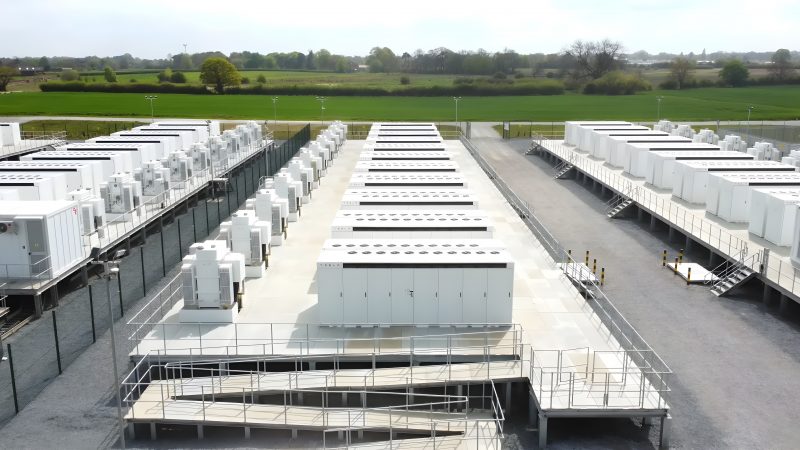
However, one thing that both devolved and national governments often do not talk about is energy storage. These are our energy reservoirs which provide resilience and balance variable generation on the grid. The benefits aren’t as clear to the public compared to other pieces of energy infrastructure. Solar panels and wind turbines are visible and tangible. However, Battery Energy Storage Sites (BESS) represent a less well known form of energy infrastructure; they are less visible but often provoke a lot of noise and opposition by members of the public. Nevertheless, BESS are essential to a renewables-led future, and we should prioritise placing them away from dense residential areas while ensuring the prosperity they generate is shared with local communities.
READ MORE: ‘Why risk the ‘Burnham bounce’ on the oil and gas industry?’
There are three reasons we must act: addressing public concerns, updating planning, and ensuring meaningful community benefit — all essential to maintaining the public consent needed for a fair green-energy future.
Firstly, public safety concerns are real and are not being fully acknowledged. This has created a perception that BESS installations are unsafe — and that perception is not without a grain of truth. If we want to maintain public support for the green transition, we cannot ignore these anxieties. The Moss Landing incident in California is now a defining example of how BESS fires can disrupt local communities. Furthermore, in the UK, the rising number of battery and vape related fires in the waste system further reinforces the sense of risk. On top of this, the National Fire Chiefs Council recommends two independent access points for emergency response, yet fire services are not statutory consultees in BESS planning decisions. Acknowledging that incidents are rare but high-impact and responding to the risks raised by communities through clear risk preparation, practical mitigation measures, action on battery and vape fire hazards, and making fire services statutory consultees, could strengthen public confidence and build community consent.
Secondly, technology is evolving rapidly, meaning developers’ claims that BESS must be built close to substations no longer holds as strongly. Modern cable efficiency means electricity can be transferred over significant distances with minimal loss. Research conducted at the University of Manchester indicates that round-trip efficiencies for modern BESS are high (91.1%) and that transmission losses over moderate distances are small. This potentially opens far more suitable brownfield or grey belt sites further away from communities, without compromising performance. Using this flexibility could materially improve public acceptance as they can be more out of sight and, thus, out of mind.
Become a friend of LabourList and join our community. Our friends support our vital non-factional work and get access to exclusive content and events.
Finally, there is a deficiency of local prosperity associated with BESS developments situated near communities. GB Energy provides a strong model of community wealth building and community ownership. Similar approaches should be mandatory for BESS developments, whether through cheaper energy, shared ownership, or guaranteed local returns. This would demonstrate that these sites are not simply abstract responses to existential climate challenges, but tangible assets that deliver real value to the communities hosting them.
In short, maintaining Britain’s global leadership in renewable energy will require addressing the issues with BESS that risk undermining public consent. Strengthening national safety rules (including making fire services statutory consultees), introducing smarter planning such as minimum setback distances from communities, and legislating real community benefits — from discounted local tariffs to investment funds or community-ownership shares — would all help build and maintain public confidence. Energy infrastructure should strengthen trust, not erode it — and these kinds of measures aim to do exactly that.
Subscribe here to our daily newsletter roundup of Labour news, analysis and comment– and follow us on TikTok, Bluesky, WhatsApp, X and Facebook. You can also write to our editor to share your thoughts on our stories and share your own. The best letters are published every Sunday.
-
- SHARE: If you have anything to share that we should be looking into or publishing about this story – or any other topic involving Labour– contact us (strictly anonymously if you wish) at [email protected].
- SUBSCRIBE: Sign up to LabourList’s morning email here for the best briefing on everything Labour, every weekday morning.
- BECOME A FRIEND: If you enjoyed this, why not consider becoming a Friend of LabourList? Help sustain our journalism, and of course Friends do get benefits…
- PARTNER: If you or your organisation might be interested in partnering with us on sponsored events or projects, email [email protected].
- ADVERTISE: If your organisation would like to advertise or run sponsored pieces on LabourList‘s daily newsletter or website, contact our exclusive ad partners Total Politics at [email protected].



More from LabourList
‘Why Iceland’s EU referendum matters to British progressives’
‘Beyond recruitment: a new fostering plan that offers real hope’
Reform’s rotten culture is exposed